
On Friday, Mr. Wale Edun, the Minister of Finance and Coordinating Minister of the Economy, asserted that recent economic trends do not suggest that Nigeria is facing a fiscal crisis, but rather that the country is undergoing a necessary fiscal correction.
In a media briefing released from his office, Edun emphasized the current government's commitment to long-term sustainability over superficial short- term solutions, underlining that this distinction must inform public discussions going forward.
His remarks coincided with statements from the Minister of Agriculture and Food Security, Senator Abubakar Kyari, who noted that efforts undertaken by the federal government to manage food inflation are beginning to yield positive results, with essential food prices having decreased by 50 percent across the nation.
Additionally, the federal government reassured foreign investors about the viability and attractiveness of Nigeria’s investment climate.
Continuing his address, Edun highlighted that the ongoing reforms are focused on structural changes, enhancing transparency, enforcing discipline, and fostering growth.
A document titled "Deepening Public Understanding of Nigeria’s Fiscal Position" was released as part of the initiative to clarify misconceptions following Edun’s recent presentations to the National Assembly, which had raised concerns about various issues including trends in debt servicing, the growth of public debt, revenue performance, and the execution of capital expenditures.
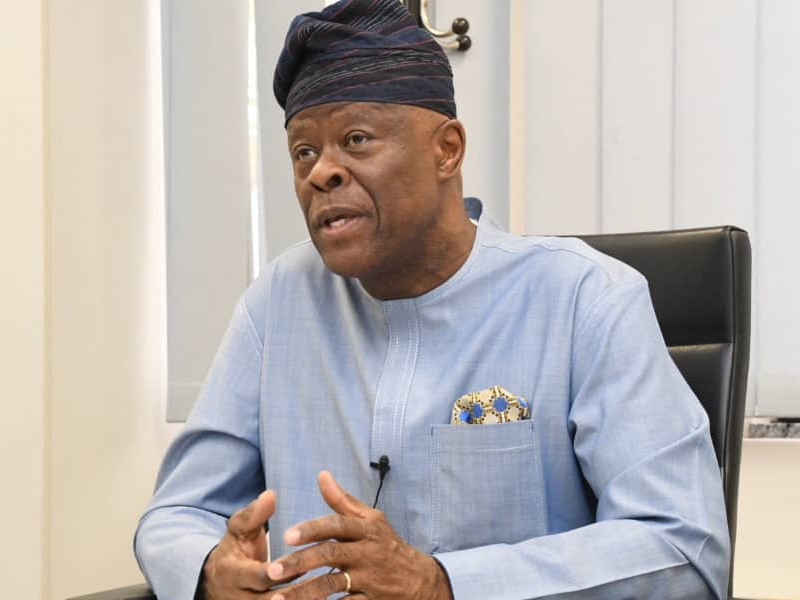
This communication sought to debunk prevalent misunderstandings by clarifying that Federation Revenue is distinct from Federal Government Revenue. It explained that revenues collected at the national level are directed into the Federation Account and then allocated monthly by the Federation Account Allocation Committee (FAAC) among the three levels of government.
It was pointed out that although the statutory distribution formula suggests that 52.68 percent of revenue goes to the federal government, 26.72 percent to the states, and 20.60 percent to local governments, this general principle varies by revenue type, with each source having its own allocation protocol.
The brief emphasized that the federal government is primarily impacted by shortfalls in oil and gas revenues, which generate a higher proportion of income for the central government.
"The federal government receives about 53–65 percent of oil and gas revenues (depending on specific components). In contrast, VAT revenues are allocated 20 percent to the federal and 80 percent to the states and local governments," the document stated, elaborating that the implication is that any underperformance in oil revenue disproportionately affects the federal government compared to other governmental tiers.
It was further noted that projections for oil and Federation Revenue for 2024 and 2025 are N37.4 trillion, while actual receipts have only reached N7 trillion, representing a 19 percent success rate. The brief argued that had the targets been met, an additional N15 trillion would have been available to the federal government.
Edun refuted assertions that federal capital projects are being neglected, while also clarifying the objectives of the Nigeria Revenue Service (NRS) and Budget Office.
He acknowledged that while capital projects at the federal level have seen limited execution, they have not been entirely halted, countering the narrative that they are nonexistent.
"There is a belief that federal capital projects are not being undertaken due to low capital releases from MDAs. However, this view is somewhat oversimplified," Edun explained, noting the presence of two funding sources for federal capital expenditures.
He defined these as expenditures financed by ministries, departments, and agencies (MDA-funded capital) and those funded by Multilateral-tied Loans dispensed directly by development partners.
According to Edun, total capital expenditure in 2024 amounted to N11.59 trillion (representing an 84 percent performance rate), while for 2025, it is projected at N11.7 trillion, which corresponds to a 76 percent performance rate.
Regarding the issue of debt, Edun asserted that an increase in debt servicing costs does not equate to financial irresponsibility. He reported that in 2024 and 2025, debt servicing exceeded its initial projections, with budgetary provisions for debt services in 2024 being N8.56 trillion, contrasted with an actual expenditure of N12.63 trillion—a N4 trillion increase.
For 2025, the budgeted debt servicing was N13.12 trillion while the actual expenditure reached N14.57 trillion, exceeding the budget by N1.45 trillion.
He attributed these increases to external economic factors, including the depreciation of the naira and heightened domestic interest rates.
Edun reassured that Nigeria's debt is not spiraling out of control, although it has increased in nominal terms in naira rubles.
Comments (0)
You must be logged in to comment.
Be the first to comment on this article!