
Astronauts participating in the Artemis II mission have made a safe return to Earth, concluding a significant journey that took them around the Moon. This mission represents the first time humans have travelled to the lunar region since the era of the Apollo program, bridging a gap of more than fifty years in deep space human exploration.
The four-person crew successfully completed their nearly 10-day spaceflight with a splashdown in the Pacific Ocean, a critical milestone that NASA officials have deemed a major stride towards future lunar landings. The return journey culminated in a textbook touchdown, as reported by mission control.
Following their re-entry into Earth's atmosphere, which involved a brief but intense six-minute period of communication loss due to extreme heat, the crew's commander, Reid Wiseman, confirmed that all astronauts were "happy and healthy."
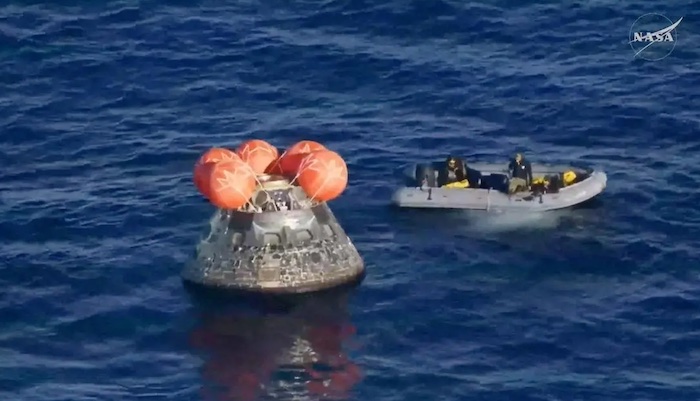
During their expedition, the crew, which included pilot Victor Glover and mission specialists Christina Koch and Jeremy Hansen, travelled a remarkable distance of 252,756 miles from our planet. Their journey reached a furthest point of 406,771 kilometres, setting a new record for the greatest distance ever covered by humans in space.
NASA representatives have characterized the mission as a pivotal moment, proclaiming "This is the start of a new era of human space exploration." The agency is actively accelerating its efforts to achieve the goal of returning astronauts to the lunar surface.
The astronauts gathered valuable data during their flight, conducting in-depth observations of the Moon. They captured photographs, made sketches, and recorded audio during their transit around Earth's closest celestial neighbour.
Reflecting on the experience, Glover conveyed that "No adjectives" could adequately describe the astronauts' observations during the mission, underscoring its profound impact.
The Artemis II mission is a foundational element of NASA's broader Artemis program. This initiative is designed to land humans on the Moon again, with a target date of 2028, and to eventually establish a permanent human presence, potentially including a lunar base.
Erizia Rubyjeana
Comments (0)
You must be logged in to comment.
Be the first to comment on this article!