
The Nigeria Customs Service (NCS) reported an impressive revenue generation of N7.28 trillion for the year 2025, surpassing its target by a remarkable N697 billion and achieving a growth rate exceeding 10% year-on-year.
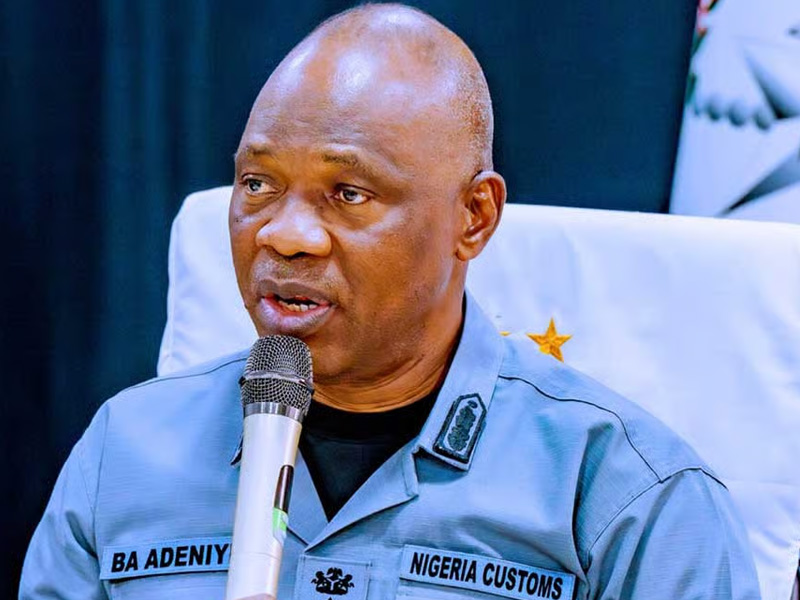
Comptroller General of Customs, Mr. Bashir Adeniyi, made the announcement on Monday during the celebration of the 2026 International Customs Day and the unveiling of the Nigeria Time Release Study (TRS) report, which aims to enhance customs administration while balancing societal protection and promoting lawful trade.
Adeniyi explained that the total revenue was up from N6.1 trillion in 2024, marking an increase of N1.18 trillion, or 19%, year-over-year.
He emphasized that these results reflect significant reform achievements within the service and are founded on improved compliance and better use of data and technology, rather than merely increasing enforcement on lawful traders. Adeniyi noted that the results were achieved through a commitment to collaboration with the private sector and upholding facilitation commitments.
Dr. Doris Udoka-Anite, the Minister of State for Finance, affirmed the government's ongoing commitment to support the necessary reforms and enhance institutional capacities for greater transparency and accountability within the customs service.
Udoka-Anite pledged that the federal government would continue to finance these reforms while providing the requisite tools and leadership to sustain the progress made under Adeniyi's leadership. She mentioned that insights from the TRS would guide future policies in the areas of infrastructure, investments, and social development, in alignment with clear trends and objectives.
The minister also encouraged an inclusive strategy among all stakeholders to translate the findings of the study into impactful improvements that would benefit the economy and its citizens.
Emphasizing the importance of trust and cooperation among institutions, Udoka- Anite stated, "The operational commitment of all partners will be crucial to driving this transformation, and I encourage everyone to take pride in their roles and continuously strive for excellence."
Adeniyi disclosed further plans to implement procedural reforms aimed at minimizing clearance times, enhancing transparency, and eliminating unnecessary bottlenecks. He pointed out that the TRS report provides a valuable assessment of user experience of the current system and highlights areas for improvement, including coordinated inspections and enhanced system interoperability.
He reiterated the necessity of forming strong alliances, stating, "Customs cannot operate in isolation. We must collaborate closely with other government agencies, the organized private sector, port and maritime operators, financial institutions, and international entities like the WCO, as the responsibilities of protection and facilitation are collectively shared."
Looking forward, Adeniyi posed a critical question: "How do we maintain our dual mission of protecting society and fostering economic prosperity amidst the complexities of global supply chains, technology-driven crimes, and rising expectations from both traders and the government?"
He provided a three-part strategy focusing on investing in intelligence-led, technology-driven enforcement: "As illicit trade grows more sophisticated, our methods must evolve accordingly. Tools like risk management, non-intrusive inspections, post-clearance audits, and data analytics will be central to our future operations."
In discussing the theme for this year's World Customs Day, "Customs Protecting Society Through Vigilance and Commitment," Adeniyi pointed out the interconnectedness of safety and economic prosperity, underscoring that customs plays a vital role at the intersection of these domains.
He highlighted recent successful operations: at Apapa, customs officers seized 16 containers of prohibited goods valued over N10 billion. Moreover, airport officials intercepted over 1,600 exotic birds trafficked without CITES permits, dismantling a wildlife crime operation that could have had dire implications for biodiversity and Nigeria's international responsibilities.
Adeniyi added that the customs teams also seized illicit narcotics and counterfeit medicines valued at hundreds of millions of naira, along with ammunition and other banned items trafficked through various routes.
He stated that while such operations often do not make headlines, their long- term impact is significant in reducing exposure to harmful drugs, preventing weapons from reaching criminal networks, and curbing the flow of counterfeit medications and endangered species.
The service recorded over 2,500 seizures, totaling more than N59 billion in harmful goods removed from circulation, including narcotics, counterfeit pharmaceuticals, wildlife products, arms, petroleum products, and substandard consumer goods, thus averting potential disasters.
Adeniyi summed up the realities faced by customs, noting that, "True protection goes beyond revenue generation; it encompasses intercepting drugs that threaten our youth, blocking counterfeit medicines that risk patients' lives, and ensuring the safety of goods entering Nigeria. While the public might not always witness these interventions, the consequences of inaction would be felt profoundly."
He reiterated that modern customs must balance vigilance with facilitation, efficiently screening high-risk consignments without stifling lawful trade. The launch of the Time Release Study is emblematic of efforts to secure and enhance Nigeria's trade gateways, transitioning from subjective opinion-driven reforms to data-informed policies.
Adeniyi concluded with insights from the TRS indicating that while clearance times are generally efficient, excessive idle periods caused by fragmented scheduling and manual processes continue to prolong the clearance cycle, posing competitiveness challenges. The focus now remains on enhancing the efficiency of goods movement.
Comments (0)
You must be logged in to comment.
Be the first to comment on this article!