
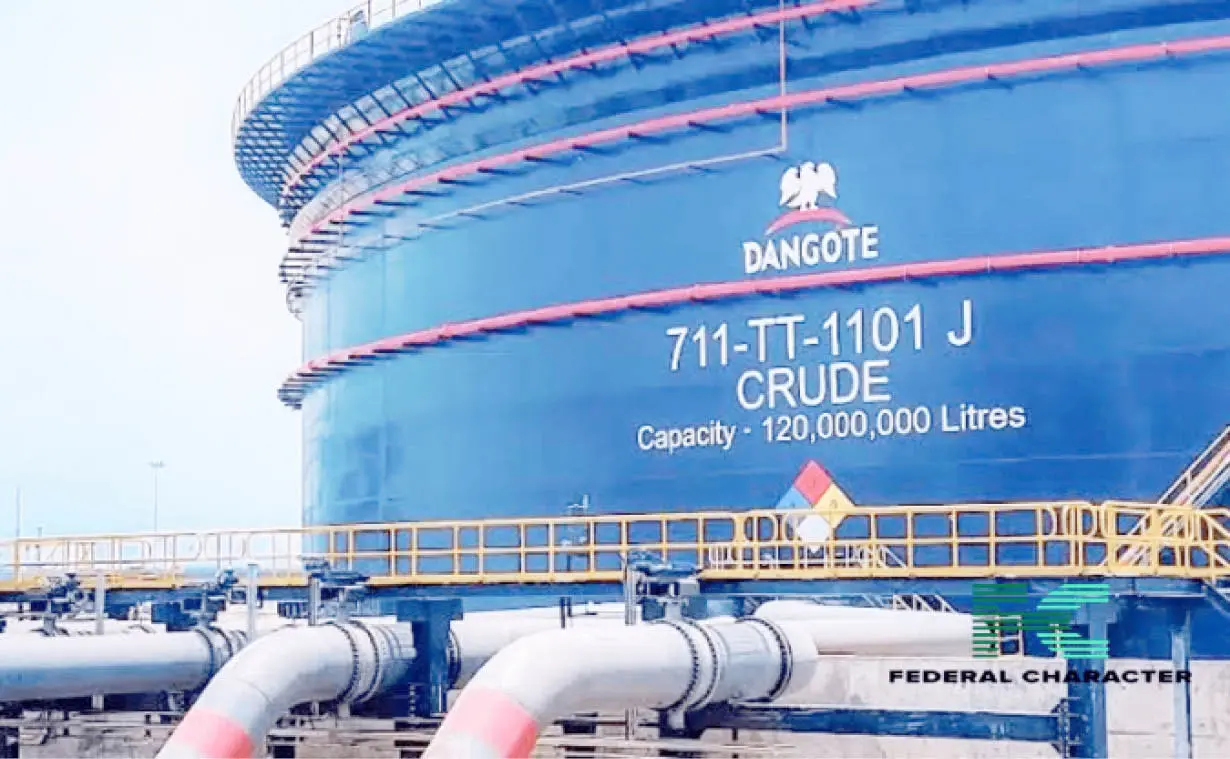
According to a recent factsheet from the Nigerian Midstream and Downstream Petroleum Regulatory Authority (NMDPRA), Dangote Refinery provided a total of 32.02 million litres of Petrol Motor Spirit (PMS) in December.
The document revealed that the company's capacity utilization reached an impressive 71% during December, against a target production of 50 million litres.
Additionally, the factsheet indicated ongoing production activities across the three refineries owned by the Nigerian National Petroleum Company (NNPC) Limited, as the Dangote Refinery remained on shutdown.
It was highlighted that the evacuation of previously produced Automotive Gas Oil (AGO) from the Port Harcourt Refinery took place while it was operational before the shutdown on May 24, 2025, with an average of 247,000 litres evacuated daily.
Due to the festive season, the Nigerian National Petroleum Company Limited (NNPCL) and various other firms imported 42.2 million litres per day to supplement the total domestic supply of 72.4 million litres of PMS.
The factsheet also announced the issuance of a license for a new refinery, while the Waltersmith refinery (Train 2) is expected to begin hydrocarbon production by January 2026 after completing its pre-commissioning phase.
For modular refineries, the Waltersmith refinery operated at 63.24% of its capacity, producing an average of 51,000 litres of AGO per day, although it functioned for only 13 days due to the pre-commissioning of Train 2.
Edo refinery reported an 85.43% capacity utilization with an average of 52,000 litres of AGO supplied daily, while the Aradel Refinery utilized 53.89% of its capacity, contributing an average of 289,000 litres of AGO per day.
The factsheet emphasized the importance of these figures, indicating a significant shift in Nigeria's energy sector towards enhanced domestic production, reduced reliance on imports, employment generation, safety enhancements, and economic stability.
Comments (0)
You must be logged in to comment.
Be the first to comment on this article!