
Former Speaker of the House of Representatives, Rt Hon Yakubu Dogara, has suggested that the United States may engage more actively in Nigeria's upcoming 2027 general elections, motivated by its strategic interests in the nation's stability and influence across Africa.
Dogara expressed these views during an appearance on Inside Sources with Laolu Akande on Channels Television, where he discussed Nigeria's position in the changing global dynamics and its implications for the country's democratic process.
He cautioned that the erosion of traditional international norms has led nations to pursue their agendas more aggressively.
"Currently, the international order has collapsed. We are at a historical juncture where being included at the decision-making table does not guarantee a favorable outcome."
However, Dogara emphasized that mere participation in global discussions does not inherently provide protection or influence.
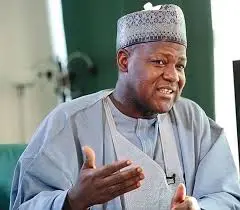
"Honestly, being part of these dialogues does not ensure that we won’t end up being sidelined. In power negotiations, often the strongest players dominate the table, leaving the vulnerable marginalized."
He asserted the necessity for Nigeria to be proactive and strategic in claiming its place on the global stage, warning of serious repercussions should the country fail to adopt decisive measures.
"If we neglect to take appropriate actions, Nigeria’s future could be shaped without our input."
Dogara highlighted the strategic significance of Nigeria to the United States and the global community, observing that the stability of Nigeria has broader implications for the region.
"The concern is that the U.S. cannot allow a decline in Nigeria’s stability because such a scenario would have repercussions that could alter the current dynamics within Africa."
He pointed out that this reality underlines why crucial global powers maintain a vested interest in Nigeria’s political and electoral landscape.
"Therefore, it is in their best interest to ensure measures are taken ahead of the upcoming elections. They might not explicitly convey that they will adopt a more involved stance… towards the 2027 elections."
According to Dogara, international scrutiny on Nigeria is expected to amplify as the general elections draw nearer.
"Based on my observations and interactions, it seems likely that this will be the case."
He pointed out that while the concept of lobbying is not inherently problematic, the reported $9 million fee paid by the Nigerian government to a U.S. lobbying firm raises significant issues.
"Lobbying itself is acceptable; however, I disagree with the government spending $9 million on this. Without evidence, such claims remain speculative. It's customary for countries to have lobbyists in the U.S.; but this amount appears excessive," Dogara remarked.
He underlined that Nigeria, akin to other nations, has valid reasons to exert influence and be visible within the U.S. political landscape, yet these efforts must be transparent and sensible.
Beyond the lobbying issue, Dogara positioned Nigeria’s foreign policy challenges in the context of a rapidly evolving and increasingly precarious global environment.
Comments (0)
You must be logged in to comment.
Be the first to comment on this article!