
Lieutenant General Tukur Buratai, who previously served as the Chief of Army Staff, has called for concrete steps to be taken against those funding terrorist activities, asserting that military engagements alone cannot fully eradicate insurgents.
Buratai noted that merely identifying financiers of terrorism would not suffice to resolve Nigeria's ongoing security crises.
In March 2024, the Nigerian federal government disclosed the identification of fifteen entities, including nine individuals and six bureau de change operators, alleged to be involved in terrorism financing. However, updates on the prosecution of these suspects have been scarce despite public pressure.
During a television appearance, Buratai commented, “We are overly reliant on the military and the army; everyone has their distinct duties. It is not my role to name the financiers of terror.
“The government is aware of the source; we have appropriate agencies. But identifying them is not enough; action must follow.”
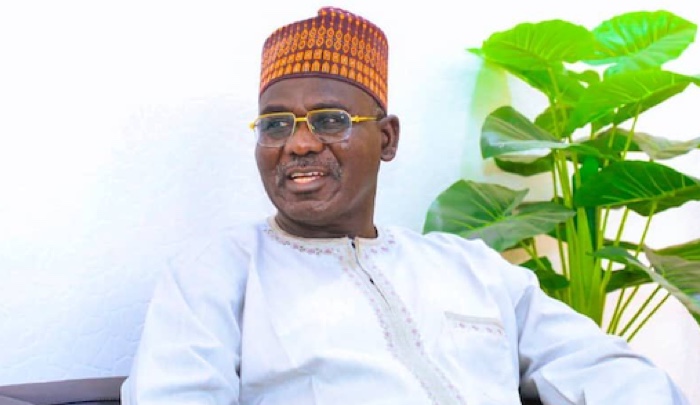
The former army chief clarified that the military's mandate is confined to its constitutional duties, while broader policy decisions, such as the reintegration of repentant insurgents, fall under the purview of the government.
He characterised Nigeria's insurgency as a multifaceted and deeply entrenched problem that cannot be swiftly resolved solely through military might.
“Our focus tends to be on the army, expecting it to handle everything: to clear, dismantle, and eliminate all insurgents, but this is an oversimplification. It’s a problem embedded within society, requiring a collective effort,” he stated.
“It would be unrealistic to expect this kind of insurgency to be eliminated quickly. These are individuals driven by ideology and beliefs, who perceive themselves as having a mission to create a perfect society, which is not attainable within Nigeria's current context.”
He also addressed the discourse surrounding the “technical defeat” of Boko Haram.
Buratai indicated that while the frequency of attacks saw a substantial decrease after 2015, and territories were recaptured, the threat continues to exist.
He recalled that during the peak of the insurgency, bombings were prevalent across various cities, from Maiduguri to Abuja. However, by late 2016, such incidents had significantly reduced, and local government areas previously under militant control were liberated.
Despite these achievements, Buratai cautioned that the insurgency could persist if not addressed comprehensively.
“When I was leaving office to assume my ambassadorial role, I warned that this issue was a deep-rooted problem that could last much longer than anticipated. My statement was based on a thorough understanding that the military's responsibility is not the sole factor,” he explained.
He pointed to persistent challenges in certain parts of the North-east and North-west, including inadequate infrastructure, challenging geographical terrain, and ungoverned territories.
According to him, effective security requires consistent investment in development, encompassing infrastructure like roads and railways, social services, and employment opportunities, to tackle the underlying causes of instability.
Buratai further elaborated that while the military has made strides and is not overwhelmed, it continues to encounter operational hurdles, such as a constrained personnel count and insufficient equipment relative to the vast expanse of the North-east region.
“I do not believe the insurgency is overwhelming our troops. We are managing, but we require additional resources like drones and more advanced platforms. The territory is extensive, and our troops are widely deployed,” he commented.
The former army chief concluded that achieving lasting peace would necessitate not only military actions but also sustained governmental initiatives, coordinated institutional efforts, and societal engagement in addressing the root causes of the insurgency.
Comments (0)
You must be logged in to comment.
Be the first to comment on this article!