
Ebuka Amanze was often considered invincible. Throughout the oppressive years of military governance, attempts to silence him proved futile. Serving as the General Secretary of the Pro-Democracy Coalition (PRODEMCO), he consistently motivated the populace to resist and unify against their military oppressors.
Then came the dawn of democracy — a day to remember! The Nigeria Peoples’ Congress (NPC) took the reins of power. Unfortunately, the politicians swiftly reverted to the bleak tactics of their military predecessors. Now, twenty years later, the NPC remains in power — two decades marked by hollow electoral victories and persistent citizen hardship.
Ebuka relentlessly criticized the NPC politicians, arguing they were hardly different from the previous military rulers, urging the electorate to exercise their votes judiciously to remove unscrupulous leaders in the upcoming elections. As long as Ebuka Amanze stood at the forefront, his signature red shirt tight against his form and his fist raised defiantly, there was a glimmer of hope for the nation — a possibility that the corrupt politicians would be ousted.
But now, Ebuka was gone.
His passing was tragic yet ordinary — a car crash. He was en route to Juk in the northeast, rallying support from the National Labour Congress against the latest increase in petrol prices. After a successful event, disaster struck when the taxi he occupied collided with a parked truck along the highway, sixty kilometers from Juk. The crash claimed the lives of Ebuka and two others, including the driver, instantly.
The nation was left in shock upon learning of Ebuka’s death. Following the official announcement on national television, the President of the National Union of Students held a press conference, asserting that Ebuka Amanze had been murdered by the NPC government, disguised as a car accident.
He called for an independent investigation to uncover the truth behind this sudden and suspicious death of the great patriot. Both the National Labour Congress and various NGOs joined in urging the government for transparency.
Tension gripped the country.
Itohan Osagie intervened to alleviate the unrest. She was the Mobilisation Director of the clandestine Socialist Front of Nigeria, the force that had sustained PRODEMCO during the military rule. Itohan traveled to Juk to retrieve the severely damaged body of Ebuka and returned it to his elderly parents in their Imo State village. Pa Amanze, a retired school principal, insisted on a rapid burial for his only son. The villagers fulfilled his request, digging a grave behind the house and laying his body, encased in a simple wooden coffin, to rest.
The only indication that a prominent political figure was being buried was the national flag draped over the coffin as per Itohan’s insistence. As the youths filled in the earth, they left, allowing Ebuka’s heartbroken parents to grieve.
Upon hearing of Ebuka’s burial, the President of the National Union of Students shifted strategies. He announced plans for a memorial service in Ebuka's honor at the National Stadium in Abuja, inviting notable trade unionists, journalists, members of civil society, academicians, and influential Nigerian students to deliver tributes.
The NPC government ordered the Chief of Police to deny a permit for the gathering, asserting that with Ebuka’s burial, the matter was concluded.
The National Union of Students granted the government one week to respond to their request; otherwise, they would mobilize students nationwide to march toward the Presidential Villa. The President of the National Labour Congress supported the students, stating that Nigerian workers would halt work if a deserving memorial service for Ebuka Amanze was denied.
The government found itself in a tight spot.
Rescue came in the form of Reverend John Opini, the Archbishop of Abuja. Unlike Desmond Tutu, Archbishop Opini often maintained a balanced stance, admonishing NPC politicians when they manipulated the electoral process and later urging the public to pray for the government as prescribed by biblical teachings.
Perceptions of Archbishop Opini varied. Some regarded him as a champion of the people's cause akin to Ebuka Amanze, limited by his clerical role. Others criticized him as an NPC supporter, doubting his sincerity during sporadic criticisms. Nevertheless, he was a respected national figure regularly featured in media interviews, providing sound bites that journalists found appealing.
Archbishop Opini announced on national television his intention to meet with President John Jamba regarding the matter of Ebuka Amanze and to propose a way forward. Two days later, he conducted a press conference confirming that the memorial service would proceed in his church — the Cathedral Church of Saint Paul, notable for hosting significant state funerals historically also attended by politicians and generals alike.
_
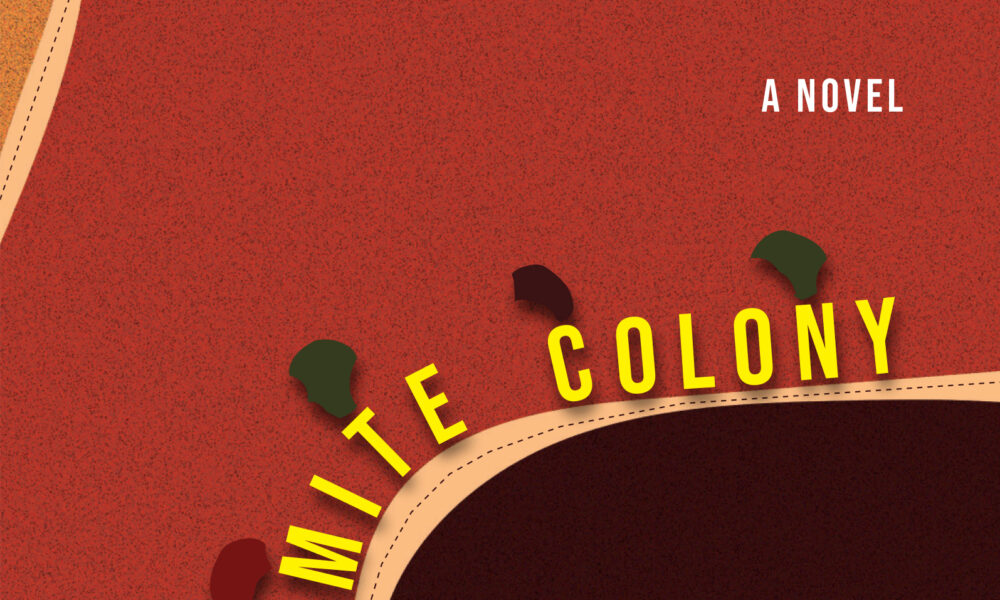
The Termite Colony is authored by Ike Okonta and published by Narrative Escape.
Comments (0)
You must be logged in to comment.
Be the first to comment on this article!