
Faduri Oluwadara Joseph, affectionately known as Father Joe, has asserted that Nigeria’s prolonged issues with insecurity, economic distress, and institutional decline are primarily linked to corruption and the reckless handling of public finances. The NRM presidential candidate argues that without robust accountability measures and strict financial oversight in governance, no reform or political shift will yield significant transformation. He believes that corruption is not merely a byproduct of Nigeria's challenges but rather the fundamental cause of them.
In a recent interview with ARISE News, Joseph criticized the self-serving nature of leadership in Nigeria, claiming that leaders consistently put their own interests ahead of national progress, thereby fostering a culture of impunity in governance.
"The issue we face in this country is that our leaders prioritize their own needs over those of the nation," he stated.
He highlighted that this failure in leadership has entrenched corruption to such an extent that mechanisms for accountability in public institutions have nearly collapsed.
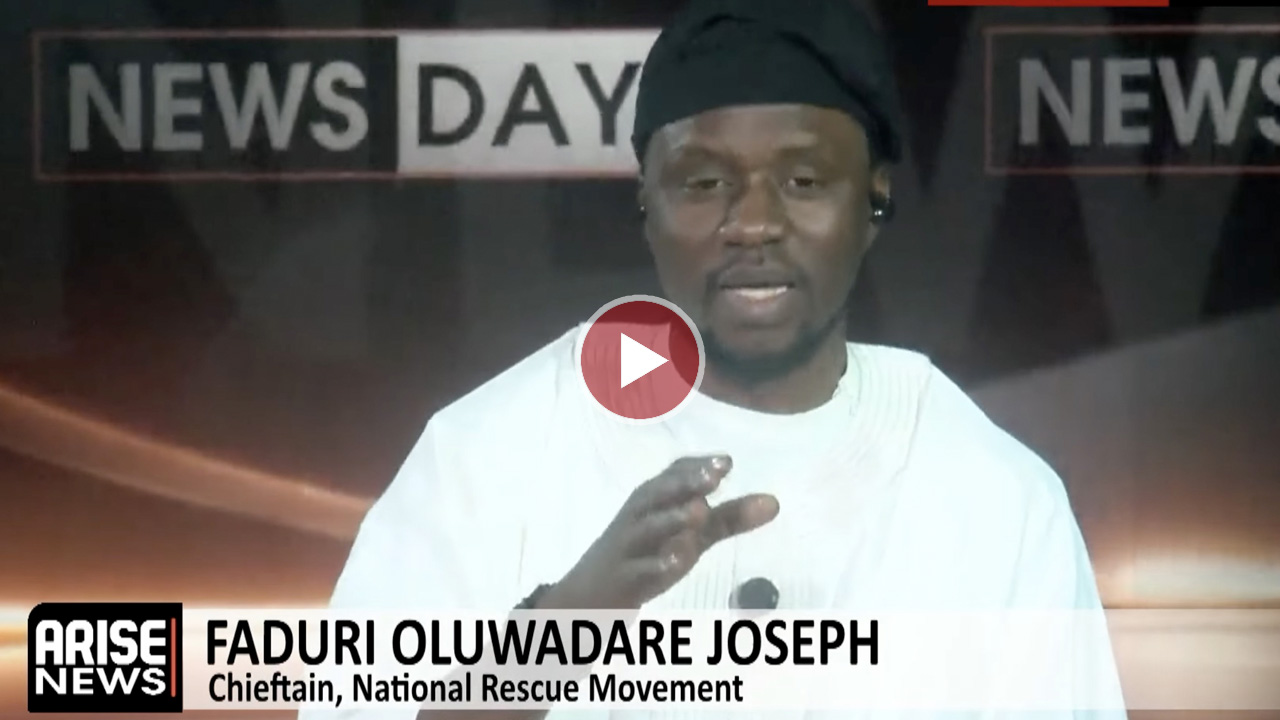
"Corruption pervades our society. We live in a country devoid of law and order, where accountability and reward systems are non-existent," he emphasized.
Joseph further commented on the staggering financial irregularities within the system, citing reports of over 200 trillion Naira that has allegedly gone missing from the National Agricultural Development Company (NADC), with no accountability for those involved.
"How can a nation progress if more than 200 trillion Naira is missing, yet no one is held accountable?" he questioned, pointing out that such inaction only encourages further plundering and fiscal irresponsibility.
In addition to the claims of missing funds, he expressed concerns about misallocated budgets, particularly expenditures that do not benefit the average Nigerian citizen.
"Consider the president's medical treatment budget of 34 million Naira for his office. Imagine the impact if that money was invested in building hospitals instead," he proposed.
Joseph argues that these financial missteps reflect a disconnection between public office and the needs of the populace. He further indicated that similar financial decisions regarding national security and foreign affairs illustrate a consistent pattern of poor management.
"Think about what could be achieved if we redirected that funding into enhancing our military," he remarked, underscoring that these issues are symptomatic of a broader collapse of accountability that allows corruption to persist.
"Corruption and the mismanagement of public finances are the reasons we find ourselves in this troubling situation today," he emphasized.
He insisted that reversing Nigeria’s decline necessitates the restoration of the rule of law, order, and stringent financial accountability at all levels of government. "When we assume office, it will be about putting the people and the nation first," he declared.
Joseph framed the upcoming 2027 election as a crucial opportunity for Nigerians to reject years of financial misconduct and to demand transparent governance. "Participating in this next election is vital for all of us," he stated.
His campaign pivots on the themes of corruption and fiscal accountability, positioning the battle against financial mismanagement as key to the nation's renewal. He contends that issues such as insecurity, unemployment, inadequate healthcare, and feeble institutions stem from unchecked corruption. The response of voters to his call for comprehensive reform remains to be seen, but his message is clear: without addressing corruption, Nigeria cannot advance.
Comments (0)
You must be logged in to comment.
Be the first to comment on this article!