
FIFA has introduced regulations that mandate all teams participating in its women’s tournaments to have at least one female head coach or assistant coach, as part of a strategy to bolster representation in women's football.
This regulation, which received backing from the FIFA Council, is set to come into force during this year’s under-17 and under-20 Women’s World Cups and the Women’s Champions Cup. It will be applicable to both youth and senior levels, encompassing club and international competitions.
According to the new guidelines, every team is required to have a minimum of two female staff members present on the sidelines during matches, with one occupying either the head coach or assistant coach position. Jill Ellis, FIFA’s chief football officer, emphasized that this initiative seeks to tackle the insufficient number of women in coaching positions.
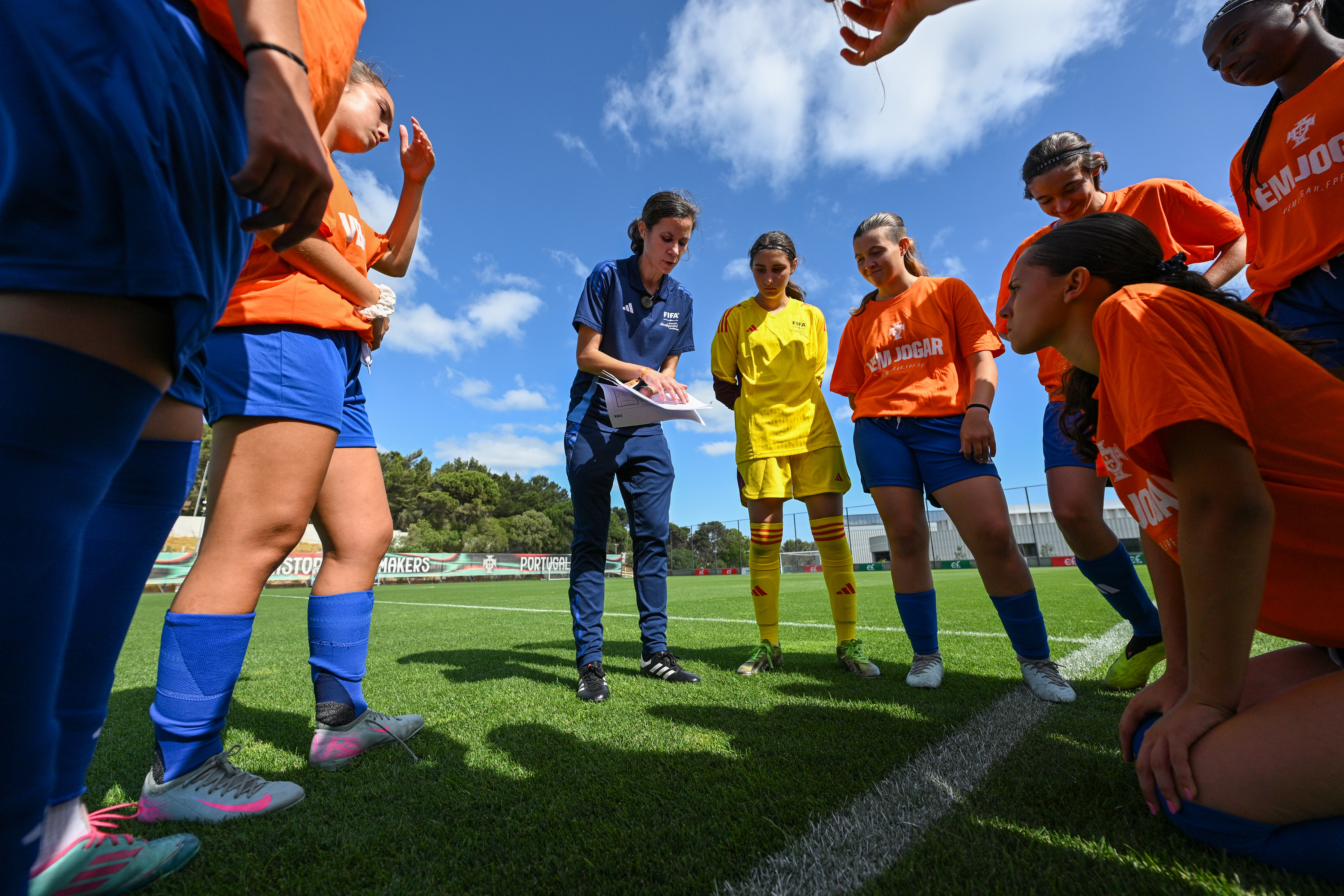
“There are simply not enough women in coaching today. We must do more to accelerate change by creating clearer pathways, expanding opportunities, and increasing the visibility for women on our sidelines,” she remarked.
“The new FIFA regulations, alongside targeted development programs, represent a significant investment in the present and future cohort of female coaches.”
This initiative is launched in light of continuing concerns regarding gender disparity in football coaching. Notably, during the 2023 Women’s World Cup, only 12 out of 32 head coaches were women, including England's manager Sarina Wiegman. FIFA aims for this policy to notably enhance female representation before future tournaments, particularly the 2027 Women’s World Cup scheduled to be held in Brazil.
Several distinguished female coaches are already making their mark at high levels, such as Emma Hayes, who manages the United States women’s team with assistant Denise Reddy. Other English coaches working in international settings include Gemma Grainger with Norway, Casey Stoney with Canada, and Carla Ward with the Republic of Ireland.
Wiegman, who has guided England to consecutive European championships and has been recognized as the FIFA best women’s coach multiple times, has also advocated for increased diversity in coaching.
“Of course what we hope is to get more female coaches at the top level and that the balance gets better than it is right now. Males are welcome too but if the balance is better than hopefully that will inspire more women to get involved in coaching,” she stated.
Comments (0)
You must be logged in to comment.
Be the first to comment on this article!