
Dame Patience Jonathan, former First Lady of Nigeria, and Douye Diri, the Governor of Bayelsa State, have articulated differing opinions regarding the promotion of women's representation in both state and national politics.
During the Pan-Niger Delta Forum (PANDEF) Women Conference 2026, Mrs. Jonathan underscored the necessity for Nigeria and Africa to adopt strategies similar to those of developed nations to foster an environment conducive to women's involvement in governance.
She cited various African nations that have successfully enacted affirmative action policies to guarantee women's representation in political offices.
Furthermore, Mrs. Jonathan called for solidarity among women in the Niger Delta and across Nigeria, stressing the significance of putting aside political differences to jointly champion women’s rights and empowerment.
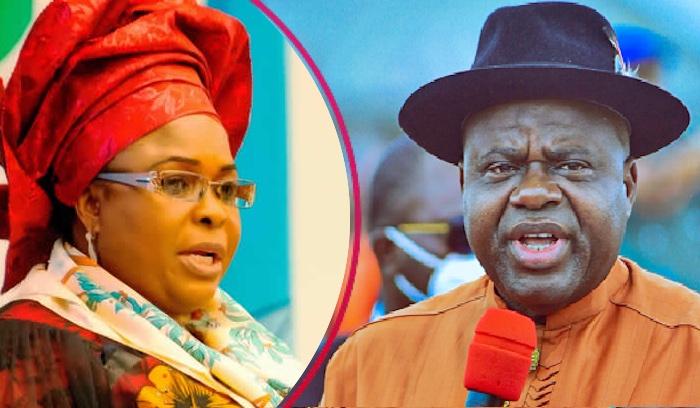
Conversely, Governor Diri emphasized the importance of fully integrating women into the political arena without relying on special seats in the National Assembly. He encouraged women to strive for equal opportunities in politics, asserting that they should not be regarded as second-class citizens.
The governor expressed confidence in women's capability to engage in politics independently of any special arrangements. He acknowledged his efforts toward enhancing women’s roles in the governance of the state, while also recognizing the ongoing obstacles to achieving gender equality in political representation.
In a statement, Diri remarked, “I understood that the British High Commission is a significant sponsor of this initiative. During a previous meeting with the Deputy High Commissioner in Bayelsa last week, we discussed women’s political involvement.”
He continued, “While I believe that the proposal for special seats for women in the National Assembly is a commendable temporary solution, I mainly disagree with it. My aim is to ensure that women are not seen as second-class citizens. In countries like Britain and America, women do not have designated seats in parliament; instead, they are recognized and fully participate in politics. There is no discussion about special arrangements or women being disadvantaged there. We can achieve that in Nigeria.”
Diri further insisted, “Our women possess intelligence and are active in various political and professional sectors. So, why should there be a call for special provisions for them? Women globally take on roles as members of parliament, governors, and presidents. Nigeria should be no different. The issues we face stem from structural inadequacies.”
He added, “We have women who are professors, doctors, engineers, and lawyers, even from the Niger Delta region. I just recently honored my daughter, who is 26 years old and holds a Ph.D. in law. Women should fight for their rights and should never accept being treated as second-class citizens in this country.”
Earlier in the conference, Rev. (Mrs.) Grace Ekong, the PANDEF National Women Leader, highlighted the need for women to cultivate education, skills, experience, and exposure to actively participate in politics.
Ekong urged women to remain engaged, stating that they have a vital role in societal progress. She declared, “As women, you should contribute wherever you find yourselves. Engage thoughtfully and constructively for the improvement of this region.
“Pursue education and inspire your children to do the same, as this will allow them to attain positions of influence in politics and partake in the shaping of our nation and its regions.
“This region is rich in resources for the nation’s wealth; nonetheless, how many women from the Niger Delta are involved in the political landscape?”
The leadership of PANDEF reaffirmed the importance of education and necessary skills for women to confidently engage in politics and facilitate societal development. They encouraged women to be proactive and unified in their advocacy for inclusion in governance.
Comments (0)
You must be logged in to comment.
Be the first to comment on this article!