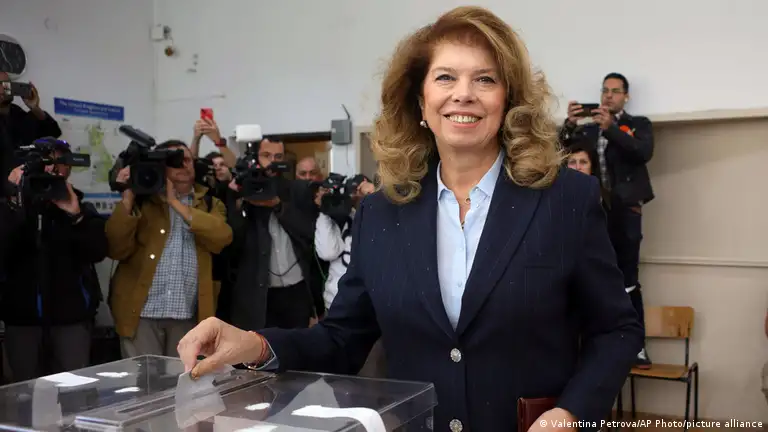
Iliana Yotova made history following her victory in Bulgaria's presidential runoff election, emerging as the first woman ever elected to the country's highest political office. The 62-year-old former acting leader gathered 57.58 percent of the total ballots cast, based on nearly complete data published by the Central Election Commission on Monday, November 2, after processing 99.95 percent of station protocols.
Running alongside her vice-presidential partner Kiril Valchev, Yotova surpassed the opposition ticket of former caretaker Prime Minister Andrey Gyurov and Georgi Kandev, who finished the race with 39.47 percent of the votes. Prior to this electoral triumph, Yotova assumed the role of acting president in January 2026 after the departure of former head of state Rumen Radev, who resigned to run for parliament. Her political background includes two successive terms as vice-president beginning in 2016 and 2021, as well as a decade-long tenure as a member of the European Parliament between 2007 and 2017. Earlier in her professional life, she worked as a broadcaster for Bulgarian National Television.
What led to this historic political milestone?
The election concluded a transitional phase in the nation's governance following Radev's sudden departure earlier in the year. Yotova's extensive background in European legislative affairs and domestic administration provided her campaign with strong momentum across various constituencies.
Political analysts noted that her established presence as vice-president and subsequent brief stint as acting head of state offered voters a sense of administrative continuity. The electoral process proceeded largely without major disruptions, culminating in a clear mandate for the incoming administration.
How did the opposition respond to the results?
The rival camp led by Andrey Gyurov acknowledged the outcome as the electoral commission finalized the tally. Observers from international monitoring bodies are expected to release their comprehensive assessment of the polls in the coming days, marking a new chapter in Bulgaria's constitutional history.