
Every year on January 15, Nigeria observes Armed Forces Remembrance Day, commemorating the brave sacrifices made by its soldiers across various battlefields. For residents of Plateau State, the 2026 observance carries an additional weight as it marks the day Imam Abdullahi Abubakar, a well- respected Muslim cleric from Yelwa village in the Gindin Akwati, Nghar area of the Barkin Ladi Local Government, departed from this life.
Imam Abubakar succumbed to respiratory failure after battling a prolonged illness at the Plateau State Specialist Hospital. His family reported that he passed away on Thursday evening around 10 p.m. Even in his last moments, he emphasized the importance of living in harmony, a principle that had been central to his life's mission.
Over five decades ago, after completing his Qur’anic studies in Maiduguri, which his father, Malam Abubakar Tsoho, encouraged him to pursue, the young Abdullahi returned to Yelwa. He expressed his desire to join the Nigerian Army amidst the civil war against Biafra, but his father rejected the notion, opting instead to arrange his marriage and direct him towards agricultural work.
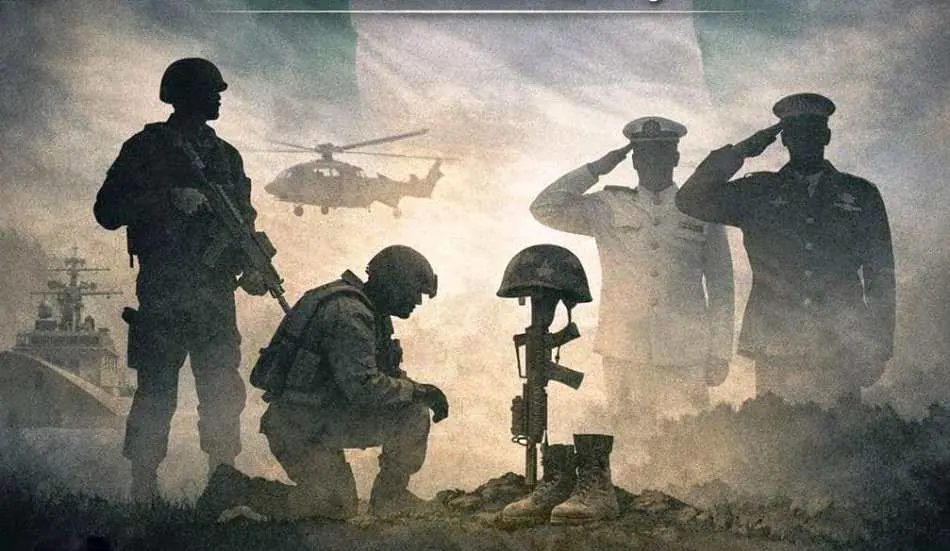
This initial inclination towards heroism was not by chance. The Imam had nurtured a long-standing desire to safeguard his nation and community. His valor occurred prominently during the devastating terrorist assault on June 23, 2018. Those acquainted with him noted his bravery, strength, and fearlessness, though few were aware of his past military ambitions. Ironically, he passed on a day dedicated to recognizing the fallen warriors of the Civil War and other conflicts; while he never donned a military uniform, he exhibited a soldier's bravery in his efforts to protect his community.
Imam Abubakar's humility, gentle demeanor, and unassuming nature earned him profound respect among those around him. He was known for his soft voice and calm disposition, leaving an unforgettable impact on many. I first encountered him in 2019, a year after violent ethnic conflicts erupted between farmers and herders in Riyom and Barkin Ladi. He had heroically led a significant rescue mission during the June 23 attack, providing sanctuary to numerous individuals fleeing from terrorists. When I inquired about his source of bravery after the attackers had killed his brother that fateful day, he simply said, "I did what Islam instructed me to do. This is the lesson imparted by the Prophet of Allah (SAW) to his followers."
In 2019, he was honored with various awards from President Muhammadu Buhari and the U.S. government, as well as numerous accolades from national and international organizations for his courageous acts. Most of these recognitions were in the form of certificates or plaques that bore no financial or social support to reflect his contributions. It was often shocking for visitors to Yelwa to find him living in extreme poverty despite his distinguished reputation. Each day, he generously shared whatever food he had as a hardworking farmer, despite his dire circumstances. It was rumored that the government once allocated him one million naira and facilitated two Hajj trips, but his son Saleh Abdullahi recounted how the Imam chose to distribute the funds to relatives and neighbors before returning home.
Greed and fame held no value for him. He maintained his integrity, refusing to be swayed by politicians, and remained committed to Yelwa, save for engagements in Jos or Barkin Ladi. A community leader, Irmiya Magit, reminisced about organizing fundraising efforts for the town's mosque, not realizing that it would later provide refuge during assaults: "Malam was a good man—a unique person."
One of his Christian neighbors, Ajuji Hamidu, who grew up alongside his family, regarded him as a father figure who accepted everyone without bias. Local resident Davou Gyang expressed sorrow, saying, "Every morning, he would stroll through the neighborhood, greeting everyone and checking in on them. We will always remember him."
The community now faces an important question: who can step into his shoes? Will unity survive in the aftermath of his loss? His deputy, Malam Abdullahi Umar, pledged to uphold the principles of discipline and peace-building that Imam Abubakar championed. They called upon local authorities and organizations not to overlook his family and the village of Yelwa, insisting on adherence to promises made for improved security and development in the region.
Imam Abdullahi’s legacy is rich with wisdom on selfless dedication, interfaith coexistence, and quiet bravery amidst neglect.
Comments (0)
You must be logged in to comment.
Be the first to comment on this article!