
The Independent National Electoral Commission (INEC) has indicated it will issue a revised schedule for the 2027 general elections, following necessary modifications in light of the Electoral Act 2026. The commission noted that the initial notice for the 2027 elections, released recently, was published under the previous legal framework.
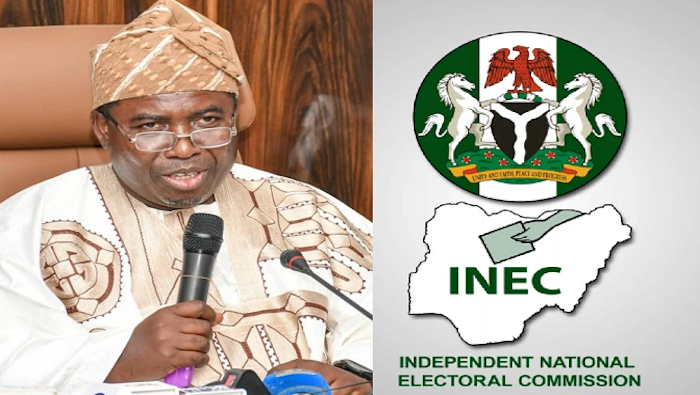
INEC Chairman, Professor Joash Amupitan, shared this update on Wednesday in Abuja during a meeting with Resident Electoral Commissioners (RECs) and the induction of a new REC for Abia State, Dr. Chukwu Chukwu-Emeka Joseph. Professor Amupitan stated, "I must not fail to inform you that we now have a new Electoral Act, 2026. We had on 13th February 2026 issued a Notice of Election before the new act was enacted. The notice was issued under the old law. With the introduction of the new Electoral Act, we have to make some adjustments and issue a revised timetable for the 2027 general election."
The commission is also re-evaluating its transportation logistics strategy to ensure better performance in the lead-up to the 2027 elections. This review was prompted by observations from the Federal Capital Territory (FCT) Area Councils election, where the Election Operations Dashboard revealed that only 45 per cent of polling units commenced operations by 8:30 am.
Furthermore, INEC has identified specific staff members in Kuje Area Council and Kabusa Ward within the Abuja Municipal Area Council (AMAC) whose actions contributed to logistical delays. These individuals will be issued queries. Additionally, transporters responsible for delays in Kwali Area Council will face blacklisting.
Professor Amupitan remarked that recent elections, including the FCT Area Council polls and bye-elections in Kano and Rivers states, provided valuable lessons for the commission. He addressed public discussions concerning alleged "voter migration" in the FCT, reaffirming that no voters were migrated in 2026 and that the initiative to improve access to polling units was implemented in 2022.
He explained that approximately 6.7 million voters were relocated from over 12,000 crowded polling units to about 17,000 less congested ones nationwide in 2022, as part of an effort to populate newly created units that initially had no registered voters. In the FCT, 411 polling units were decongested, with around 580,000 voters moved to 1,156 polling units.
The INEC chairman noted that some voters reported difficulties locating their relocated polling units. In response, he directed that a fresh text message notification be sent to all affected voters who did not participate in the 2023 general elections and whose polling units were migrated in 2022, to assist them in finding their new voting locations.
Despite extensive publicity and notifications via text and email, some voters still encountered challenges finding their polling stations. Professor Amupitan stressed the importance of continuous voter education, stating, "Our policies may be sound. Our intentions may be noble. But if citizens do not understand our processes, then the objective is only half achieved. I, therefore, direct all Resident Electoral Commissioners to intensify voter education and sensitisation in your respective states. Voter awareness must not be episodic. It must be continuous."
Logistics and punctuality were highlighted as critical areas. Professor Amupitan reported that only 45% of FCT polling units opened by 8:30 am, which he deemed unacceptable, despite all units opening by 10:00 am. He reiterated that staff involved in delays in Kuje and Kabusa would be queried and that the transporter in Kwali would be blacklisted. He added that the commission is refining its transport logistics model.
While acknowledging initial delays, he confirmed that voting proceeded in all polling units and the elections concluded successfully. He commended the generally peaceful conduct in the FCT, Kano, and Rivers, noting the absence of violence, and praised security agencies for their role.
However, he did mention an unfortunate incident at the Kuje Central Collation Centre and another in Kwali Area Council where thugs invaded the facilities. These situations were managed, and results were eventually collated. He urged RECs to enhance engagement with security agencies and stakeholders to ensure peaceful elections through deliberate planning.
Professor Amupitan also pointed out improvements in the commission's result management system, identifying result collation as a significant vulnerability. Safeguards have been added to the BVAS system to prevent manipulation during transmission to the INEC Result Viewing Portal (IReV). The Presiding Officer must now capture and upload Form EC8A, and enter party scores directly into the BVAS. The system includes internal validation checks to prevent over-voting and ensure mathematical consistency.
These measures were tested in the FCT Area Council and Kano/Rivers State bye- elections, with results uploaded to IReV proving accurate. Approximately 97% of FCT Area Council election results have been uploaded to IReV.
Regarding a viral report of a polling unit in Kwali allegedly recording 1,219 votes despite having only 345 registered voters and 213 accredited voters, Professor Amupitan confirmed an investigation. The discrepancy was found to be an error by the Presiding Officer who initially recorded "122" but corrected it to "121" after a recount. The correct result was subsequently entered into collation forms.
He concluded by stating that while no election is perfect, the commission must strive for excellence under heightened public scrutiny. He warned against absenteeism and dereliction of duty, promising strict sanctions for erring staff. He mentioned that upcoming governorship elections in Ekiti and Osun, as well as the 2027 general election, will present further challenges. Professor Amupitan emphasised that INEC's credibility is built on performance, and every instance of delayed polling unit opening or staff negligence erodes public trust. Conversely, transparent uploads, peaceful environments, and satisfied voters strengthen democracy.
The commission plans a comprehensive review and sanitisation of the voter register in preparation for the 2027 elections.
Comments (0)
You must be logged in to comment.
Be the first to comment on this article!