
Iran has issued a renewed warning to the United States following President Donald Trump's decision to deploy a substantial naval force towards the nation. This development coincides with heightened tensions stemming from a violent response to protests instigated by Supreme Leader Ali Khamenei.
The warning was articulated by senior Iranian cleric Mohammad Javad Haj Ali Akbari, who remarked that Iran could target US-linked investments throughout the Middle East if Washington decided to strike Iran. "The investments totaling one trillion dollars in the region are under the surveillance of our missiles," he stated.
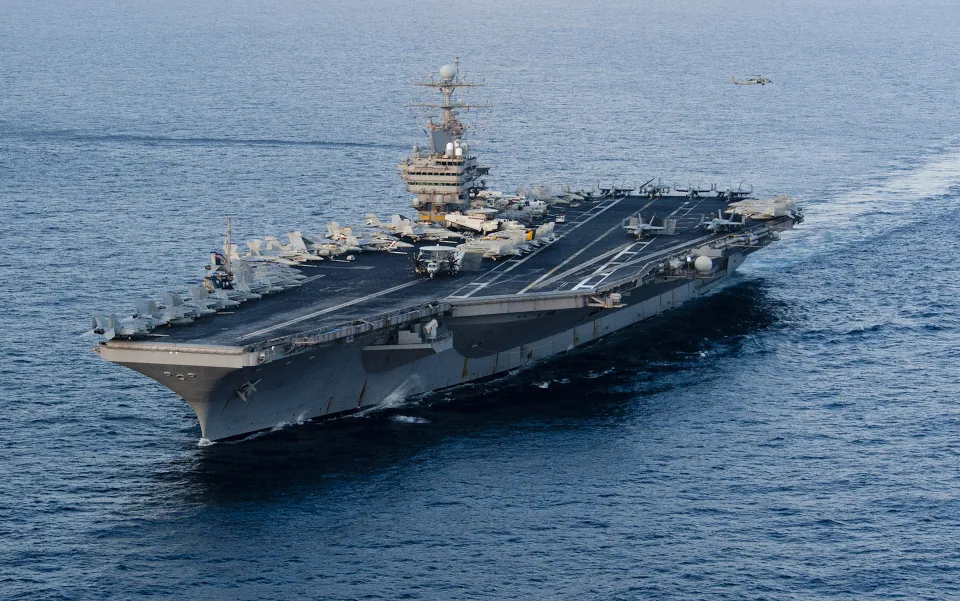
The situation has escalated after Trump issued fresh threats against Iran due to reports of executions related to protest actions, warning that severe repercussions would follow if such actions persisted. The US president affirmed that a significant naval contingent, including the aircraft carrier USS Abraham Lincoln along with several guided-missile destroyers, was on its way to the area, though he expressed hope that military force would not be necessary.
"We have an armada… heading in that direction, and perhaps we won’t have to use it," Trump remarked, adding, "We are monitoring them very closely."

Additionally, the United Kingdom has dispatched Royal Air Force Typhoon jets to Qatar, described by the Ministry of Defence as a precautionary measure. This action follows growing tensions between Tehran and Washington, coupled with concerns regarding regional stability. A spokesperson for the Ministry clarified that this deployment came at the invitation of the Qatari government and reflects the UK’s commitment to collaborating with international partners to uphold security in the Middle East.
The four Typhoon jets, capable of deploying an assortment of short- and long- range guided munitions, were sent to Qatar, located just across the Persian Gulf from Iran.
Iranian officials, however, have contested claims regarding the cessation of executions of protesters. Mohammad Movahedi, Iran’s chief prosecutor, rejected assertions that hundreds of executions had been canceled, insisting that, "This claim is completely unfounded. No such figure exists, nor has the judiciary taken any such decision."
Moreover, Iran’s foreign minister, Abbas Araqchi, stated there were "no plans for executions whatsoever," despite the mounting international unease.

The United Nations Human Rights Council is slated to convene an emergency session to address what it characterized as "alarming violence" employed against protesters in Iran, where discontent that originated over economic issues has transformed into broader calls for political reform.
Human rights organizations estimate that thousands of individuals have lost their lives since the onset of these protests, though the exact numbers are difficult to ascertain due to a nearly complete internet blackout in the nation. Analysts suggest that this protracted disruption has complicated efforts to verify reports and may be intended to obscure the true extent of the government's crackdown.
Comments (0)
You must be logged in to comment.
Be the first to comment on this article!