
The internal discourse among Iranian hardliners about whether Tehran should openly seek nuclear armament in light of increasing U.S. and Israeli hostility is becoming more pronounced, public, and urgent, as per insiders in the nation.
Since the reported assassination of Supreme Leader Ayatollah Ali Khamenei on February 28 at the beginning of the conflict, there has been a noticeable shift in power dynamics. The Revolutionary Guards are reportedly gaining more influence, leading to a rise in hardline perspectives regarding Iran's nuclear strategy, according to senior officials.
While Western countries have long harbored suspicions about Iran's nuclear ambitions, Tehran has consistently refuted such claims. Iranian officials often cite Khamenei's stance against nuclear weapons as incompatible with Islamic principles, along with their commitment to the Nuclear Non- Proliferation Treaty (NPT).
Nonetheless, there has yet to be any formal declaration to alter Iran's nuclear policy. According to one source, while no concrete steps towards weapon development have been initiated, key figures within the political establishment are now overtly questioning existing policies and advocating for modifications.
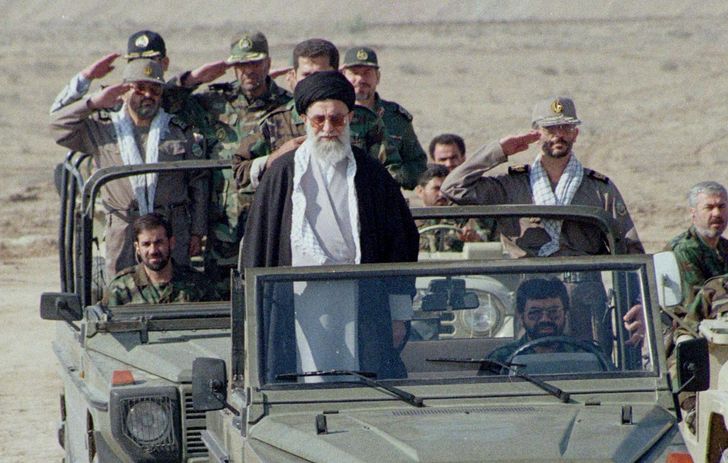
Recent military actions by the U.S. and Israel during ongoing discussions regarding Iran's nuclear potential appear to have influenced strategic assessments. Some Iranian analysts are expressing sentiments that maintaining a non-nuclear stance or adherence to the NPT may no longer be beneficial.
The prospect of withdrawing from the NPT—which was historically viewed as a mere rhetorical option—has begun to be more openly debated in state-aligned media. Discussions are increasingly addressing the idea of Iran actively pursuing nuclear armament, a topic previously considered too sensitive for public dialogue.
A notable political leader recently proposed suspending Iran's membership in the NPT while evaluating its effectiveness in ensuring national security. Other officials have echoed similar thoughts, suggesting that Iran may need to reassess its commitments in light of shifting security challenges.
Although these discussions are taking place, it is worth noting that Iran has historically leveraged threats regarding its nuclear capabilities in international negotiations without formally withdrawing from the treaty. This newly emerging rhetoric might be indicative of a similar tactic.
There remains some ambiguity concerning how rapidly Iran could advance towards nuclear development, particularly following persistent airstrikes targeting its nuclear and military sites in recent weeks.
Experts have long theorized that Iran's objective has been to maintain a 'threshold state' status—capable of quickly assembling a nuclear weapon if necessary, yet stopping short of outright development.
In the past, high-ranking military officials have warned that Iran might seek nuclear weapons if the nation’s existence were under threat, a scenario that some argue may now exist.
Khamenei's long-held religious opposition to nuclear weapons, though not formally documented, has been significant in shaping Iran's nuclear posture. With his reported death, there are growing doubts regarding whether this position will endure, especially as hardline factions within the leadership gain traction.
Comments (0)
You must be logged in to comment.
Be the first to comment on this article!