
The leadership of the Nigeria Labour Congress (NLC) has stated that the ruling from the National Industrial Court will not end the ongoing strike initiated by Federal Capital Territory Administration (FCTA) workers.
Additionally, the NLC criticized the Minister of the Federal Capital Territory, Nyesom Wike, for threatening to terminate workers' jobs less than two hours after the court made its decision.
According to Daily Trust, the National Industrial Court in Abuja had ordered the striking workers to resume their duties immediately due to unresolved demands.
In response to this development, NLC's Acting General Secretary, Benson Upah, questioned why the court did not take into account the “injustices faced by the workers due to the actions of the Minister”.
Upah pointed to the non-remittance of National Housing Fund deductions by the minister to relevant authorities, as required by the NHF Act, and similarly criticized the failure to send pension contributions per the Pension Reform Act 2014 (amended).
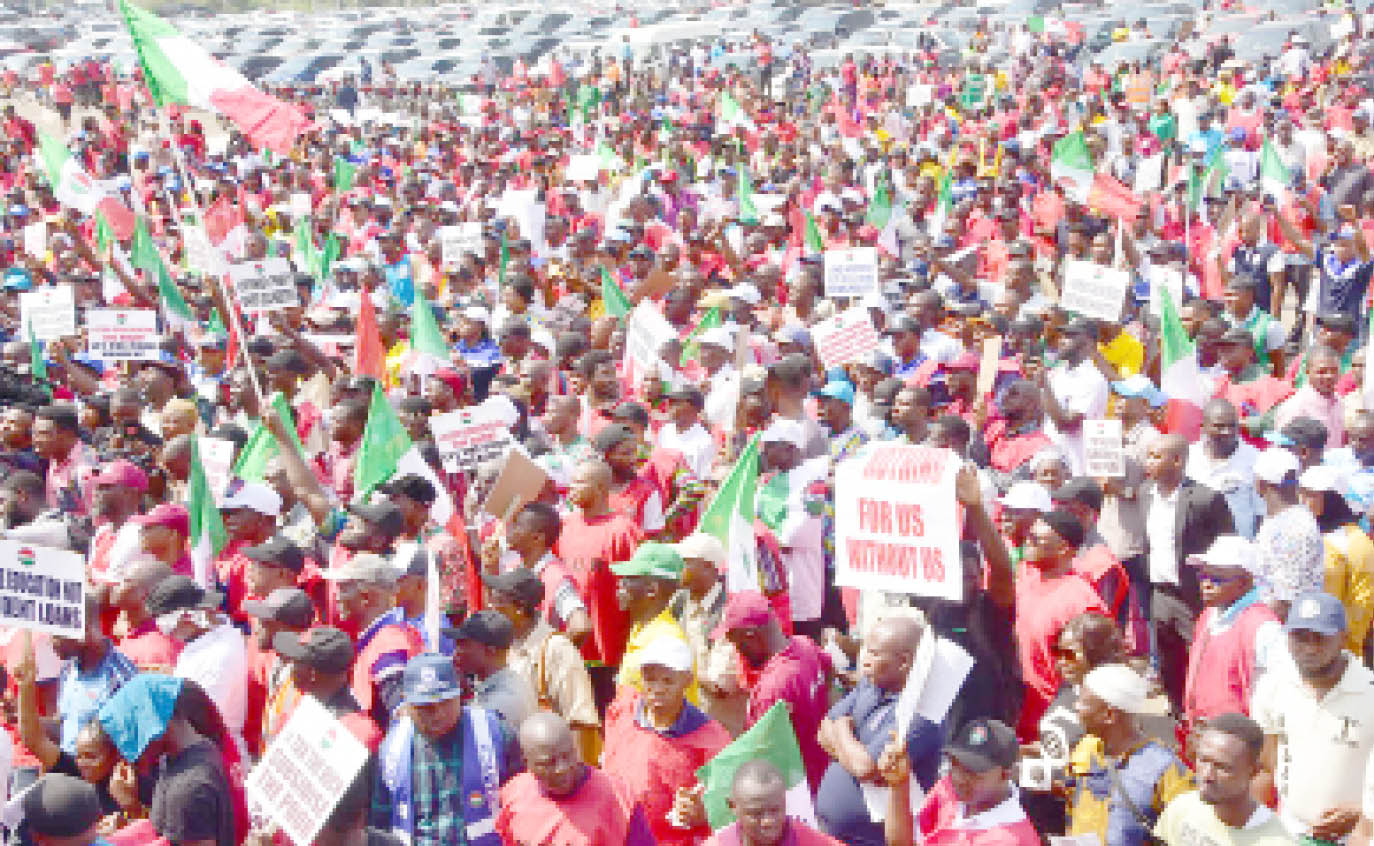
He asserted, “If the court aims to dismantle the strike and weaken the resolve of the affected workers, it has misjudged. Our morale remains unshaken, and we urge workers to stay firm in their beliefs.”
Furthermore, the labour leader announced that the Congress has formally warned any entity or individual disregarding the Pension Fund Act and National Housing Fund Act about potential serious consequences.
In expressing disappointment with the ruling of the National Industrial Court on January 27, 2026, Upah explained that the court ordered the suspension of the strike and set a new date for the matter on March 25, 2026.
“While we understand that court decisions will not satisfy all parties in a dispute, it is vital for justice to be administered equitably to all involved,” he added.
Upah expressed concern that the court failed to address ongoing violations against the large number of FCT workers by the Minister, FCTA, and FCT.
He elaborated on the violations, noting that the NHF Act penalizes failure to remit deductions within one month with penalties ranging from N50,000 to N100 million, as well as potential jail time for directors or responsible officers.
The NLC representative also pointed out similar penalties within the Pension Reform Act for late remittance of deductions, which requires payments within seven working days of salary disbursement, with continued default leading to 2% monthly penalties on the outstanding amount.
“There are additional consequences for non-compliance, beyond what has been included here,” he remarked.
“Given these circumstances, we find it regrettable that the court did not prioritize justice for the workers with even a minimal form of injunctive relief. The ramifications of a prolonged adjournment combined with the absence of any injunctive support severely undermine the workers’ cause and raise questions about the court's intent in this case.
“The Minister of the FCT quickly responded by threatening to dismiss workers before the ink on the court's order was even dry. We are doubtful that constructive dialogue can occur in such a hostile environment.
“We must also acknowledge the risks associated with courts neglecting their responsibilities. Our nation should not tread down this perilous path.
“This statement serves as a notice to all institutions, organizations, and individuals breaching the Pension Fund Act and National Housing Fund Act regarding imminent engagement.”
He concluded by urging both workers and congressional bodies to remain vigilant about the enforcement of this engagement to ensure compliance, “to dispel any thoughts of bluffing.”
Comments (0)
You must be logged in to comment.
Be the first to comment on this article!