
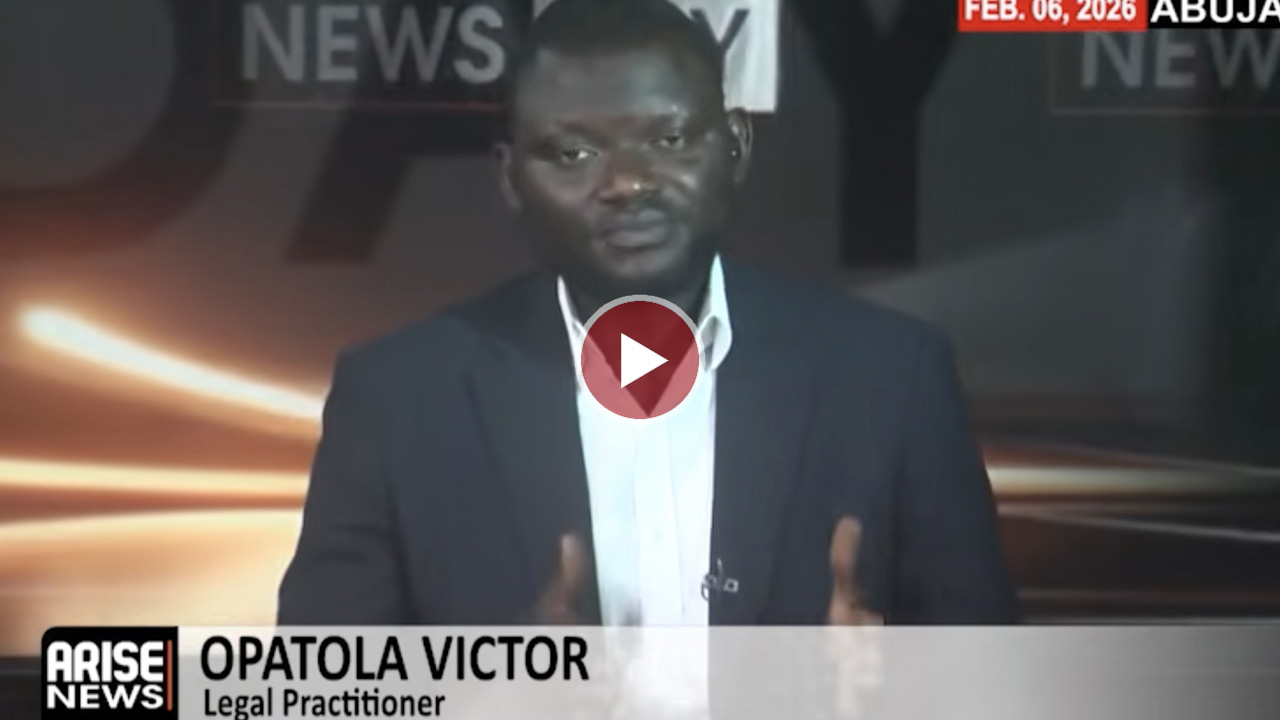
Legal analyst Opatola Victor has asserted that the discrepancies observed between laws enacted by the National Assembly and their published versions should be viewed as intentional changes rather than simple administrative errors. He cautioned that such actions pose a threat to constitutional integrity and undermine public confidence in Nigeria's legislative system.
In an interview aired on ARISE NEWS on Friday, Victor discussed the controversies linked to the Electoral Act Amendment Bill and previous issues regarding newly approved tax legislation, where the versions that received presidential assent or were published appeared to differ from those passed by lawmakers.
He stated that any law approved by the president that significantly varies from what the National Assembly legislated constitutes what he refers to as "constitutional sabotage" and should not be enforceable upon Nigerian citizens.
Victor elaborated that the matter transcends trivial clerical oversights, highlighting that gazettes are vital legal documents intended to provide public notice, thus making their contents authoritative and applicable under the law.
He contended that in instances where multiple iterations of a law exist or where the published statutes conflict with those approved by the legislature, it would be unreasonable to hold citizens accountable under such laws, which he viewed as legally perilous.
Reflecting on the earlier dispute surrounding Nigeria's tax regulations, Victor noted that the National Assembly's effort to issue certified authentic copies after receiving public criticism was an implied acknowledgment that the published versions contained errors.
He maintained that the modified clauses in the tax legislation impacted crucial aspects like tax responsibilities and duties, arguing against dismissing these changes as mere clerical errors.
Furthermore, regarding the Electoral Act Amendment Bill, Victor criticized the legislature for failing to incorporate a mandatory provision for electronic transmission of election results, leaving the decision solely up to the Independent National Electoral Commission (INEC).
He observed that this discretionary power eroded public trust during the 2023 general elections, during which INEC allegedly failed to fulfill assurances previously given to voters, ultimately breaching their legitimate expectations.
Victor warned that ongoing legislative inconsistencies within a short timeframe indicated a deeper issue of internal disarray within the National Assembly, rather than merely isolated administrative errors.
He urged Nigerians to demand accountability from their elected officials, warning that unless this concerning trend is rectified, public confidence in democratic institutions and the rule of law is likely to continue deteriorating.
Comments (0)
You must be logged in to comment.
Be the first to comment on this article!