
John Odigie Oyegun, who heads the Policy Manifesto Committee of the African Democratic Congress (ADC), has expressed regret to Nigerians for the inadequacies of previous administrations, stating that the APC-led government he supported has strayed from its original intentions.
In an interview with ARISE News on Friday, Oyegun remarked that the escalating hardship, food scarcity, and rising insecurity have driven him back into the political arena, after having distanced himself from it for a time.
"I believe I owe an explanation, a contribution, and a form of atonement to Nigeria," Oyegun stated. "Perhaps I should begin with atonement. I was actively involved in every campaign meeting and witnessed the overwhelming excitement the party generated among the public, along with the high expectations that followed."
Reflecting on his experiences with former President Muhammadu Buhari during the 2015 election campaign, Oyegun noted that early signs of trouble were overlooked.
"I recall being alongside the president during rallies where the crowds were exuberant. He questioned how to fulfill the expectations of so many. I advised him that while not every issue could be resolved, he should aim to give his best and instill hope. Unfortunately, it went awry right from the start, deepening the dissatisfaction among Nigerians."
Describing the growing plight faced by ordinary citizens, Oyegun explained that he receives daily communications from people in distress.
"In earlier times, I received messages about unpaid school fees. Now, people reach out saying they cannot provide meals for their children, pleading for any assistance. This deeply troubles me," he recounted.
He emphasized Nigeria's rich resources and questioned, "How could we have faltered so badly?"
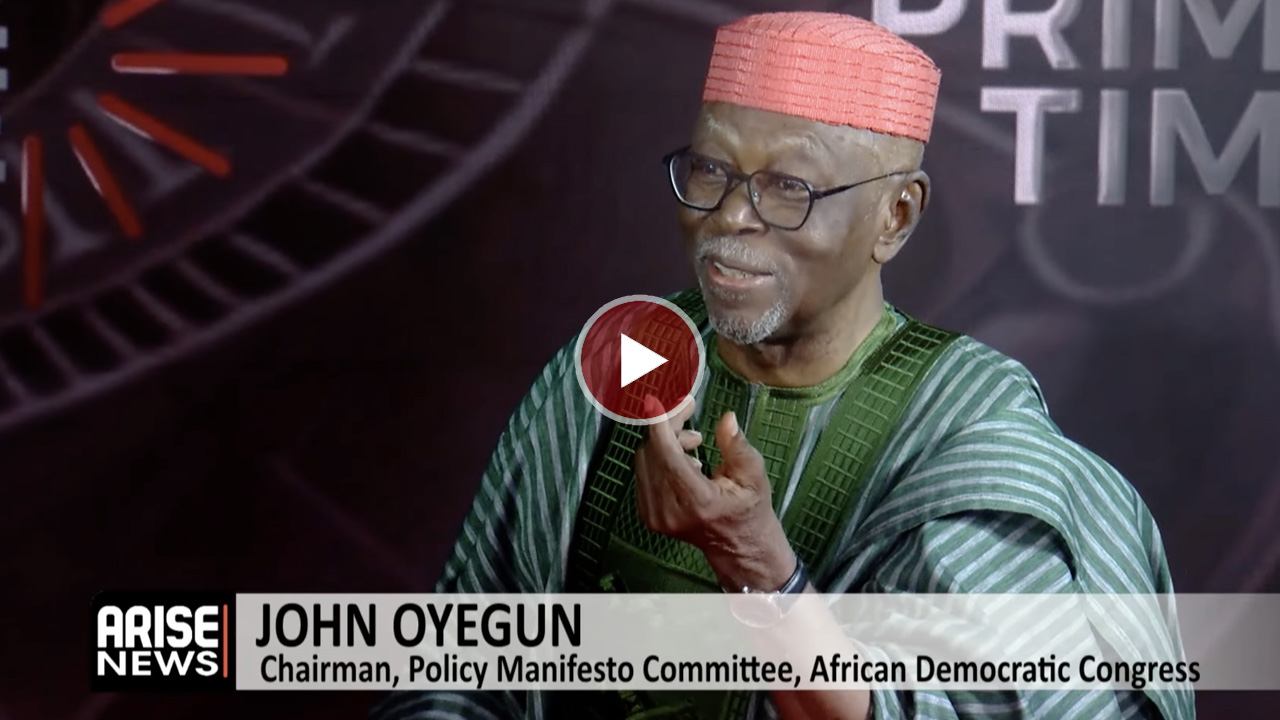
Currently leading the draft of the ADC manifesto, Oyegun asserted that the party's primary communication to Nigerians will be one of apology, underscoring that the nation can no longer afford the status quo.
"Our message must significantly differ this time. It must start with an apology: 'We are sorry for continuously failing you,'" he asserted.
He further mentioned the ADC's commitment to presenting itself as distinct from traditional parties by appealing for personal sacrifice over systemic patronage.
"Currently, we lack governors or significant political figures. Individuals are joining not for financial incentives or positions but out of a genuine belief in our potential to effect change. They are prepared to make sacrifices," he noted.
Oyegun expressed no concern over the recent wave of governors defecting to the APC, interpreting it as a moment of political clarification.
"We are quite pleased that nearly all governors have joined the APC. We would even celebrate their arrivals with music if others follow suit," he remarked.
He stated, "Now, the battle is clearly identified: the populace against the oppressors – many governors, united under one banner, all exonerated for their past actions."
Oyegun revealed that he confronted Buhari privately only a few months after he took office.
"I approached Buhari six months after he was inaugurated and expressed that his administration was deviating from what the people anticipated. His response was that he had learned from his experiences and was striving to embody a true civilian leader. However, I left that discussion feeling disheartened, and subsequent events confirmed my apprehensions."
He stated that governance under the APC quickly fell into a pattern of 'business as usual,' with fresh faces occupying Aso Rock.
Regarding President Bola Tinubu's approach to the fuel subsidy, Oyegun criticized its execution as inadequate and damaging.
"My initial reaction was that such a sudden change would have devastating effects on the populace and warranted better planning. Instead, fuel prices increased abruptly, and we have yet to stabilize. We have transitioned from hunger to starvation."
He elaborated, "Hunger signifies having just one meal per day; starvation means no meals at all. This leads to desperation. That is our current reality."
Oyegun cautioned that insecurity is not confined to traditional hotspots anymore.
"Initially, Boko Haram was primarily a challenge in Borno. Insecurity is now creeping into the South. The recent incident in Kwara illustrates this well. Reliable local sources reported that security personnel responded ten hours after the attack commenced."
He asserted that the ADC manifesto must incorporate innovative thinking to address the country's challenges.
"We must adopt unconventional strategies. 'Business as usual' cannot be tolerated any longer. Nigeria faces an existential dilemma, and this is our last chance."
He emphasized that the selection of a presidential candidate must be driven by practical considerations rather than emotions.
"Only one individual can assume the presidency. We must evaluate the scenario: if you run, what are the implications? What does the arithmetic suggest for potential alliances?"
In contemplating his legacy at the age of 86, Oyegun acknowledged past shortcomings while advocating for the persistent adherence to principles.
"We attained power, but we failed to manage it wisely. Principles cannot be overlooked; you must stand for something," he asserted.
"This nation is responsible for the well-being of its 230 million citizens. God did not err in bringing us together. Presently, we find ourselves mocked and scorned, yet we deserve so much better."
Oyegun concluded with a reflection, saying, "My wish is that in my final moments, I can look back and say that Nigeria has finally emerged from the depths of its struggles."
Comments (0)
You must be logged in to comment.
Be the first to comment on this article!