
The Rietberg Museum in Zurich has confirmed its decision to return 11 artefacts associated with the looting of the historic Kingdom of Benin to Nigeria. This move is a continuation of the efforts in Europe to return cultural heritage to Nigeria.
The museum, founded in the early 1950s and based on a collection started by German-Swiss banker Eduard von der Heydt in the 1920s and 1930s, announced that the 11 artefacts are part of its permanent collection and will be sent back to Nigeria.
The transfer will be managed through the National Commission for Museums and Monuments, a body representing the Nigerian government. The artefacts originate from Benin City, the former kingdom's capital, which suffered extensive looting during the Benin Expedition of 1897. Numerous celebrated bronze and ivory pieces from the kingdom were later scattered throughout Europe.
Included in the artefacts to be returned are two particularly acknowledged items, as emphasized by Rietberg director Annette Bhagwati. One of these is a bronze head from approximately 1850, which commemorates the ancestor of a chief and was originally situated in a royal ancestral shrine.
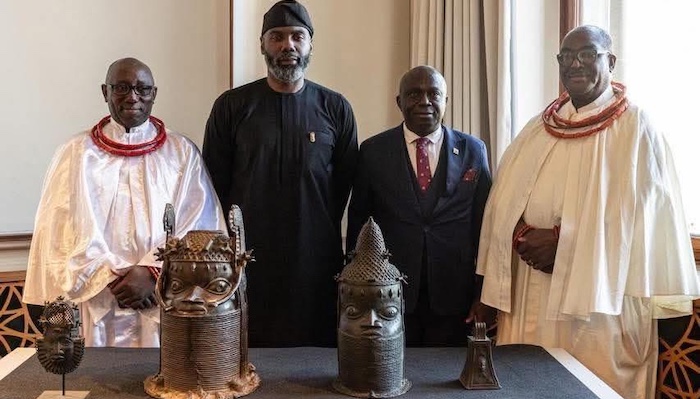
The second item is an 18th-century ivory tusk that once graced the Royal Palace, attached to a bronze memorial head and illustrating the narrative of an Oba from the 17th or 18th century.
Bhagwati remarked, “These two works, possessing significant ritual importance, are scheduled for transfer to Nigeria, most likely this summer.”
The historical journey of the ivory tusk exemplifies the intricate pathways looted artefacts often traverse. It was acquired by British collectors and sold at a Sotheby’s auction in London in 1962 before being obtained by the Rietberg in 1993 via a dealer from Zurich.
While the ownership of all 11 items will change, nine will remain in Zurich under specific arrangements. Bhagwati explained that this entails Nigeria's desire for the artistic heritage of Benin to continue to be prominently represented in Switzerland.
“Those on the Nigerian side expressed a strong desire to ensure that the history and artistry of Benin remain highlighted in Switzerland,” she stated.
Among the items remaining under Swiss custody is a 17th-century pendant bronze mask, which was also looted during the 1897 raid on the Royal Palace. This piece had gone through various collections in Germany and America after being auctioned in 1902. It returned to Europe via a Dutch dealer in 2009, but will stay at the Rietberg as a permanent loan despite the ownership change.
The restitution initiative is part of the Benin Initiative Switzerland, which was launched in 2021 under the aegis of the Rietberg Museum. This initiative evaluated the provenance of Benin artefacts housed in Swiss collections and identified that at least 55 objects were likely linked to the 1897 looting.
This action positions Zurich alongside other European entities, such as Berlin’s Ethnologisches Museum and the Wereldmuseum Leiden, that have pledged to return artefacts from Benin as global pressure mounts for the repatriation of cultural heritage taken during colonial times.
Comments (0)
You must be logged in to comment.
Be the first to comment on this article!