
Professor Sam Amadi, the Director of the Abuja School of Social and Political Thought and an analyst for Arise, has stated that Nigeria's inability to appropriately assess security risks is weakening its response to security threats.
During an interview with ARISE NEWS on Friday, Amadi emphasized how this lack of clarity affects the nation's security measures.
"I’m not a soldier; I’m a policy strategist. It appears there is a significant ambiguity regarding the evaluation of the risks and challenges we confront," he remarked.
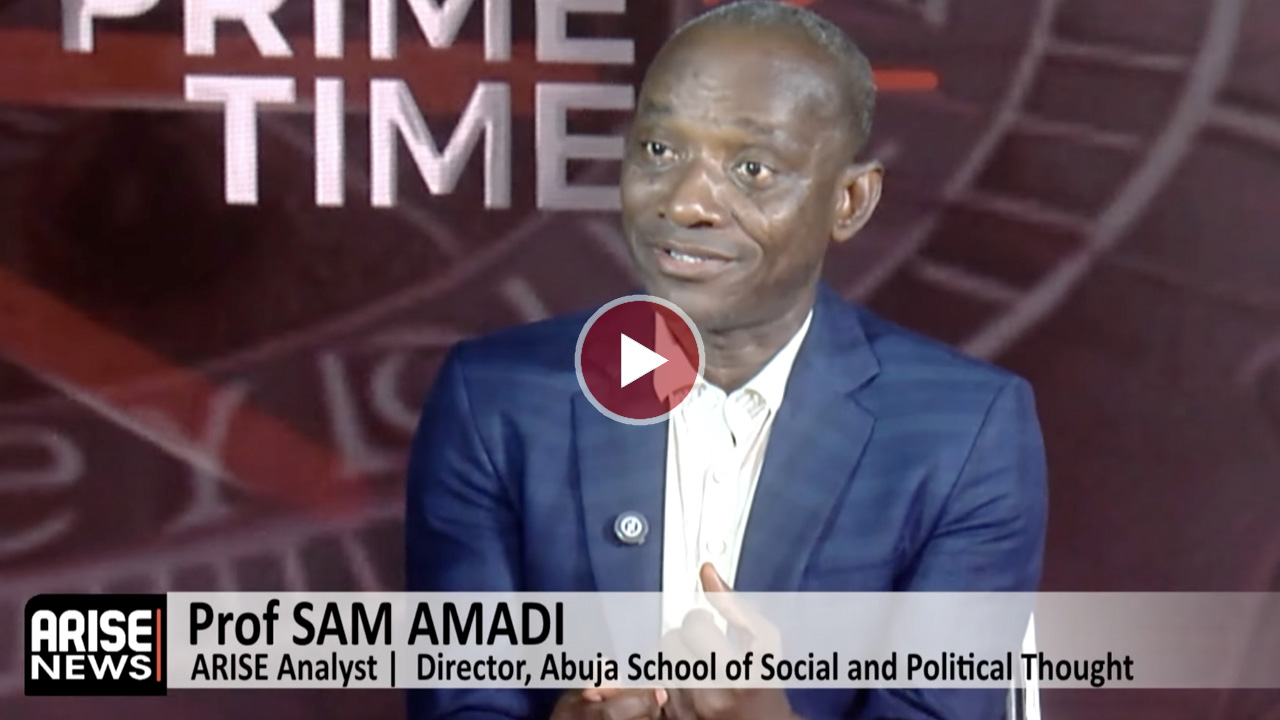
He further elaborated that the All Progressive Congress (APC) rose to power due to the People's Democratic Party's (PDP) failure in addressing terrorism issues. Yet, nearly a decade later, the ongoing insecurity reflects a persistent lack of clear risk evaluation and strategic direction.
"The APC emerged largely because of the perceived failures of the PDP concerning terrorism and security issues; Nigeria was recognized globally as one of the most fragile and terror-stricken nations. One would expect that the APC, starting with President Buhari, would have effectively articulated the threats we face.
Thus, with nearly ten years in power, if the threat remains unchanged, and if strategic leadership is still lacking in mitigating this threat, it calls attention to the clarity of our risk assessments and the strategies we employ to address them," he explained.
Moreover, Amadi pointed out that the audacity of terrorists against the military has increased, attributing this trend partly to leadership that has made grand promises but failed to deliver results.
He elaborated, "When Christopher Musa was appointed as the new Minister of Defense, there was an expectation of receiving a decisive leader who understands the intricacies of winning this war. However, several months later, people are still questioning the existence of any new strategy. While I don’t serve in military roles, I understand that clarity in recognizing risk levels is crucial to any campaign."
Amadi criticized the ambiguous perception within leadership regarding terrorists, stating that viewing them as “brothers” complicates proactive and decisive action.
"We must have a clear commitment to defeat the enemy. I sense a hesitation in Nigerian leadership regarding definitions. Our initial questions should be: Who exactly is classified as a terrorist? What objectives do we have towards them? How do we categorize such entities? It becomes problematic when public figures, including the NSA, refer to them as 'some of our brothers', as that introduces a moral complexity that hampers aggressive military responses. The essence of a military force is to decisively confront the enemy," he urged.
He reiterated that without clear definitions and objectives, the state cannot take effective action against terrorism. He concluded, "If we can't clearly identify who poses a threat—if we perceive them as one of our own, regardless of their location—then the state's response will inherently lack decisiveness. The core issue lies in our failure to accurately diagnose the situation, define our challenges, assess them adequately, and set humane yet clear objectives for resolution."
Comments (0)
You must be logged in to comment.
Be the first to comment on this article!