
Abdul Ningi, who represents Bauchi Central, stated that the Senate can indeed allow its voting process on the subject of real-time electronic transmission of election results to be transparent. This statement was made amid increasing public debate over the recent amendments to the Electoral Act.
During a television interview, Ningi spoke ahead of an emergency plenary session of the Senate, which was convened in light of public discontent regarding how the issue of electronic result transmission was handled following the amendment bill's third reading.
When questioned about the possibility of Nigerians observing how individual senators cast their votes on the matter, Ningi affirmed that the Senate’s regulations could facilitate such transparency.
"I believe it is possible. It largely hinges on the presiding officer's choice as the law permits it," he stated.
He further illustrated that a senator could formally announce their stance on e-transmission, making it officially recorded, thus enabling a transparent process for accountability.
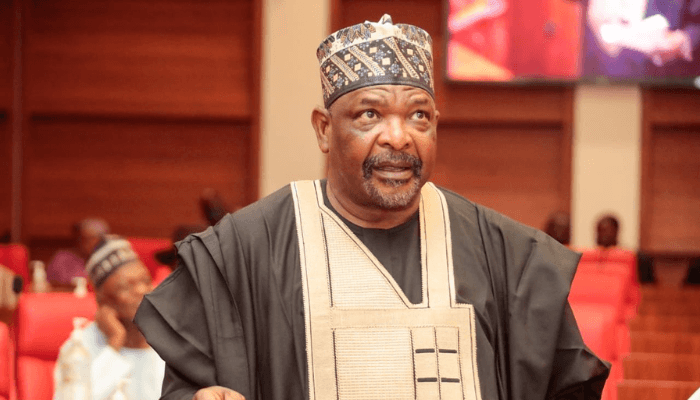
Ningi emphasized that confusion has arisen due to the manner in which Senate procedures were conducted, asserting that comprehensive records of voting and discussions must be accessible.
He remarked, "It is critical to analyze what the votes and proceedings reflect today so that we know how to proceed."
Ningi raised concerns over the handling of a motion for amendment by Manguno, questioning the procedure that led to that decision, such as who initiated the questioning and whether it was sufficiently discussed.
He claimed that many senators were not adequately informed before the resolution was reached, stating, "One of the reasons there is unrest is that the Senate President should have consulted us as a committee and asked for more information on Manguno's proposal."
He also rejected the interpretation that the divide over the issue stemmed from partisan politics, insisting, "I'm here to assure you that this issue is not politically motivated. It has never been about parties."
Ningi pointed out that should the Senate President make a decision on the matter, it would enforce the majority's choice regardless. He expressed his frustration over what he regarded as unfair broader critique aimed at the Senate as a whole.
"It is disheartening to witness total condemnation of the Senate. I can assure you that a significant majority of senators support the House's position on this matter," he stated, adding that governors from various political parties—both APC and PDP—have endorsed electronic transmission of results.
The Senate has faced harsh backlash since it opted against mandating real-time electronic transmission of election results as part of the amended Electoral Act. The exclusion of this clause would have mandated that presiding officers of the Independent National Electoral Commission directly send polling unit results to the IREV portal instantly after signing.
Instead, the Senate retained the current provision that allows results to be transferred "in a manner prescribed by the Commission."
Senate President Godswill Akpabio has defended this approach, explaining that the removal of the term "real-time" was intended to prevent legal challenges linked to potential network issues.
"We merely suggested removing the term 'real-time' to avoid complications should a network failure lead to court disputes, as someone might argue the results should have been transmitted in real time," Akpabio clarified.
Despite these reasons, protests erupted in Abuja with demonstrators demanding that the lawmakers enshrine "real-time electronic transmission" in the revised law.
Comments (0)
You must be logged in to comment.
Be the first to comment on this article!