
ARISE News analyst Dayo Sobowale has declared that the recurring assaults on communities during Christian festivals highlight the inadequacy of Nigeria’s security strategies in tackling the persistent insecurity plaguing parts of the nation.
In an interview on ARISE News on Monday, Sobowale characterized the recent violence in Benue and Kaduna States as tragic and, unfortunately, predictable, given the established pattern of such incidents during religious celebrations.
"Tragic incidents like these have been happening on seasonal occasions, precisely Christian festivities," he observed.
He emphasized that while the violence is not uniform across the country, specific regions, particularly in the Middle Belt, have been repeatedly targeted, suggesting a deliberate pattern.
"Persistently, at this period of time, these sort of things happen in Kaduna, Benue, and Plateau State," he pointed out.
Sobowale indicated that the nature and timing of these attacks suggest a degree of planning, recalling instances where communities were targeted just before festive gatherings.
"Some people… have raised concern that these things are meticulously planned," he remarked.
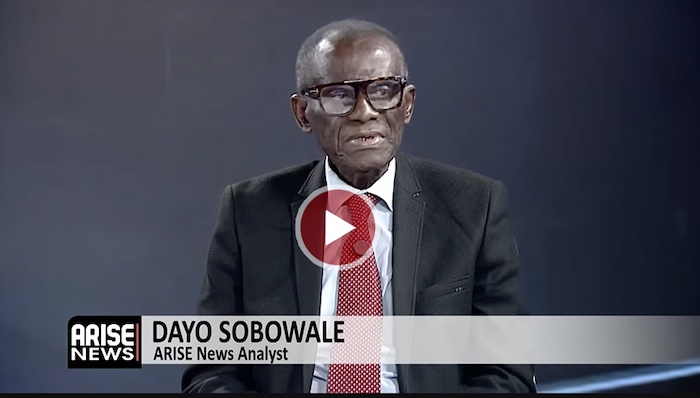
While acknowledging past critiques of the military, Sobowale described the overall security landscape as intricate and challenging to resolve.
"We have a protracted, intractable insecurity problem on our hands," he stated.
He cautioned that the ongoing occurrence of such attacks, especially during key religious periods, has drawn significant international attention to Nigeria’s security situation.
"There is the global charge… that we are practicing genocide against Christians… that is a very weighty and disturbing charge," he commented.
Regarding the underlying causes of the violence, Sobowale identified the long- standing conflicts between herders and farmers as a primary driver, characterizing it as a dispute over land and natural resources.
"The crucial cause is Fulani herdsmen versus farmers… it’s a matter of water and space," he explained.
He noted that while similar conflicts are present throughout the Sahel region, Nigeria has struggled to implement effective and equitable solutions.
Sobowale also expressed concerns about potential biases within the governing structures, suggesting that such biases could be hindering decisive action.
"It’s as if there’s some empathy… in the power structure for the Fulani herdsmen," he said.
Despite these obstacles, he refuted the notion that recurring attacks should be accepted as unavoidable.
"God forbid… the results show clearly that the security strategy… have not been able to curtail these things," he asserted.
He underscored the responsibility of the government and security agencies to prevent these incidents from becoming commonplace.
Turning to legislative measures, Sobowale expressed doubt about their efficacy, highlighting that existing laws, such as those prohibiting open grazing, have not been consistently enforced.
"They have not functioned as legislated," he stated.
He also questioned the extent of accountability for past attacks, suggesting that the absence of repercussions might be encouraging a cycle of violence.
"I don’t think there has been accountability," he remarked.
Sobowale concluded that beyond military interventions, Nigeria must address the deeper political, social, and structural issues fueling the insecurity.
"We have to be able to identify… who is the enemy within… and not sweep [it] under the carpet," he urged.
Sobowale’s analysis underscores the pressing need for a more robust and accountable security framework, warning that without tackling the fundamental causes, cyclical violence, particularly during sensitive times, is likely to continue.
Comments (0)
You must be logged in to comment.
Be the first to comment on this article!