
After a five-year hiatus, the Argungu Fishing Festival is set to make its return from February 11 to 14 in Kebbi State. This event, rich in tradition and community involvement, is highly anticipated by many.
As the festival approaches, key points of interest regarding the Argungu Fishing Festival are worth noting, highlighting its significance as one of Nigeria's most captivating cultural events.
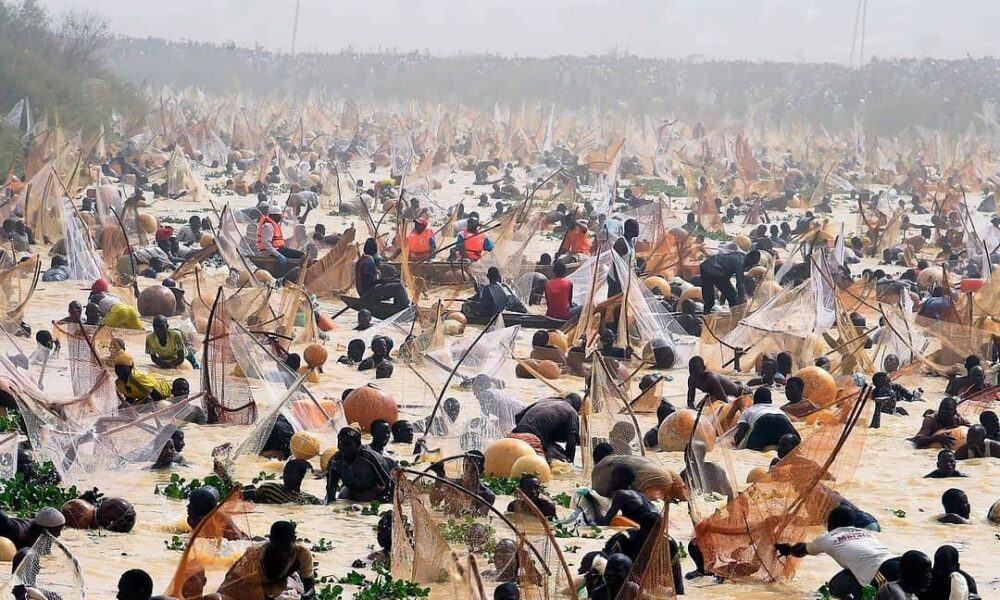
The festival, which was first held in 1934, serves as a symbol of peace, originating as a reconciliation initiative after prolonged tensions between the Kebbi Kingdom and the Sokoto Caliphate. Over the years, it has evolved into a prominent cultural gathering that fosters unity and celebrates a shared heritage, maintaining its importance even after the resolution of past conflicts.
Typically held in February, the festival coincides with the conclusion of the farming season and the onset of fishing season, aligning with the lifestyle of the local inhabitants who engage in both agriculture and fishing. This timing is crucial, as it reinforces the community's traditions linked to the river's significance.
Before the fishing competition commences, a cultural ritual is performed to secure the river's blessing. This responsibility is entrusted to the Sarkin Ruwa, who conducts the necessary sacrifices prior to the event. Until this ritual is completed, fishing in the Mata Fadan River is prohibited, as it indicates the river’s readiness for the competition.
The Sarkin Ruwa plays a vital role as the traditional guardian of the Mata Fadan River, a duty passed down through generations. His responsibilities extend beyond conducting the rituals; he also ensures the river remains safe for competitors, which includes keeping crocodiles away and summoning fish from adjacent waters before the contest.
The Mata Fadan River serves as the festival's central venue, where thousands of fishermen come together for the competition. At the start of the event, signaled by a gunshot, participants enter the waters armed with fishing nets and traditional calabashes, competing to capture the largest fish. While women do not directly fish, they actively partake by joining the drumming ensembles that enliven the atmosphere. The fisherman who successfully catches the biggest fish receives a reward, with historical records indicating that one of the largest captured weighed up to seventy-five kilograms.
Comments (0)
You must be logged in to comment.
Be the first to comment on this article!