
Following Nigeria's return to civilian governance in 1999, then-President Olusegun Obasanjo sought to revitalize the economy after years of military rule dysfunction. Initially met with skepticism, his liberal economic strategies ultimately succeeded in lowering inflation, attracting investments, and achieving approximately 7% annual GDP growth by the end of his second term, though this progress eventually stalled.
In the past decade, per capita GDP has diminished. However, new evidence indicates the possibility of a resurgence reminiscent of the post-Obasanjo economic upturn, as suggested by some analysts.
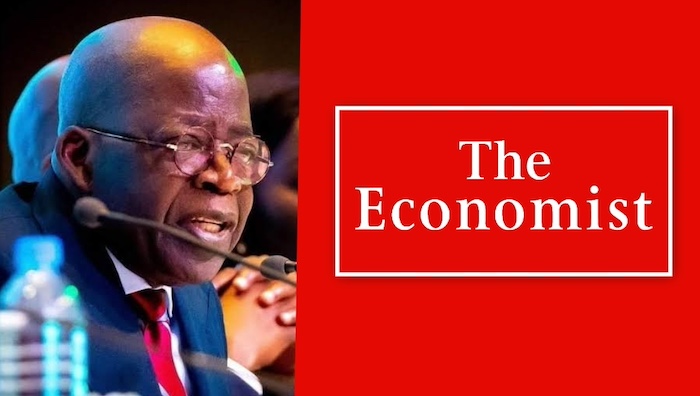
Over the last two and a half years, Bola Tinubu, a former Lagos governor from Obasanjo's era who was elected president in 2023, has pursued his own structural reforms. As he prepares for a second presidential campaign in 2027, early signs suggest these reforms may begin to yield beneficial results.
Mr. Tinubu confronted significant challenges upon his inauguration in 2023, inheriting a central bank burdened with $7 billion in unmet obligations—equivalent to 1.4% of GDP—prompting a drastic exit of international investors. The central bank had lost credibility due to a dangerously lax monetary policy, mismanagement of dwindling foreign reserves, and efforts to maintain an untenable multi-tiered currency exchange system. In 2022 alone, the beleaguered government incurred $10 billion in costs tied to a damaging fuel subsidy.
To remedy these issues, Mr. Tinubu's administration implemented comprehensive reforms, including the elimination of the fuel subsidy and the abandonment of the multi-tier exchange rate, allowing the naira to float freely.
The central bank adopted a stringent monetary policy to mitigate the ensuing inflationary pressures. Additionally, measures to enhance security in the Niger Delta and attractive tax incentives for investors were introduced to reverse declining oil production.
Nearly three years later, Nigeria's population of 230 million—particularly the impoverished and middle-class residents—continues to grapple with rising fuel and food prices. Poverty has escalated, yet signs emerge that Mr. Tinubu's harsh strategies are starting to bear fruit. The annual inflation rate, which reached a nearly three-decade peak of 34.8% in December 2024, has since decreased to 15.2% by December 2025.
Economic growth is showing revival with the IMF projecting a 4.4% expansion for Nigeria in 2026. Following two steep devaluations in 2023, the naira has stabilized, and the central bank’s foreign exchange reserves have surged to $46 billion, the highest point in seven years.
These improvements in macroeconomic stability are beginning to restore confidence among investors. On January 22, Shell, a British oil company, expressed optimism about finalizing plans in 2027 to develop a $20 billion offshore oil field that has remained untapped for over two decades. Likewise, Exxon Mobil, a U.S.-based corporation, has pledged $1.5 billion for deepwater development through 2027.
Local business leaders are similarly optimistic. Oil and gas production is on an upswing, bolstered by local companies repairing leaks and enhancing output from onshore operations in the Niger Delta, now considered safer due to Mr. Tinubu’s security initiatives.
These developments may grant the government additional financial flexibility, especially as a more affordable naira enhances the competitiveness of Nigeria’s non-oil exports, including products like cocoa and cashew nuts.
Recent reforms in taxation and revenue collection are additional projects by Mr. Tinubu's government that could further elevate revenue streams in the upcoming years. Reducing inflation should also progressively alleviate the cost-of-living challenges faced by citizens.
However, even the most hopeful observers remain guarded. Savings from the discarded fuel subsidy have primarily been allocated to servicing a continuously rising public debt. Presently, approximately 60% of government revenues are consumed by debt obligations.
On January 20, Nigeria's finance minister conveyed the administration's goal of reducing borrowing in the current year, although existing budget forecasts indicate this may be unrealistic. "The government is financially strapped. There is nothing available for future investment, that is the stark reality," remarks Esili Eigbe, a Nigerian consulting expert.
Unless drastic measures are taken to cut civil service salaries or restructure debt to lower costs, the increased revenue from recent tax reforms is unlikely to be allocated for much-needed infrastructure improvements or to enhance public health and educational services. "The deficit may have diminished, yet there appears to be no inherent ability to advance capital projects," asserts David Cowan, an economist with Citi.
This situation implies that it will be an extended period until ordinary Nigerians, who have borne the brunt of Mr. Tinubu's reforms, start to perceive tangible benefits.
The struggle to afford food has been particularly acute, affecting not only the 42% of Nigerians surviving on less than $3 daily, as categorized by the World Bank as living in extreme poverty, but also middle-class urban dwellers. The price for a kilogram of rice has nearly increased by four times since May 2023, while salaries have scarcely changed. Despite the current decline in inflation, many individuals still find it difficult to secure adequate nutrition.
In the early 2000s, Mr. Obasanjo's reforms aimed to enhance economic vitality and improve citizens’ living standards by attracting new capital investments into newly privatized industries. By 2007, domestic enterprises were valued at $85 billion, a substantial growth from $3 billion in 1999.
In contrast, Mr. Tinubu's strategy thus far has primarily revolved around stabilizing the economy and revitalizing the country's struggling oil and gas sector. To usher in a more prosperous era for Nigerians, he will need to transcend these immediate priorities.
Comments (0)
You must be logged in to comment.
Be the first to comment on this article!