
President Donald Trump reportedly conveyed his dissatisfaction with NATO during a significant private discussion with Secretary-General Mark Rutte, highlighting growing divisions within the alliance regarding the military actions involving Iran.
The meeting, which spanned over two hours at the White House, was described as a period of candid and direct dialogue between the leaders. Post-meeting, Rutte characterized the talks as open, acknowledging Trump's frustration with several member nations of the alliance, while also noting that the conversation took place between "two good friends."
Further intensifying the critique, White House spokeswoman Karoline Leavitt quoted Trump as stating that NATO had been "tested and they failed" during the period of conflict with Iran. These comments reflected a deepening discontent in Washington regarding the extent of support received from European allies during the US military operations.
Reports indicate that several NATO member states were hesitant to engage directly in the conflict. Some nations reportedly denied US military aircraft passage through their airspace, while others refused to dispatch naval assets to help safeguard the crucial Strait of Hormuz, a vital chokepoint for international energy shipments.
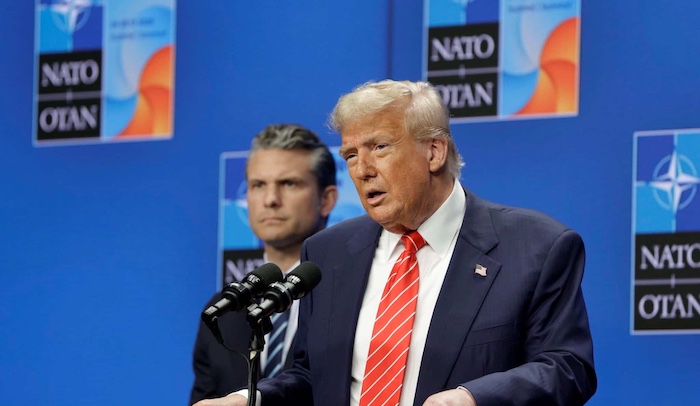
While Rutte did not specifically name any countries, he conceded that some alliance members had not met expectations during the Iran operation. Nevertheless, he pointed out that a majority of European nations had contributed in various capacities, suggesting a varied response rather than a complete collapse of collaboration.
Following the meeting, Trump echoed his sentiments on the social media platform Truth Social, asserting that NATO had not provided the necessary backing to the United States and questioning whether such support would be forthcoming in the future. In preceding weeks, he had frequently referred to the alliance as a "paper tiger" and had floated the possibility of the US withdrawing from the 32-nation bloc.
The exchange occurred even as Trump had announced a provisional halt to attacks on Iran, implementing a two-week ceasefire. Despite this development, the political aftermath of the conflict continued to strain relations between the US and Europe, with diplomatic tensions showing no signs of abating.
Leavitt further elaborated on the administration's viewpoint, accusing NATO member states of not supporting the American people despite profiting from defense frameworks funded by the US. She indicated that Trump's intention was to directly address Rutte concerning burden-sharing and alliance obligations.
Trump also urged nations reliant on Gulf oil to assume greater responsibility in countering Iran's influence over the Strait of Hormuz. However, European diplomatic sources suggested that many countries were disinclined to participate in maritime security or mine-clearing initiatives while hostilities were ongoing.
Analysts described the disagreement as a critical juncture for NATO. Oana Lungescu, now associated with the Royal United Services Institute, cautioned that the alliance was at a "dangerous point" amidst escalating geopolitical challenges.
The disputes over Iran added to existing points of contention concerning Ukraine, defense expenditure, and the US foreign policy agenda. Trump's positions on Russia, his criticisms of Ukraine, and prior remarks about Greenland had already caused unease among European allies.
Notwithstanding the strain, US officials privately assured European governments of America's continued commitment to NATO. In parallel, Rutte aimed to foster ongoing dialogue and explore avenues for enhanced defense collaboration, encompassing discussions on both the Iran conflict and the war in Ukraine.
Comments (0)
You must be logged in to comment.
Be the first to comment on this article!