
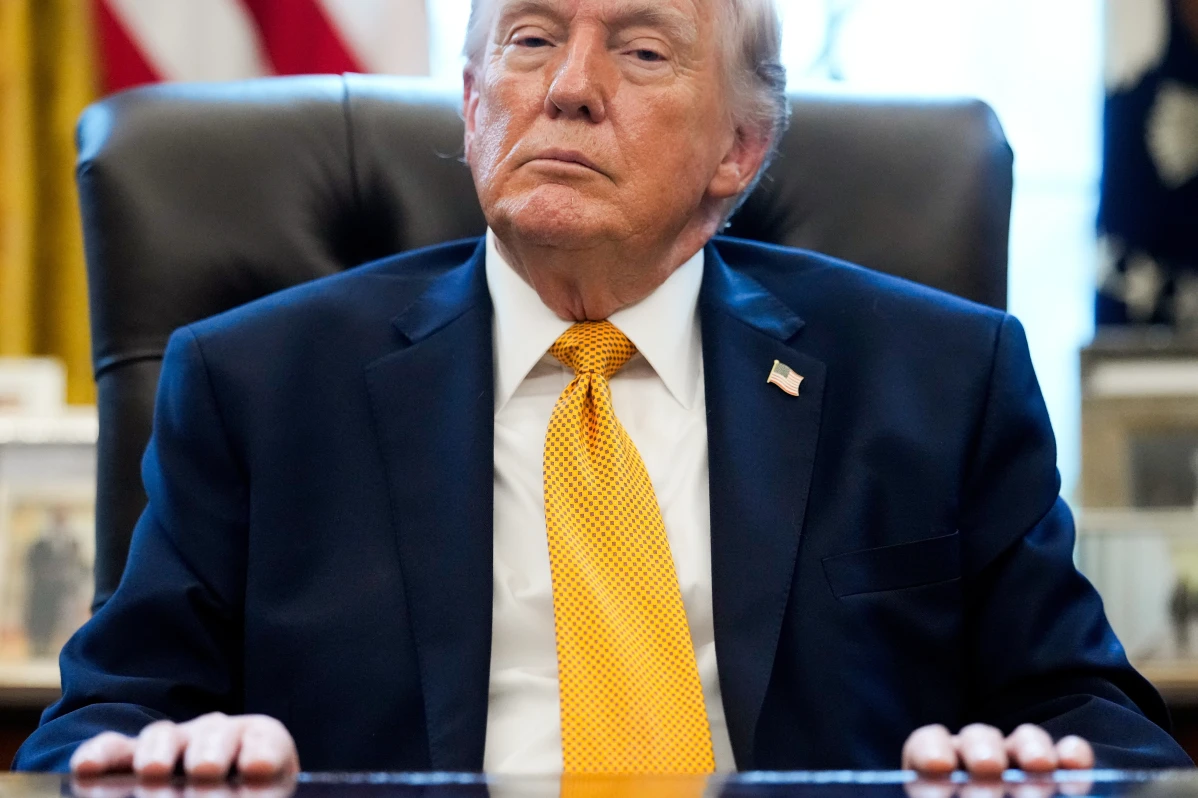
On Tuesday, President Donald Trump launched a scathing critique against NATO allies for their refusal to support initiatives to navigate the Strait of Hormuz, asserting that the United States is self-sufficient in addressing threats from Iran.
Speaking at the White House during a meeting with Irish Prime Minister Micheál Martin, Trump stated that the military alliance has demonstrated a failure in loyalty at a critical juncture.
‘I believe NATO is making a significant error,’ Trump remarked. ‘I have often questioned whether NATO would stand by us when needed. This was an important test.’
These comments followed a series of rejections from U.S. partners who opted not to partake in a suggested mission meant to escort ships through this vital passage. French President Emmanuel Macron declared that France would ‘never’ take part under the current situation, insisting that stability must first be established.
Despite the opposition from allies, Trump asserted that the United States is fully capable of unilateral action.
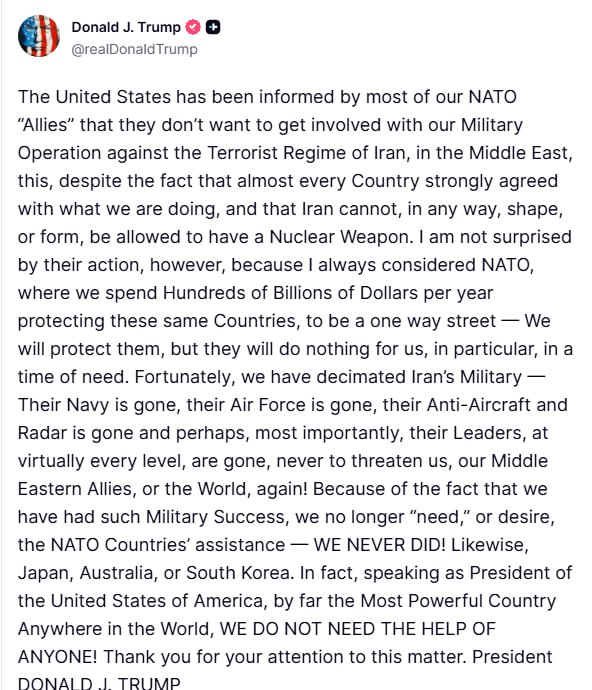
‘We don’t need too much help. We don’t require any assistance,’ he stated. He later reinforced this idea in a social media post, indicating that the U.S. has attained sufficient military achievements to forgo NATO’s involvement.
Expanding his criticisms, Trump described NATO as functioning as a ‘one-way street,’ claiming that nations like Japan, Australia, and South Korea are hesitant to engage. He indicated a potential reassessment of America’s relationship with NATO while clarifying that there are no immediate changes planned.
Trump took specific jabs at world leaders, mentioning British Prime Minister Keir Starmer’s lack of support as a ‘major mistake’ and dismissing Macron’s position, predicting the French leader would soon be out of office.
Tensions in the Strait of Hormuz are escalating following Iran's targeting of regional energy facilities and threats to oil vessels, affecting one of the global shipping routes critical for crude oil supply.
Trump presented mixed messages regarding the conflict, referring to the situation in Iran as ‘merely a military operation’ and implying that U.S. involvement might conclude shortly, while remaining ambiguous about the future direction for Iran’s governance.
The ongoing conflict across the Middle East has led to rising global oil prices and is intensifying the pressure on U.S. allies to clarify their positions.
Comments (0)
You must be logged in to comment.
Be the first to comment on this article!