
Nobel Laureate, Professor Wole Soyinka, issued a warning on Thursday, emphasizing that societies which disregard their historical narratives and overlook injustices are at risk of succumbing to tyranny. He underlined the necessity of cultural identity and historical consciousness as vital components for achieving justice and national rejuvenation.
Speaking at the centenary celebration of the Yoruba Tennis Club in Lagos, Soyinka reflected on the club's roots in the broader fight for social freedom, dignity, and self-definition among Nigerians.
As the event's Guest Lecturer, Soyinka noted that the establishment of the Yoruba Tennis Club was not merely a social initiative but part of a historical endeavor aimed at reclaiming dignity amidst oppression.
He referred to the name of the club as a potent statement of identity, challenging the notion that embracing one's Yoruba heritage is incompatible with universal values.
“What’s wrong with being Yoruba?” Soyinka posed, asserting that cultural grounding does not preclude one from having cosmopolitan tendencies.
He argued that humanity should be organized around acknowledging and respecting origins rather than cultural erasure.
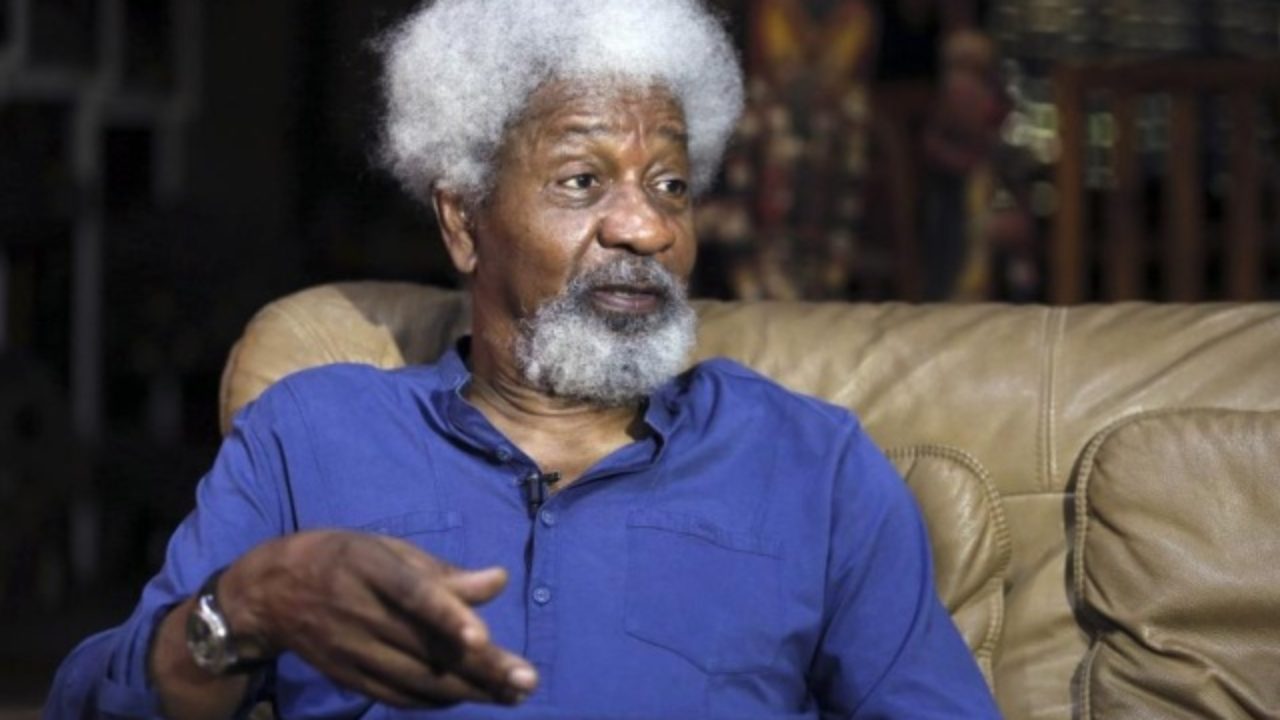
“The founders of the club clearly knew who they were and what they fought for,” he declared.
Soyinka further recalled Nigeria’s journey post-independence, indicating that many leaders were more focused on replacing colonial figures than dismantling the unjust structures left behind.
He explained that the excitement surrounding independence often masked the necessity for deep reflection regarding governance, accountability, and justice.
The playwright revealed that his initial work, ‘A Dance of the Forests,’ was intentionally cynical, meant as a caution against repeating past mistakes.
Contrary to expectations that the play should have celebrated independence, Soyinka emphasized that the true work of nation-building had only just begun.
“The future is not solely about breaking free from the past,” he remarked, stressing that progress entails remembering past errors and learning from them in order to avoid repeating them.
He cautioned that tyranny often does not emerge abruptly; instead, it manifests when societies disregard justice, silence opposition, and allow leaders to comfortably assume the roles of past oppressors.
“The inability to address historical injustices leaves nations susceptible to the recurrence of abuse and oppression,” Soyinka stated.
He asserted that organizations such as the Yoruba Tennis Club bear a responsibility beyond mere celebrations, calling on them to maintain their roles as platforms for reflection, discussion, and moral fortitude as Nigeria charts its future.
In conclusion, Soyinka argued that the centenary lecture should not only commemorate the past but also serve as a rallying cry for renewed dedication to justice, cultural integrity, and an awareness of history.
Earlier, Chief Olawumi Gasper, Chairman of the Yoruba Tennis Club, reiterated the club's dedication to preserving history, culture, and intellectual leadership. He described the milestone as representative of the institution’s lasting legacy and its ongoing influence in shaping Nigeria’s cultural and intellectual realms.
He noted that founded a century ago, the club remains rooted in history while continuously addressing modern national and global challenges.
“The Yoruba Tennis Club has long been a hub for leaders, thinkers, and professionals focused on societal advancement,” he observed.
Gasper also praised Soyinka, acknowledging him as a figure of significant intellectual depth, cultural richness, and ethical insight. He highlighted the interactive session as a valuable opportunity for attendees—many of whom have engaged with Soyinka’s works—to learn directly from a prominent figure in African intellectual circles.
He paid homage to the founding members of the Yoruba Tennis Club, recognizing their foresight, sacrifices, and unwavering commitment to preserving the institution's traditions and principles.
Comments (0)
You must be logged in to comment.
Be the first to comment on this article!