
The Vice President of the Yoruba Tennis Club, Babatunde Sobamowo, has commended the club as Nigeria’s foremost guardian of cultural and civic values as it approaches its centenary anniversary with a series of events planned for the year ahead.
In a recent interview with ARISE News, Sobamowo remarked that the club's distinctiveness over the past century stems from its commitment to traditions, values, and resilient leadership since its inception.
"Over the last 100 years, we have engaged in numerous developmental initiatives," Sobamowo noted.
He mentioned the club's impressive facilities, including the Greetings Hall built in the 1990s and an Olympic-sized lawn tennis court that stands as a testament to Nigeria's sporting prowess.
However, Sobamowo emphasized that the essence of the club lies deeper than its physical attributes.
"The Yoruba Tennis Club is distinguished not only as the oldest indigenous sports and social institution in Nigeria but also for possessing unique traits that set it apart from other clubs," he elaborated.
Sobamowo underscored the vital role the club plays in preserving cultural identity.
He reflected on how the experiences gained from long-standing membership within the club have influenced members profoundly.
"Myself and the Chairman joined in our forties and have been around for nearly three decades now. The lessons learned are invaluable," he remarked.
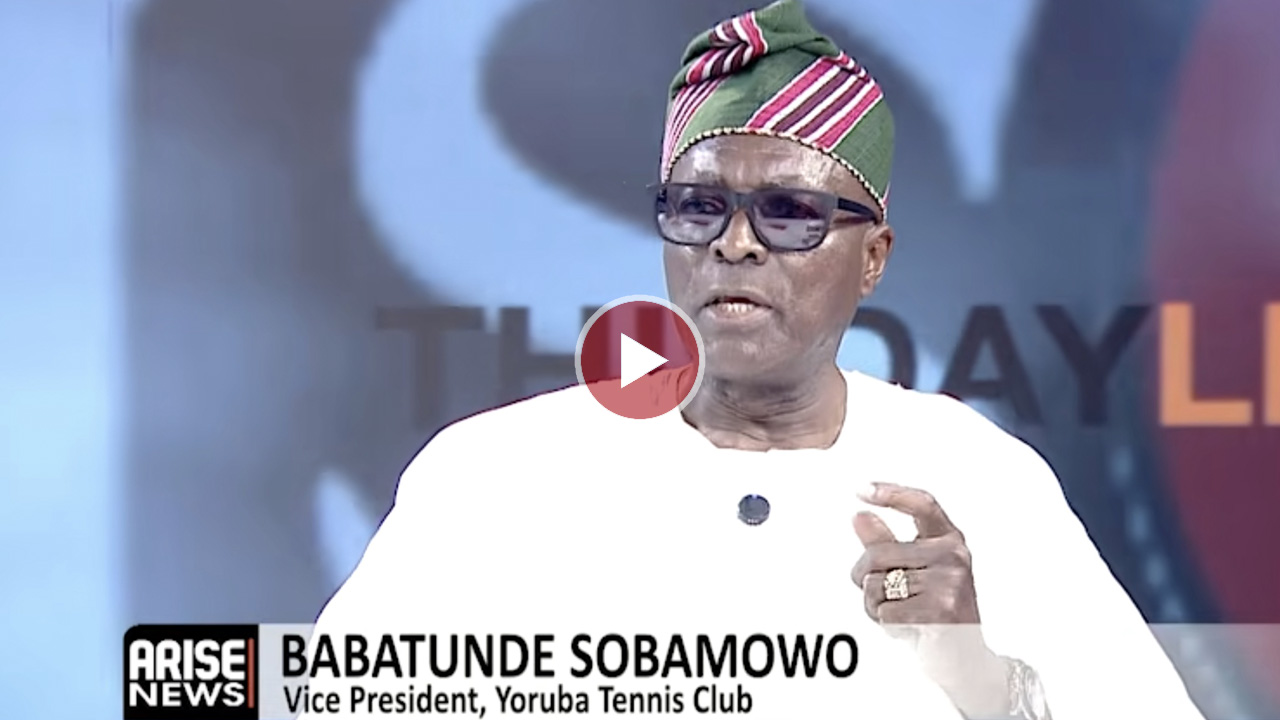
In discussing the club's traditions, he pointed to its initiation rites as a significant representation of its core values.
"The founders of this club exuded a spirit of love and camaraderie, which is evident in our initiation ceremonies. It illustrates a bond that affects our interactions within the club," he explained.
Additionally, Sobamowo articulated the importance of the club’s traditional ceremonies for deceased members, stating, "Another unique aspect is the castle ceremony, where a long-term member is culturally distanced from the club, further defining our special character."
He also mentioned practices like abalábí that reinforce the club's identity as a culturally grounded yet progressive establishment.
"We operate as a cosmopolitan club while deeply embodying our cultural roots. We address a range of issues and fulfill our roles as opinion leaders," he asserted.
Sobamowo stressed the significance of the club's illustrious past, mentioning renowned personalities who have been part of the institution, including Chief Justices and distinguished professionals from numerous fields.
He highlighted the club's electoral process, suggesting it as a potential model for Nigeria.
"An exceptional aspect of Yoruba Tennis Club is how we conduct our elections. This is a practice from which Nigeria could derive lessons," he stated.
"The trustees serve as the custodians of our traditions, ensuring that capable individuals are chosen as leaders of the club," he added, praising the stability and unity the leadership structure has maintained over the years.
"Historically, I'm the 40th chairman, which illustrates the carefulness of our election process and our commitment to a harmonious environment," Sobamowo remarked.
He reiterated the centrality of respect within the club’s community.
"Respect is paramount—both for the elderly and is reciprocal. We extend this courtesy to younger members as well," he noted.
Regarding membership, Sobamowo addressed misconceptions about exclusivity, clarifying, "No, there are no restrictions on membership to only Yoruba individuals. Historically, we have had many members from the North. For instance, when I served as the club's secretary, the former Governor of Bauchi State, Alhaji Isa Yuguda, was initiated."
He reinforced that the club's cultural practices are inclusive of non-Yoruba members.
"Initiations depend fundamentally on language and representation. It’s a respectful process, nothing controversial, and we value integrity," he stated.
Ultimately addressing claims of the club being politically motivated, Sobamowo clarified its position.
"As I mentioned earlier, we are opinion leaders," he affirmed.
"While we engage in political discourse, we refrain from political partisanship. We invite speakers on current issues without aligning with any political entities," he pointed out.
He reiterated that the club's relationship with public office holders adheres to its constitutional obligations in a non-partisan manner.
"Constitutionally, every governor of Lagos State serves as a vice patron of the club," he explained.
"This relationship does not imply political favoritism, as we advocate for goodness and improvement," he added.
Sobamowo expressed pride in the club’s century-long record of internal peace.
"To have lasted 100 years without internal conflicts is a commendable feat that deserves recognition," he stated.
On February 5, the Yoruba Tennis Club will kick off its centenary celebrations with a prominent intellectual seminar featuring Nobel Laureate Professor Wole Soyinka, culminating in the main anniversary celebration on September 15.
Comments (0)
You must be logged in to comment.
Be the first to comment on this article!