
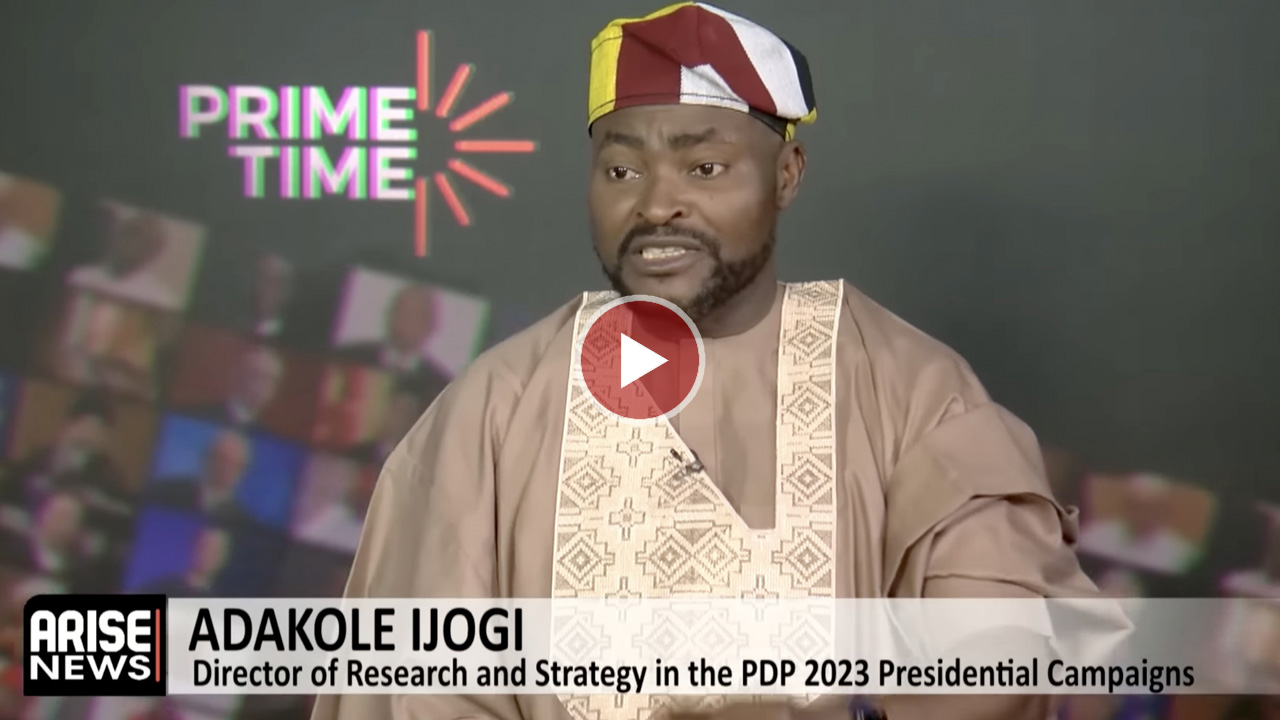
Adakole Ijogi, a political economist, has raised alarms regarding the ongoing fuel crisis in Nigeria, labeling it a situation that "greatly affects the Nigerian people."
Ijogi argues that a fuel price hedge should have been established to prevent prices from spiraling.
He expressed these views during an interview with ARISE NEWS on Tuesday, where he examined fuel pricing and its implications for the Nigerian economy.
"The disruptions you see have a significant impact on everyday Nigerians. This is critical since fuel serves as the backbone of the Nigerian economy. We face all the shocks stemming from the volatility in the oil sector. In light of the ongoing Middle Eastern crisis, I believed there should have been a hedge in place. The government ought to have secured some financing from our foreign reserves to cap fuel prices at no more than N900," he suggested.
Ijogi clarified that while his proposed measure may appear similar to a subsidy, it is fundamentally a temporary hedge designed to avert an exponential increase in fuel costs.
Moreover, Ijogi conveyed frustration regarding Nigeria's low crude oil production levels, stating that the country produces significantly less than its capacity.
"For us to be producing less than 1.5 million barrels per day is embarrassing—especially when Saudi Arabia is producing 10 million. It’s simply unacceptable. I believe we must take governance more seriously and prioritize the welfare of the Nigerian populace," he commented.
He also contended that the current administration is unlikely to respond to labor's demands, particularly amid increasing tariffs on utilities and fuel.
"Historically, this government has not shown signs of responsiveness. If you analyze the situation since its inception, all factors affecting Nigerians have escalated—from utility rates to fuel costs. The core issue lies on the supply side, not demand. While people have the means, their purchasing power is declining," he explained.
Ijogi characterized the declining purchasing power of Nigerians as an "economic contradiction," citing that Nigeria, which supposedly boasts Africa's largest economy, has seen its economic scale shrink drastically.
"Nigeria's economy is now estimated at around 199 billion US dollars, down from 540 billion. Though we once had the largest economy in Africa, the Nigerian Naira does not even rank among the top ten currencies globally," he expressed.
He urged action to strengthen the Naira against the dollar, indicating that although there has been a stabilization of the currency, there has not been a genuine improvement in its value.
"While it has stabilized, no real progress has been made, and I urge those in power to be attentive to the needs of Nigerians," he said.
Ijogi also addressed Aliko Dangote’s recent proposal advocating for remote work as a potential coping strategy.
"Considering the evolution of technology and internet access, I believe there’s potential for remote work. It’s essential that both the government and private sector explore options that allow employees to work predominantly from home for a significant portion of their tasks until our current challenges are resolved. While face-to-face interactions have their benefits, we need to adapt to the present circumstances and foster flexible work arrangements," he concluded.
Comments (0)
You must be logged in to comment.
Be the first to comment on this article!