
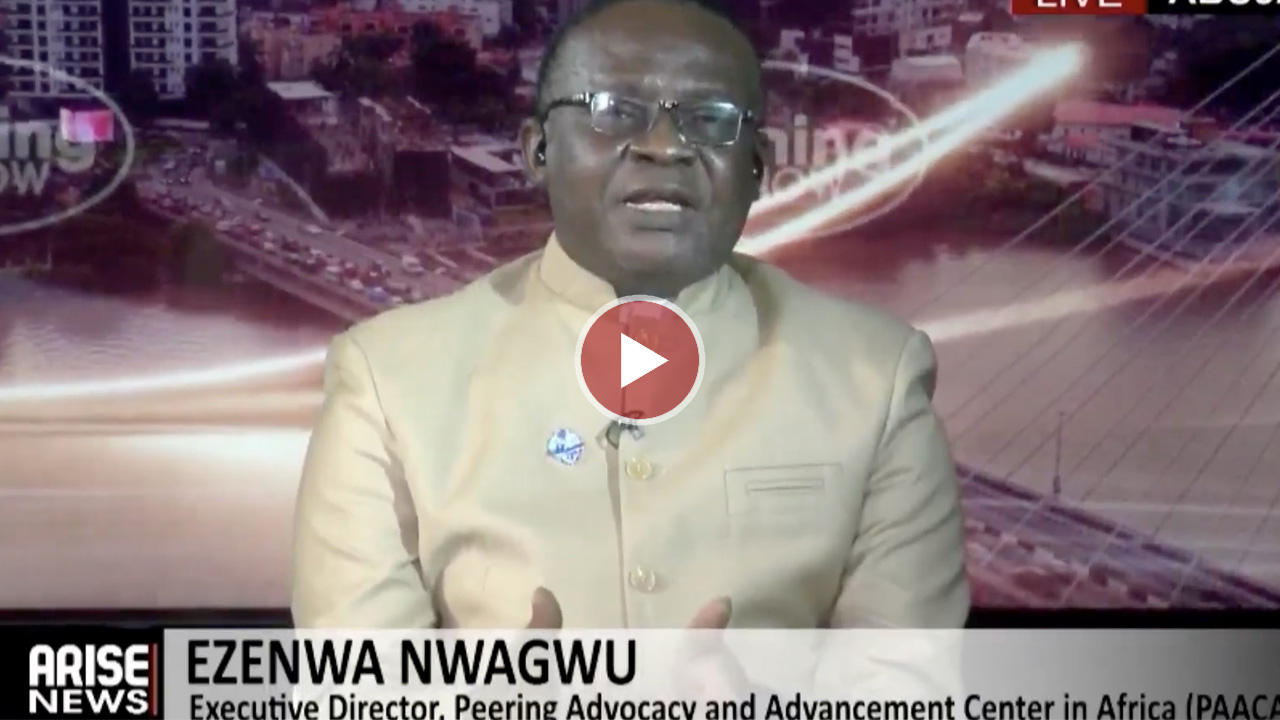
Ezenwa Nwagwu, who serves as the Executive Director of the Peering Advocacy and Advancement Center in Africa (PAACA), has stressed that electoral reform in Nigeria requires a broader scope. He insists that conversations should not only focus on the electronic transmission of results but also include the collation process and more significant engagement from political parties.
In an interview with ARISE NEWS on Monday, about the ongoing discussions surrounding the amendment to the Electoral Act, Nwagwu remarked, “The current push for changes in the electoral act is encouraging. It reflects an increasing demand for enhanced citizen oversight regarding governance and the actions of our elected officials.”
He continued, “The more citizens actively participate in legislative matters, the more we are advancing the democratic process. While electronic result transmission is crucial, it is not comprehensive enough. The discussion should expand to encompass both electronic transmission and collation of results. If the existing law mandates the uploading of data to the iREV system as it currently stands, we are merely uploading static images of handwritten documents which lack the capability for computational processing.”
Nwagwu highlighted the importance of the collation process, pointing out that it must be closely linked to activities occurring at polling units. He noted, “If the results are tampered with through collaboration between party agents, electoral officials, and security personnel at the polling units, then uploading those results does not enhance the transparency or integrity of our elections.”
He added, “Therefore, I advocate for a more thorough approach that includes both electronic transmission and the collation of results.”
He also pointed out that the infrastructure, especially internet access, plays a vital role in facilitating real-time reporting. Nwagwu called for coordination among telecommunication providers, the National Communications Commission, and the Ministry of Communications and Digital Economy to ensure that reliable, real-time systems are established without causing further complications.
“It is essential to address the nuances of internet penetration. We cannot overlook this issue. The efficacy of our elections is tied to our infrastructure. It is critical to identify areas where real-time operations can be effectively implemented. Achieving this requires collaboration between service providers, the National Communications Commission, and the Ministry of Communications, clearly demarcating zones of reliable internet availability in our discourse,” he articulated.
He further emphasized, “According to YIAGA’s report, it is vital to continuously foster interest and develop facilities that enhance the trust levels in elections and public institutions across various stakeholders, including INEC, security agencies, political parties, and citizens. Our collective efforts must aim to elevate the level of trust surrounding the electoral process.”
Nwagwu concluded by stating, “As we engage in talks about electoral reform, it’s equally crucial to consider political reform, as political parties play a fundamental role in the recruitment of our leaders. In these discussions, political parties should be actively involved, rather than just individual political figures whose interests might vary.”
“It is often the case that only political figures participate in these dialogues, driven by their immediate interests, rather than the political parties articulating a clear stance and collaborating with civil society to drive meaningful change,” he summarized.
Comments (0)
You must be logged in to comment.
Be the first to comment on this article!