
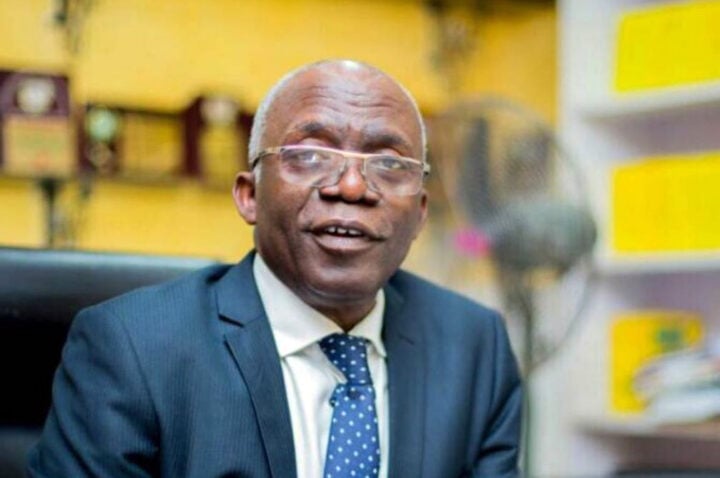
Femi Falana, a senior advocate of Nigeria, has raised alarms over reports that police forces utilized expired tear gas canisters during protests in Makoko aimed at challenging unlawful demolitions and forced evictions in the area.
His remarks coincided with explanations from the Lagos State Government, which stated that the demolitions were necessary to safeguard lives and prevent possible disasters in the region.
Additionally, the Lagos State House of Assembly has called for a meeting with stakeholders and community leaders from Makoko and surrounding waterfront areas, scheduled for Tuesday.
The demonstrations, organized by activists Mr. Hassan Taiwo, popularly known as Soweto, and Mr. Dele Frank, sought to highlight the alleged unlawful demolitions and forced evictions faced by residents of waterfront communities. Although initially non-violent, the protest escalated when police officers deployed tear gas at close quarters.
Several individuals sustained injuries in the altercation, which led to widespread condemnation from human rights organizations and civil society groups.
While visiting injured protesters at Lagos State University Teaching Hospital, Falana characterized the police's actions as unconstitutional and a serious infringement on citizens' rights to peaceful assembly.
At the hospital, Falana received updates on the condition of one of the injured individuals, Mrs. Kafayat Muftaudeen, from a nurse identified as Mr. Adedeji Hassan.
Hassan reported that Mrs. Muftaudeen had sustained a severe injury to her leg. Although she was set to be discharged, she would require further treatment, including regular wound care and weekly hospital appointments before undergoing surgery.
"She is ready for discharge and will return weekly for dressing," Hassan noted, explaining that she would eventually need skin grafting once healing occurs.
Falana described the injuries he observed as alarming and unusual. "In my over 40 years of participating in protests nationwide, I have never witnessed tear gas causing such serious injuries. What I have seen is not typical," he stated.
The experienced lawyer emphasized that citizens' rights to freedom of expression and peaceful assembly are protected under the 1999 Constitution, indicating that Nigerians do not need police permits for protests.
He added that according to the Police Establishment Act, the organizers' responsibility is merely to inform the police, who must ensure their safety.
Falana noted that the protest organizers adhered to legal protocols, pointing out that police officers had initially escorted the protesters from Ikeja Under Bridge to the Alausa Secretariat before the situation deteriorated.
In response, the Lagos State Government reiterated that its demolition actions in parts of Makoko were intended to protect public safety and avert disasters.
During a press briefing in Alausa, Ikeja, the Commissioner for Information and Strategy, Gbenga Omotoso, along with the Governor's Special Adviser on E-GIS and Urban Development, Dr. Babatunde Olajide, and Special Adviser on Media and Publicity, Gboyega Akosile, asserted that the government holds a duty to ensure residents' safety without infringing on others' rights.
Omotoso revealed that many wooden structures along the waterfront were dangerously positioned beneath high-tension power lines, posing significant risks to occupants.
He confirmed that the decision to demolish such structures was made in the interest of public safety and to uphold the dignity of residents living under hazardous conditions.
Furthermore, Olajide commented that the demolition in Oworonsoki was a result of a decade-long planning process. He described the removal of buildings within high-tension corridors as part of a comprehensive safety initiative statewide.
He stated, "The governor has allocated $2 million for the water city project, with an expected $8 million funding from the United Nations. However, we are aware of the current funding challenges encountered by many donor organizations. Thus, we continue with our commitment to the environmentally friendly water city project at the fishing community's location. This initiative does not affect the fishing community. Demolitions occurred solely within high-tension corridors."
He assured that displaced residents would receive compensation, mentioning that enumeration procedures were underway. “The primary goal is to prioritize saving lives,” he emphasized.
Ongoing engagement with affected occupants regarding the redevelopment of Makoko is in effect. There is an international task force, including UN representatives, collaborating on this project, with proposals from private firms to establish schools in the area as well.
Subsequently, the Lagos State House of Assembly has summoned stakeholders and leaders from communities impacted by the recent demolition in Makoko and adjacent waterfront areas.
The Clerk of the House, Olalekan Onafeko, communicated that this move was in response to a petition filed by the affected communities.
In a written correspondence to community leaders, Onafeko acknowledged the petition submitted on January 14, 2026, and invited them to attend a meeting with the Committee on Rules and Business on February 3, 2026, at the Assembly Complex, Alausa, Ikeja, at 10 a.m.
He requested that the community heads attend the meeting with relevant documents to guide productive discussions.
Separately, the Centre for Human and Socio-Economic Rights (CHSR) condemned the manner in which the protests were handled and called for investigations into the killings of six traders in the Owode Onirin region of Lagos State that occurred in August 2025.
At a press briefing at the International Press Centre, Ogba, Lagos, CHSR President, Mr. Alex Omotehinse, stated that citizens possess a constitutional right to protest.
He asserted, "We demand an independent inquiry into the deaths of the six traders from Owode Onirin and those affected in other communities across the state. We also seek the prosecution of all individuals involved in these killings and an end to police interference during lawful civic activities and protest."
"Justice, compensation, and rehabilitation for all communities affected by the demolitions are vital. We denounce the intimidation and coercion efforts aimed at disassociating Owode Onirin traders from legitimate protests against illegal demolitions and the tragic killing of six young men in August 2025," he emphasized.
"Peaceful protest is a constitutional right. The victims of these demolitions are citizens, not enemies, and civil society organizations must be viewed as partners in democracy, not opponents," he concluded.
Comments (0)
You must be logged in to comment.
Be the first to comment on this article!