
A legal expert and activist, Maxwell Opara, has vehemently condemned suggestions that opposition parties should abstain from participating in elections, characterising such a proposal as an "act of cowardice." He contended that stepping away from the electoral contest would inevitably weaken the opposition's standing and grant a straightforward victory to the party currently in power.
During an interview on ARISE News on Tuesday, Opara cautioned that boycotting elections would not halt the ongoing democratic procedures, asserting that the Independent National Electoral Commission (INEC) would proceed with the process irrespective of participant numbers. He explained that refusing to vote or field candidates only serves to create a void that benefits incumbent political forces.
He pointed out that even in hypothetical scenarios where only a single party is a contender, the electoral commission would still conduct the exercise and announce a victor. This, in his view, renders the concept of a boycott both unworkable and counterproductive for any serious political organisation.
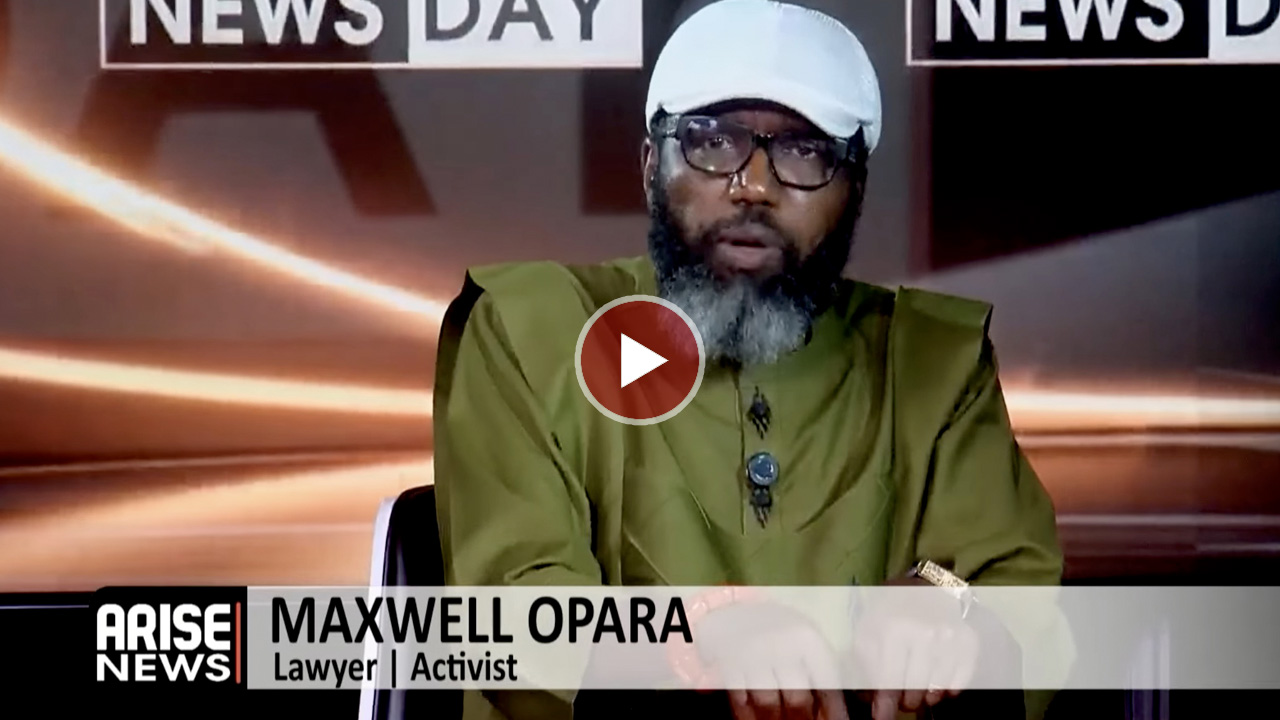
"INEC will still go ahead… If it’s only APC… they will go ahead and declare him (President Tinubu) winner," Opara remarked, reinforcing his argument that electoral outcomes cannot be altered by non-participation.
He further proposed that instead of boycotting, opposition factions should concentrate on forging robust alliances capable of countering electoral irregularities. He identified unity as the most effective shield against any perceived undue advantage held by the ruling party.
Opara highlighted that ongoing internal disagreements among opposition figures have consistently undermined their prospects, making it simpler for the governing party to maintain dominance in the political arena. He described the absence of coordinated action as a significant impediment.
"If the opposition are not united, they’re just wasting time," he stated, encouraging political figures to set aside personal ambitions in favour of the broader objective of national governance.
He also emphasised the significance of strategic planning and readiness, advising opposition leaders to anticipate potential challenges and seal any vulnerabilities that could be exploited against them.
In his view, political competitions necessitate foresight, discipline, and meticulous planning, particularly when contending with seasoned adversaries. He warned that a lack of adequate preparation would inevitably lead to repeated disappointments.
"The best way to solve your problem is to face your problem, not to run away from your problem," he added, underscoring the necessity of bravery and direct involvement in the political system.
Opara concluded by asserting that boycotting elections sends an inappropriate message regarding sincerity and dedication, noting that no legal provision exists to halt elections simply because certain parties opt out. He maintained that tangible political advancement can solely be achieved through active engagement, solidarity, and calculated strategies, insisting that a boycott would neither disrupt the established system nor yield the desired results.
Comments (0)
You must be logged in to comment.
Be the first to comment on this article!