
Nigeria's housing landscape has been marked by recurring patterns of ambitious government plans and subsequent underachievement for decades. From the post- independence era to the present, various administrations have launched large- scale housing schemes with significant publicity, yet have consistently fallen short in their effective implementation.
The drive for widespread housing solutions began in earnest in 1972 under General Yakubu Gowon with the introduction of the Federal Low-Cost Housing scheme, a concept that has remained a fixture in the nation's policy discourse. President Shehu Shagari's administration later embarked on an extensive National Low-Cost Housing Programme, aiming for 200,000 units within four years, but ultimately delivered fewer than 32,000. The period of military rule from 1983 to 1998 saw a shift in focus towards urban renewal, though these efforts were hampered by poor planning and widespread abandonment of projects. With the return to democratic governance in 1999, President Olusegun Obasanjo's administration pivoted towards a private sector-led approach, promoting a National Housing Policy supported by a mortgage finance system. However, challenges such as underdeveloped mortgage frameworks, excessively high interest rates, and the exclusion of low-income groups meant that the aspiration for accessible housing for the masses remained largely unfulfilled.
The late President Umaru Musa Yar’adua introduced the Vision 20:2020 housing objective, which was short-lived. Former President Goodluck Jonathan's Affordable Housing Scheme struggled to achieve its mass housing targets, often relying on Public-Private Partnerships (PPP). The National Housing Programme initiated by former President Muhammadu Buhari in 2016, intended to deliver regional housing projects, was seen as innovative. Nevertheless, many of the homes constructed nationwide proved unaffordable and subsequently fell into disrepair. Current reforms under President Bola Ahmed Tinubu, which aim to stimulate the market through private developers and mortgage accessibility, are struggling due to the prevailing economic conditions: low national income, high inflation, currency devaluation, widespread unemployment and underemployment, and a generally weak purchasing power.
A recent investigation by Daily Trust has highlighted the significant wastage resulting from the disconnect between government housing strategies and the actual needs of the population. A survey of housing initiatives across various states revealed that numerous completed housing projects are lying vacant due to unaffordability. In Bauchi State, for instance, four distinct sets of approximately 6,000 housing units are either finished but unused or remain incomplete. These sites are often found overgrown with vegetation and inhabited by wildlife. These housing projects, developed between 2007 and 2023, have all faced the same challenge: they are out of reach for the average Nigerian.
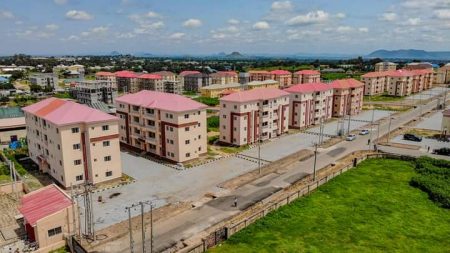
Mass housing projects in Nigeria frequently appear to serve as vehicles for political grandstanding and as avenues for wealth accumulation by a select political elite, rather than fulfilling their intended purpose of providing adequate housing for citizens. If the core principle of these projects were genuinely 'affordable housing for the people,' the design and implementation strategies would necessarily differ significantly.
Government schemes at both federal and state levels have predominantly favoured the construction of two or three-bedroom houses built with iron and concrete blocks, even in rural settings. These homes carry price tags ranging from N40 million to N100 million, a sum far beyond the reach of the youth population, which constitutes a substantial majority. Similarly, low-income households find it impossible to afford homes priced between N5 million and N20 million. This disparity is clearly reflected in the continuous expansion of informal settlements and slums surrounding major urban centers across the country.
If the government were truly committed to urban renewal and addressing the housing deficit, investments in mass housing should be directed towards constructing homes that are accessible and affordable to low-income segments of the population. Countries in Asia have successfully implemented such strategies, aligning their housing policies with the economic realities of their citizens.
It is concerning that there appears to be a lack of governmental interest in exploring or modernizing Nigeria's traditional housing methods, which often utilize materials like mud and bricks, offering a cost-effective alternative to expensive cement, concrete blocks, and steel.
Nigerian universities are ideally positioned to conduct research aimed at modernizing these traditional building techniques. Such research could lead to standardized, affordable housing solutions for the masses. For example, Japan has successfully adapted its traditional wooden houses (Minka) into modern housing estates like Dauchi, blending contemporary apartment designs with elements of traditional Japanese communal living.
South Korea has developed apartment complexes in Seoul that incorporate the Hanok system, featuring traditional wooden houses with ondol heating. Malaysia's approach to low-cost housing includes the Rumah Melayu concept, integrating the ventilation principles of traditional stilt houses into modern concrete flats. Other nations, including China, Taiwan, Singapore, and India, have similarly standardized their traditional housing systems to provide affordable homes for their populations.
We urge the government to collaborate closely with researchers and professionals in architecture, civil engineering, building technology, and surveying. This partnership should focus on developing realistic and affordable housing schemes that resonate with Nigeria's cultural context and the genuine needs of its people, rather than continuing to channel funds into projects that benefit politicians and contractors, resulting in abandoned structures prone to neglect. Current housing policies often appear to be shaped by civil servants motivated by corruption and executed by political contractors whose primary concern is electoral cycles. The critical issue of mass housing is too significant to remain under the sole management of career civil servants.
Although governments have claimed to establish mortgage systems to facilitate housing loans, these initiatives have proven ineffective in practice. The majority of Nigerians who are the target demographic for mass housing cannot meet the stringent requirements of mortgage banks due to their limited income. Asian countries, in contrast, construct housing, often in apartment form, for low-income residents who can access mortgages through their employers. In many of these countries, organizations employing over 30 individuals are mandated to provide housing schemes, akin to health insurance. This practice is largely absent in Nigeria, primarily because employers acknowledge that their staff cannot afford mortgage repayments from their current salaries. This system requires a fundamental change.
Presently, mass housing initiatives in Nigeria, particularly under the current administration, primarily benefit a select few. It is not too late for the government to reassess its approach and implement genuinely affordable housing solutions for both urban and rural populations.
Comments (0)
You must be logged in to comment.
Be the first to comment on this article!