
Olukayode Ajulo, the Attorney General and Commissioner for Justice of Ondo State, has put forth historical, legal, and geographical data to counter assertions made by the Ogun State government regarding the ownership of Eba Island.
In a discussion with reporters, Ajulo defended Ondo State’s claim to the island, expressing astonishment that the debate arose given that official documents and years of administrative oversight had consistently identified the territory as being part of Ondo.
“I speak as someone who has served Ondo State diligently and observed the formal acknowledgment of Eba Island as being within our jurisdiction,” he stated. “The Nigerian National Petroleum Corporation along with other federal agencies have visited the island multiple times and have unequivocally recognized it as part of Ondo State. Yet today, Ogun State is making claims to it. What has changed?”
Ajulo noted that these claims compelled him to personally delve into historical records detailing the island's ownership. “I conducted an individual forensic investigation in the United Kingdom, engaging with the British Library, the National Archives at Kew, and several other colonial record repositories,” he explained. “I analyzed original treaties, maps, intelligence sketches, cadastral surveys, and gazette notifications. Each document reaffirmed that Eba Island is a vital section of Atijere in the Ilaje Local Government Area of Ondo State.”
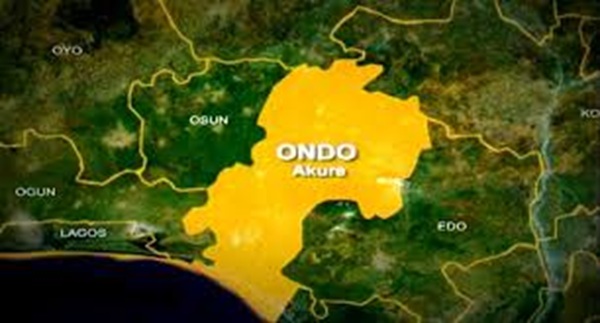
He added that prior to Nigeria's amalgamation in 1914, the island was part of the Ilaje/Mahin territory within the Lagos Colony. “In 1885, the Amapetu of Mahin entered into a protective treaty with colonial officials, which integrated the Mahin Kingdom, including Atijere and Eba Island, into the Lagos Colony’s governance,” Ajulo remarked.
Post-amalgamation, he stated, the island became part of Ondo Province, particularly within the Okitipupa Division, where it was marked as a forestry reserve under the administration of the Atijere Native Authority.
By 1933, Atijere was recognized as the administrative center for the district, housing the Native Court where chiefs appointed by the Amapetu managed local affairs. “Eba Island unquestionably fell under the jurisdiction of Atijere Native Court, and by 1950, it was included in the Ilaje District Council, with Atijere as its administrative center,” he noted.
Ajulo pointed out that despite various reforms in local government, including the establishment of Ilaje/Ese-Odo Local Government in 1975 and the creation of Ese-Odo Local Government Area in 1997, the island continued to belong to the Ilaje Local Government Area. He further emphasized the deep-rooted cultural and human connections between the island and the Ilaje community.
“Families from Ilaje have inhabited, fished, cultivated, and practiced their faith on Eba Island for generations. They have never pledged loyalty or paid dues to Ogun State authorities. River Ufara stands as the natural and permanent boundary separating Ilaje territory from Ijebu land. The evidence upholds our claim,” he said.
Ajulo further articulated the legal foundation of Ondo State's claim, referencing Section 44(3) of the 1999 Constitution and Item 39 of the Exclusive Legislative List, which assign ownership of mineral resources to the federal government while outlining the benefits based on territorial affiliation and host localities.
“Claims cannot be established through press announcements, media claims, or opportunistic statements; they are rooted in historical rights, ongoing governance, and customary law. There is no official notice, court ruling, or boundary alteration that has reassigned Eba Island to Ogun State,” he asserted.
He mentioned that documents derived from his research included colonial administrative maps from the Lagos Colony era, intelligence reports, provincial sketches after unification, treaty illustrations from the 1885 Mahin protection scheme, gazette notifications, and ethnographic maps that place the island under Ondo’s jurisdiction. Ajulo cautioned that rival claims over the island could heighten tensions among coastal communities in both states.
“Ogun’s assertions may lead to community disputes and jeopardize the harmonious relations along our shared coastline,” he expressed. “Ondo State will uphold its territorial rights through every legal avenue available, including the courts, the National Boundary Commission, and the court of public opinion.”
He called for calm and emphasized the importance of resolving the matter through constitutional and legal frameworks. “There should be no uncertainty: Eba Island has always been, is, and will always be part of Ondo State. The resources beneath it are a divine blessing intended for the Ilaje people and for the advancement of our state,” Ajulo concluded.
Comments (0)
You must be logged in to comment.
Be the first to comment on this article!