
US lawmakers have voiced strong objections against the Nigerian government's allocation of substantial funds towards lobbying in Washington rather than taking effective measures to combat increasing security issues and religious persecution domestically.
This criticism arose during a congressional session focused on religious freedom, where representatives expressed alarm over Nigeria reportedly engaging lobbyists at a cost of approximately $9 million intended to mitigate the portrayal of violence and persecution occurring within the nation.
In remarks at the session, one lawmaker recalled the significance of the International Religious Freedom Act enacted in 1988 and warned against any complacency regarding its impact.
"The act, passed in 1988, has greatly influenced conditions globally, including in Nigeria. We cannot afford to neglect this issue," he stated.
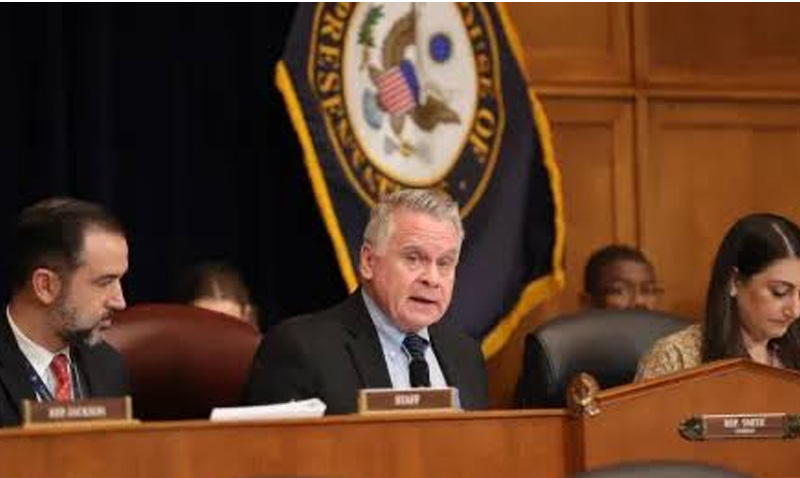
The subcommittee's Chairman was notably critical regarding Nigeria's choice of actions, disclosing particulars about the lobbying agreements.
"I wish to inform my colleagues of my serious concerns that Nigeria has engaged the K Street firm DCI, totaling $9 million, with payments of $750,000 monthly, while a Nigerian billionaire has committed to a $120,000 monthly contract with BALCORP to sway Congress and the executive. Ambassador, you are very much aware of the ongoing struggles we have faced on this front over the years," he revealed.
Another legislator cautioned that such lobbying tactics, historically utilized by regimes associated with human rights violations, were aimed at softening their global image.
"Countries hire these firms to produce well-crafted narratives suggesting that all is well. Nations like Haiti and China are often cited as examples of this tactic. I remember the period of Nicholas Ceausescu in Romania, where lobbying firms were engaged to maintain his image despite the severe human rights violations occurring under his rule," said the lawmaker.
In a personal note, another panelist shared how reading "Tortured for Christ" by Richard Wurmbrand inspired his commitment to religious freedom, emphasizing the tendency of lobbying firms to prioritize their clients over the individuals suffering from persecution.
"My interest in religious freedom was sparked by this book that illustrates the duplicity of such firms. Their efforts often focus on advocating for their clients rather than championing freedom and an end to religious persecution. I have additional thoughts but will leave it here," he concluded.
The Chairman expressed gratitude to all participants before yielding the floor to the ranking member.
"I wish to thank everyone once more for attending. I’d like to pass the floor to my esteemed colleague Ranking Member Jacobs for any comments he may have," he said.
The ranking member acknowledged the importance of the hearing and the testimonials offered.
"Thank you, Mr. Chairman, and gratitude to all the witnesses for their valuable insights during this critical discussion," he noted.
This hearing highlights the escalating discontent in Washington concerning Nigeria’s response to security challenges, especially attacks linked to religious persecution, and raises serious questions about the country's decision to focus on foreign lobbying instead of safeguarding its citizens.
Comments (0)
You must be logged in to comment.
Be the first to comment on this article!