
Vote counting is currently underway across various regions in Uganda following presidential and parliamentary elections that were characterized by significant delays, a nationwide internet shutdown, and accusations of vote rigging from opposition parties.
Bobi Wine, the primary opponent of President Museveni, has claimed that there were widespread irregularities in the voting process, citing serious misconduct without providing any conclusive evidence to back his assertions.
"Massive ballot stuffing reported everywhere," Wine stated in a social media update.
The authorities have not yet addressed his fraud allegations, nor have they responded to claims that numerous polling agents and supervisors affiliated with his National Unity Platform party were either abducted or chased away from polling stations.
Voter turnout faced disruptions due to delays reaching as long as four hours in certain locations, which officials attributed to failures in biometric machines required for voter identity verification. Voters and onlookers suggested that the complications were exacerbated by the nationwide internet shutdown, along with shortages of voting supplies and late arrivals of necessary equipment at polling spots.
Consequently, some polling places remained open beyond the scheduled closing time. The electoral commission announced that individuals who were in line by 17:00 local time would still be permitted to vote. Earlier, the commission had issued an apology regarding what it termed as "technical glitches" and assured that efforts were being made to correct them.
Uganda’s leader Yoweri Museveni, aged 81 and in power since 1986, is vying for his seventh consecutive term against 43-year-old pop star turned politician, Bobi Wine.
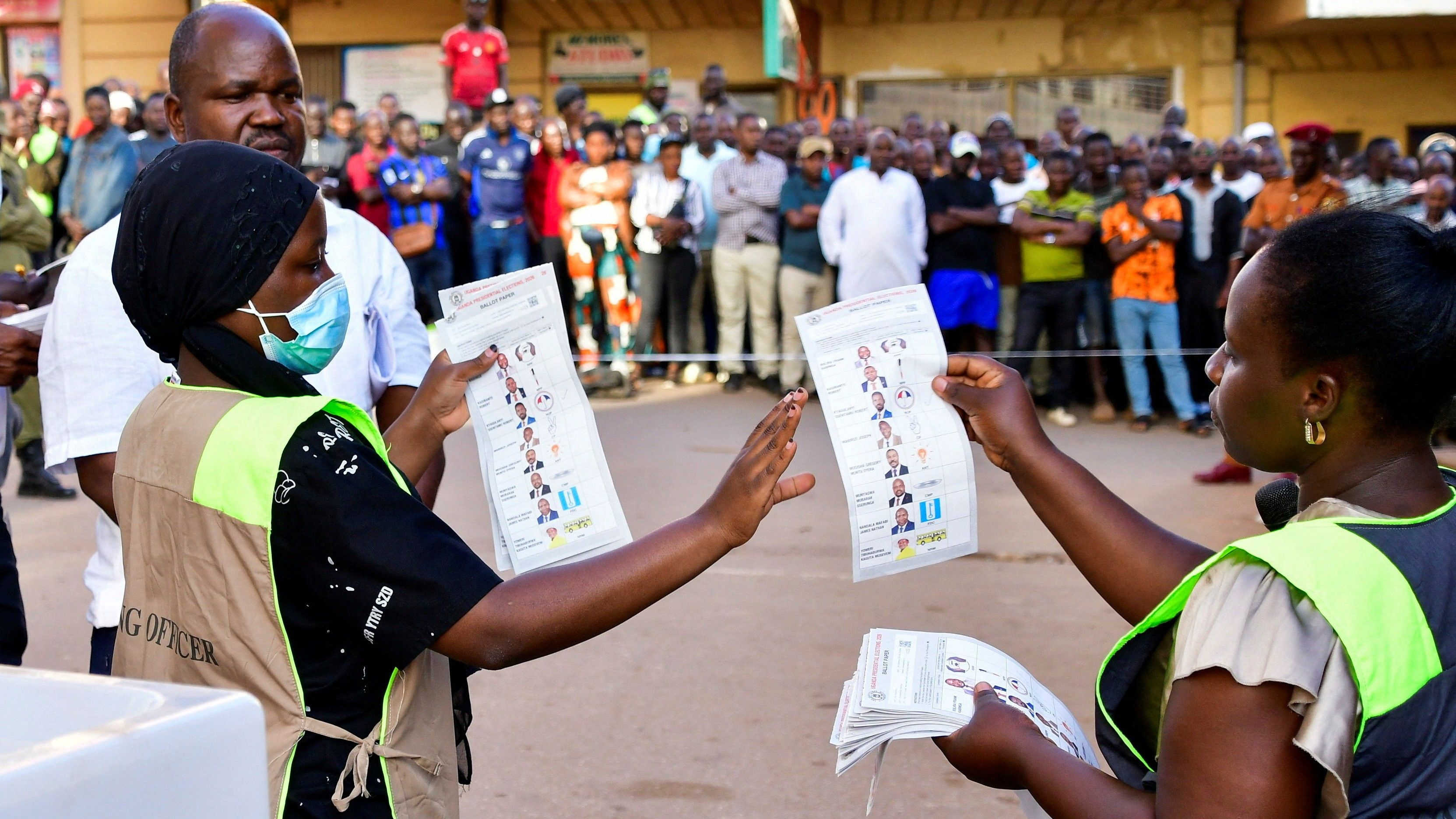
The electoral commission indicated that the results for the presidency are expected to be revealed by 16:00 local time on Saturday.
In the capital, Kampala, voting had concluded by 18:00 local time at polling stations monitored by the BBC, even with the noted delays in some areas. Official attendance figures have yet to be disclosed; however, the disruptions hinted at the possibility that some voters left without casting their votes.
While voters expressed their discontent, many remained resolute in their intention to participate in the election process.
"I’m angry because I still haven’t voted. We were supposed to start at seven, but it’s now [08:00], and no voting has begun. The ballot papers are missing, and I’m at a loss for words," lamented Kaweesi Ismail, a voter in Kampala.
Election chief Simon Byabakama directed officials to utilize the national voters’ register in instances where biometric verification processes encountered problems. These issues appeared to affect areas dominated by both the ruling party and opposition supporters alike.
After casting his vote in Rwakitura Village in the western Mbarara region, Museveni reported experiencing similar issues.
"I placed my thumbprint on the machine, but it was not recognized. However, my facial recognition was accepted instantly by the device. The machine is operational," he pointed out.
When questioned about his stance on whether he would accept the election results, the president remarked: "This is one of the manipulations we must investigate to determine the cause of the problem?"
"We are currently trying to ascertain if this was intentional," he added.
Although the election process appears to be primarily focused on the contest between Museveni and Wine, analysts suggest that Museveni is likely to extend his lengthy tenure given that he has emerged victorious in all previous six elections.
Wine has vowed to combat corruption and implement extensive reforms, whereas Museveni maintains that he is essential for ensuring stability and progress.
The campaign season was notably turbulent, with recurrent disruptions to opposition activities. Security forces have faced accusations of assaulting and detaining supporters of Wine. Police spokesperson Kituuma Rusoke dismissed these allegations, accusing the National Unity Platform supporters of instigation.
In a bid to prevent misinformation, fraudulent activities and incitement to violence, internet access was suspended earlier in the week, a measure that drew criticism from the UN human rights office, labeling it as "deeply concerning."
The NUP critiqued this rationale, claiming that the authorities were attempting to hinder the opposition’s ability to mobilize and document suspected fraud. The party introduced an offline vote monitoring application called Bitchat, which utilizes Bluetooth technology to disseminate images of result forms and voting information without requiring internet access.
Museveni, a former guerrilla leader, has benefited from constitutional changes that repealed age and term limits, enabling him to continue seeking elected office.
Bobi Wine, whose real name is Robert Kyagulanyi, had been defeated by Museveni in the 2021 elections but rejected the results, alleging electoral fraud.
Besides the two leading contenders, there are six additional candidates in the presidential race. Additionally, voters are selecting representatives for a new parliament, with 353 seats available.
For a significant portion of the electorate, economic concerns remain paramount. The youth, who make up the bulk of Uganda’s population, are encountering inadequate job opportunities, despite rising average incomes. Issues surrounding infrastructure, education, and healthcare access are also highly prioritized among voters.
Human rights organizations such as Amnesty International and the United Nations have reported increasing harassment of opposition supporters, including arrests predicated on politically motivated charges. Amnesty characterized the actions of security forces during the election-related campaign as "a brutal campaign of repression" leading up to the vote.
Comments (0)
You must be logged in to comment.
Be the first to comment on this article!