
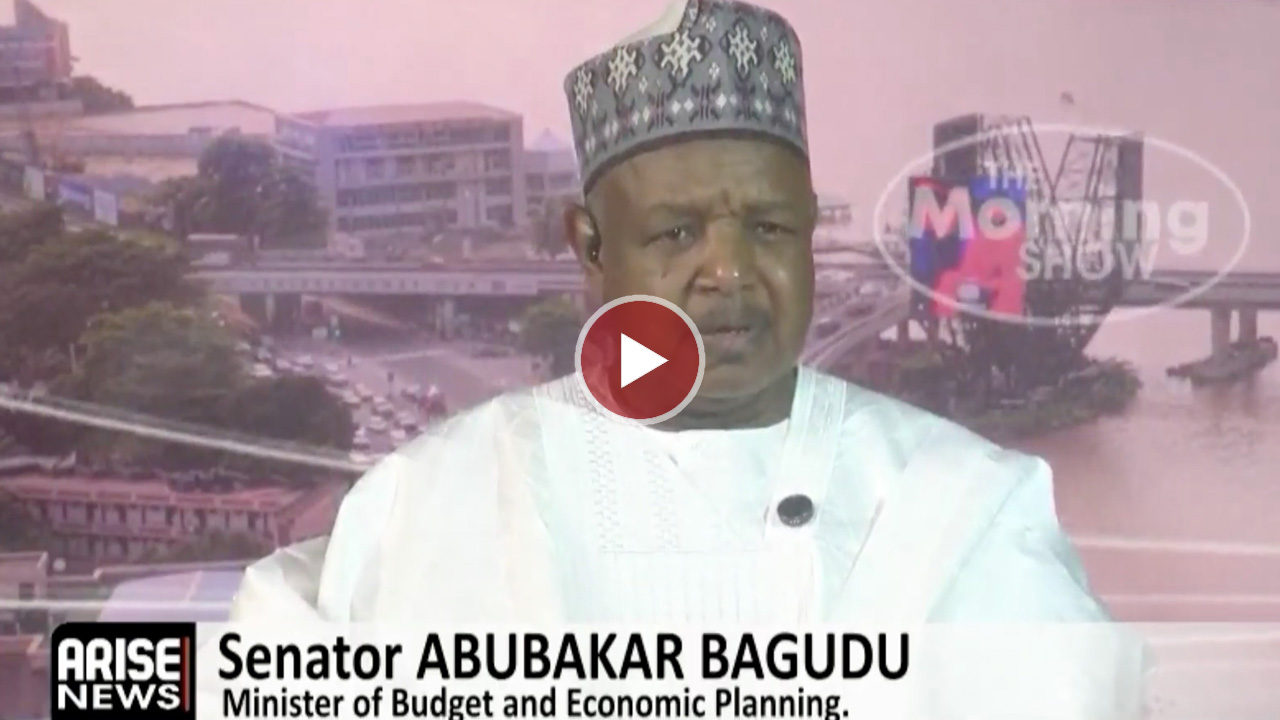
Senator Abubakar Bagudu, who serves as the Minister of Budget and Economic Planning, has vigorously defended the economic reforms initiated by President Bola Tinubu. He claimed that the government's difficult policy decisions have reinforced public finances and enhanced funding both for states and local governments, putting in place the groundwork for enduring national growth.
In a discussion with ARISE NEWS on Wednesday, Bagudu countered the notion that the reforms have not succeeded, affirming that these changes were vital for reversing Nigeria's economic downturn, improving fiscal management, and positioning the country for sustainable development.
He stated, "I must disagree with the assessment that we are failing because our national agenda acknowledges that while we are not yet where we wish to be, we are candid about our current state. Our historical underinvestment is evident; our economy is relatively small when compared to both our potential and our anxieties."
Furthermore, Bagudu emphasized that the administration faced pre-existing structural challenges which necessitated bold and sometimes difficult decisions for rectification. "To address these issues, we must take courageous and tough decisions—ones that may not be popular but are essential to halt the economic decline and start generating revenue for all tiers of government, whether in the north, south, or any part of Nigeria."
He noted that the enhancements resulting from these reforms are increasingly apparent, especially regarding improved financial allocations to regional governments. "Local governments in the northern regions are receiving better funding today, just as state governments across the north are better financed as they are nationwide. Such improvements would not have materialized without these reforms, which, although pervasive across Nigeria, hold particular significance for the north by increasing funding available to enhance local socio-economic conditions."
Bagudu also firmly rejected claims that the federal budget was in disarray. "Contrary to assertions that the budget is chaotic, I must disagree. Like many nations, we are grappling with various pressures on our revenue streams to adequately meet our budgeting requirements, particularly for debt servicing, amid a challenging global economic landscape that complicates market functions and revenue flow."
He elaborated that gaps between revenue and expenditure are a common scenario in democracies and cited international instances to support his argument. "It’s quite typical, especially in democratic budgetary systems, to experience revenue-expenditure discrepancies. For instance, the recent budget impasses witnessed in the United States occur even when a single party controls both chambers. We do have room for improvement, but stating we are in chaos is not accurate."
Addressing concerns regarding financial hardships among Nigerians, Bagudu noted, "When discussing statistics that reflect fiscal distress, I prefer to adopt a humble stance; however, it’s crucial to consider other measures provided by the National Bureau of Statistics and various global institutions such as the World Bank and IMF, as well as local analysts, who recognize the positive trajectory of our macroeconomic reforms while stressing the importance of inclusive reforms."
In addition to macroeconomic stability, Bagudu underscored a new commitment focusing on local prosperity. "We have adopted a strategy approved by the National Economic Council aimed at transforming all 8,809 wards in Nigeria into centers of prosperity through collaborative efforts across government tiers."
He emphasized that this approach entails identifying the economic potentials of each ward, addressing existing challenges, particularly poverty drivers, and rolling out programs to mobilize economically active individuals and businesses in those wards to ultimately boost growth.
Addressing Nigeria's agricultural sector, he pointed out, "We recognize, based on last year's census and reports by the National Bureau of Statistics and Central Bank of Nigeria, that approximately 42 million households engage in various forms of agricultural production."
Bagudu indicated that the government aims to modernize and support these households to enhance productivity and income. "Our goal is to harness the full capacity of society, including the federal, state, and local governments, alongside the private sector, to significantly uplift these households. This entails recognizing and compensating for external challenges affecting farming practices while ensuring that farmers across all sectors can enhance their output sustainably."
Concerning the contemplated sale of public assets, he dismissed the idea that this initiative is merely to remedy fiscal deficits. "The sales are not solely meant to bridge deficits, although they can help, as discussions about the sale of national assets have been ongoing for years."
He argued that prolonged government ownership of specific assets has hampered efficiency and deterred investment. "Our aim is to optimize our oil and gas resources, aspiring to increase oil production to 3 million barrels daily. Currently, we are underperforming at below 1.5 million barrels. The Minister of Petroleum and Gas indicated our gas reserves near 210 trillion cubic feet; however, we are utilizing less than 7 million cubic feet due to governmental constraints that discourage investor engagement. We need to allow investors to access these assets for them to contribute positively to our economic prosperity. While this might yield immediate revenues, it is not the singular goal."
Bagudu reaffirmed his support for the administration and proclaimed his involvement in the reform journey. "Since President Tinubu took office, I have served as his minister of budget, closely following every decision and reform initiative undertaken. I am a proponent of these choices because they are what Nigeria requires."
He concluded by highlighting President Tinubu's commitment to nationalistic approaches in governance. "Mr. President has consistently demonstrated a nationalistic focus in steering our national endeavors."
Comments (0)
You must be logged in to comment.
Be the first to comment on this article!