
At first glance, traveling between two neighboring capitals seems straightforward, as a simple line connects Conakry in Guinea to Freetown in Sierra Leone on a map. However, as I recently discovered, the reality is far more complex once you dive into the logistics of such a journey.
Having just completed a short trip from Conakry to Freetown—two capitals that are about 300 kilometers apart—I soon realized that mere physical proximity does not equate to ease of travel in Africa. Ideally, flying would be the most efficient option. I imagined a quick flight that would leave without a moment's delay. However, reality painted a different picture.
After some inquiries, I learned that flying from Conakry to Freetown was not as direct as expected. Instead, it would require traveling north to Casablanca, Morocco with Royal Air Maroc, effectively going to North Africa before heading back down to West Africa. Alternative routes involved lengthy layovers in cities like Abidjan, Lomé, or Banjul.
It felt absurd to think that one could leave their house and drive through three countries only to arrive back at a destination so close. Frustrated, I stared at the map, longing for a simplified solution. The thought of traveling by road seemed more reasonable—though the journey might take 6-8 hours, it would save money and might just be the easier option.
Yet, my optimism was quickly tempered as I remembered the realities of traveling in West Africa. The prospects of navigating border posts with long waits for documentation and the inevitable delays at bustling taxi stops played over in my mind. In West Africa, a taxi will only depart once all seats are filled, which could lead to endless waiting.
Caught between the allure of a speedy journey and the dread of inevitable delays, I started to feel overwhelmed by the intricate challenges that come with moving between two close countries. Just when I thought to give in to that frustration, I encountered a seemingly disruptive solution: The SeaCoach.
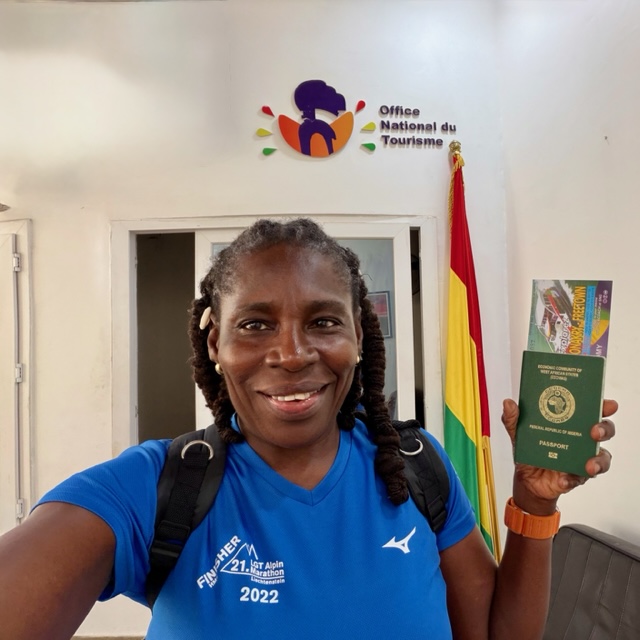
Operating three weekly trips between Conakry and Freetown with a travel time of four hours, the SeaCoach represented a beacon of hope in West African travel. Encouraged by this development, I promptly visited the SeaCoach office in Conakry, where I found the process refreshingly straightforward. "Arrive an hour before departure, buy your ticket, complete the necessary documentation, and embark," I was told, leaving me pleasantly surprised by the simplicity.
Deciding to take the SeaCoach felt like a breath of fresh air amidst travel chaos. On the morning of my departure, I packed my bags and checked out of my hotel, ready for a quick and smooth cruise to Freetown. However, upon approaching the reception to request a taxi, my request was met with laughter from the staff. “You’re too early!” she chuckled, explaining that I could only check in an hour before departure.
Stunned by the irony, considering all my prior anxieties over timing, I sat in the lobby for two hours, observing the daily hustle and bustle of hotel guests and staff.
The ticketing office was my first stop, and it was there that I noticed the immigration checks should ideally be completed before purchasing tickets. Two travelers ahead of me, both with non-refundable tickets, were directed back at immigration after discovering their documents were not in order. Procedural systems must also consider human factors.
When my turn came at immigration, the officer examined my passport with a curt demeanor. He mumbled the word "argent" (French for money), to which I politely admitted that I did not understand. His insinuation became clear as another officer stepped in to explain that he was merely hinting at a 'gesture of appreciation' for their services.
A familiar mix of shock and irritation washed over me as I grappled with the visibility of corruption rearing its head once again. I knew how to respond to such requests in Nigeria, and while I don’t condone such practices, I opted to remain firm in my convictions. Instead of yielding to his demands, I took out my debit card, causing the officer’s bright expression to fall; he promptly returned my passport and dismissed me.
I would not be part of a corrupt transaction. I had determined long ago that taking part in such practices only entrenches the very issues we decry. I would answer his unspoken plea with steadfastness.
When it was finally time to board, I was excited to see the name “Aliko Dangote,” emblazoned on the vessel’s side. Known for transforming industries in Nigeria and beyond, his name stirred a sense of pride within me, whether or not he was involved with the operation.
As I took my seat on board, I noted an unsettling sight: neither the captain nor the passengers donned life jackets. In my past experiences, safety was paramount, and I had been trained to wear a life jacket the moment I stepped onto a vessel. To my surprise, the crew simply provided instructions on how to wear them without enforcing any requirement to do so. I accepted seasickness pills but maintained my guard, knowing well that four hours on the Atlantic could be unpredictable.
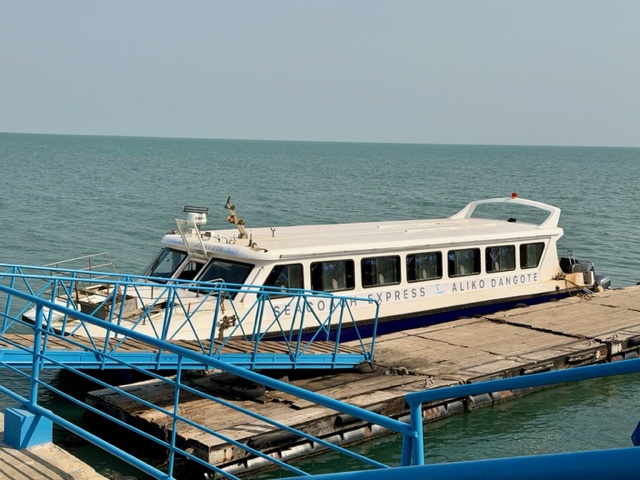
Throughout the trip, I drifted in and out of sleep, witnessing small fishing boats navigate the ocean. Their resilience intrigued me, showcasing the bravery of African fishermen who roam the waters, defying the might of the sea.
As the sun dipped into the horizon, a sense of unease took hold of me. Daytime had been my anchor, and with the encroaching darkness—deep and mysterious—came the worry of how our captain would navigate the night. Would their boat have lights like a car? The thought lingered ominously, reminding me of the vast unknown before us.
Just as daylight waned, cabin lights flickered on, illuminating the interior and banishing encroaching shadows. Our steady engine hummed with a calm confidence, and off the horizon, I spotted the twinkling lights of Freetown, a sight that sparked a wave of relief.
As I joined the line at immigration in Freetown, I observed the officers behind the desks, executing their duties with a hard-to-read demeanor. I quietly handed my passport to the first officer, who proceeded to pass it to the next without acknowledging me. This officer engaged me with small talk, asking me if I knew of a popular Nigerian footballer, JJ Okocha, and whether I liked Jollof Rice. Our discussion soon led to his insinuation that I should provide funds for more rice, but I skillfully diverted my way back without complying, successfully navigating the situation.
Ultimately, I managed to avoid an unwanted stamp in my passport as well. Small triumphs mean a lot when journeys weigh heavily on the mind. After successfully exiting immigration, I exchanged some currency and hired a taxi to my hotel. Though $20 felt steep for such a short ride, it was night, and my wellbeing, coupled with the experiences gained along the way, outweighed the expense.
In just four hours, I had traversed one ocean and crossed two borders, gathering memories and lessons throughout. The illustration of how neighboring capitals lack direct air links despite the wealth and resources present across Africa is ironic.
Why do West Africans need to journey to Europe or North Africa to visit neighboring countries? The complexity tied to travel, trade, and tourism is a barrier to easy access. The SeaCoach serves as a beacon of what can occur when we decide to foster connections rather than uphold divisions.
To those powerful individuals in Africa, I implore you to invest in efforts that enhance intra-regional travel. Strengthen our coastal transport options, build relevant infrastructures, and enable easier movement across our continent. We do not suffer from a lack of distance; rather, we need the connections to unlock our manifold potential.
Comments (0)
You must be logged in to comment.
Be the first to comment on this article!