
It was difficult to imagine just two years ago that Nasiru El-Rufai, the former governor of Kaduna State, would find himself detained for a week under serious criminal allegations, all while being part of a government where he was perceived as a key figure.
Recently, El-Rufai made several television appearances where he boldly shared details about how the National Security Adviser’s phone was purportedly tapped, stating that he listened in on discussions where the NSA allegedly ordered his apprehension at the airport.
His situation echoes the story of the Greek political figure Alcibiades: known for his charm and ambition, he often found himself undermined by his own words. El-Rufai’s claims have the potential to surpass his personal conflicts with the NSA, Nuhu Ribadu, and loom large over the state's commitment to national security and adherence to the rule of law.
Utilizing state machinery to intimidate political adversaries cannot be permitted within a democratic framework, nor should the unlawful detention of individuals exercising free speech be accepted. Yet, El-Rufai’s disclosures may also constitute an admission of illegal activity, jeopardizing the nation's security framework.
In my previous column, I noted the decline in rapport between El-Rufai and Ribadu, which now resembles cold remnants of a past alliance. Ribadu may be a figure with whom El-Rufai has disrupted relations, but he maintains a critical office. El-Rufai, now as a private citizen, has no entitlement to intercept anyone’s communications, especially one holding a sensitive position like that of the NSA.
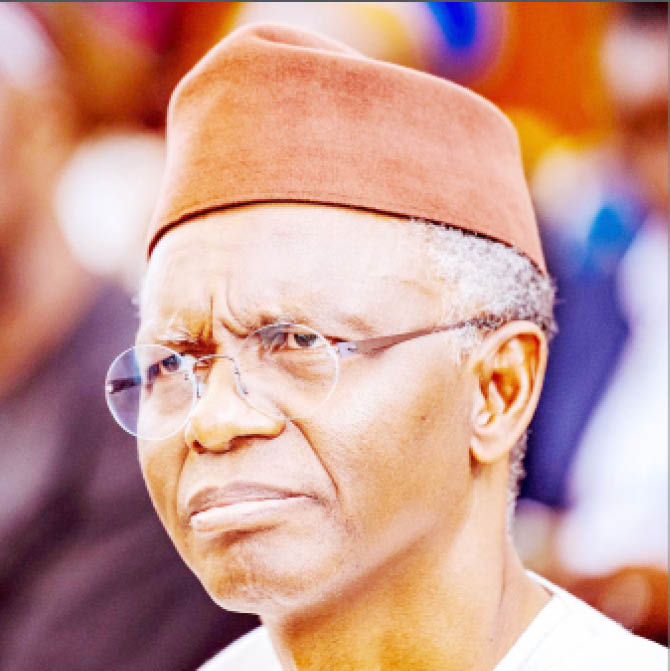
The former governor has consistently accused the NSA of weaponizing security agencies against his political rivals, leveraging the Independent Corrupt Practices and Other Related Offences Commission (ICPC) against him, and collaborating with the current Governor, Uba Sani, to undermine his influence as the 2031 elections approach. Among his most startling claims are insinuations that the NSA is involved in importing poison to eliminate political competition and the telephone tapping accusations.
Although many Nigerians may have tolerated his provocative behavior, affecting not only his former political party but also his personal standing, the latest claims may indicate that he has crossed a line in illustrating what he perceives to be the lengths his adversaries are willing to go.
Demands from civil society organizations for a thorough investigation into his claims, and potential prosecution if found valid, highlight the gravity of the circumstances. There is no justification for wiretapping the NSA’s communications and belittling it as mere political gamesmanship. Some matters are too serious to be trifled with. The ICPC has charged El-Rufai with several offenses in the Federal High Court, an appropriate course of action; however, the delays in his trial and ongoing detention without bail raise concerns, particularly as his next court hearing is set for April.
The charges outlined against him in the Federal High Court in Abuja accuse him of three related offenses stemming from his notorious comments under the amended Cybercrimes Act, which criminalizes unauthorized access to another person’s electronic communications. In this context, political motivations do not represent lawful authority.
During the latest court session at the Federal High Court, Justice Joyce Abdulmalik refused to accept El-Rufai's bail application, deeming it premature since he had not yet been formally charged, underscoring that a defendant must enter a plea before the court can consider bail. The case was adjourned until late April for proper arraignment due to the fact that El-Rufai was still in ICPC custody concerning a separate inquiry and was not present in court.
While legal proceedings are finally taking shape, politics has not remained distant. From the outset, El-Rufai has characterized his challenges as the result of Ribadu’s schemes rather than acknowledging his choices while in power or the implications of his own statements outside of it. In Nigeria, it is customary for those in power to frame every charge as persecution and every claim as a witch-hunt. Recognizing that he may have overstepped concerning surveillance could mark a vital step toward public accountability. If such actions remain unpunished due to political connections, it sends a troubling message about the norms of surveillance.
In contrast, Ribadu has chosen a different path. In February of last year, he asserted that he was too busy focusing on his responsibilities to engage in public disputes with El-Rufai, indicating a level of respect for both their families and former partnerships. He has also dismissed suggestions of seeking a presidential bid in 2031. His efforts to remain above the noise have been interpreted differently by observers, as either maturity or arrogance, thereby amplifying scrutiny over El-Rufai's media engagements.
Peeling back the layers of theatrics reveals that this is not merely a moral conflict but a reflection of the damage elite conflicts can wreak on our fragile institutions. When a former governor trivializes surveillance and information trading as mere strategic moves, he normalizes a political environment where such tactics are not anomalies but standard tools in competition.
The central inquiry throughout this controversy should not revolve around taking sides, but rather the type of nation we aspire to build. Nigerian institutions require safeguarding from personal vendettas. While it is crucial for El-Rufai to face judicial scrutiny and be afforded a fair trial, his detention must also comply with legal standards.
Although Ribadu is appointed politically, his office transcends mere politics. Engaging in petty squabbles over his essential national duties could risk grave harm to a country already grappling with significant insecurity, economic distress, and eroding public trust.
While El-Rufai might harbor resentment over his exclusion from the ministerial lineup, blaming Ribadu is merely an easy target. Ultimately, the decision to exclude him from consideration rests with the president, who publicly encouraged his enlistment before leaving him unsupported.
If El-Rufai genuinely advocates for the greater good, he must recognize that when grievances collide with the delicate state of our institutions, it is the country, not the individuals involved, that pays the ultimate price.
Comments (0)
You must be logged in to comment.
Be the first to comment on this article!