
US Defence Secretary Pete Hegseth has refuted claims that American officials have overlooked the potential threats posed by the ongoing conflict with Iran to the Strait of Hormuz, deeming these assertions as 'patently ridiculous.'
Hegseth's comments were made in response to reports indicating that US authorities had not sufficiently considered the risk of Iran obstructing vital shipping routes in this strategic waterway.
"Historically, Iran has threatened shipping in the Strait of Hormuz for decades," he stated to the press.
"This is typically their modus operandi — to hold the Strait hostage. CNN seems to believe we did not anticipate this. That’s a fundamentally unserious claim," he expressed.
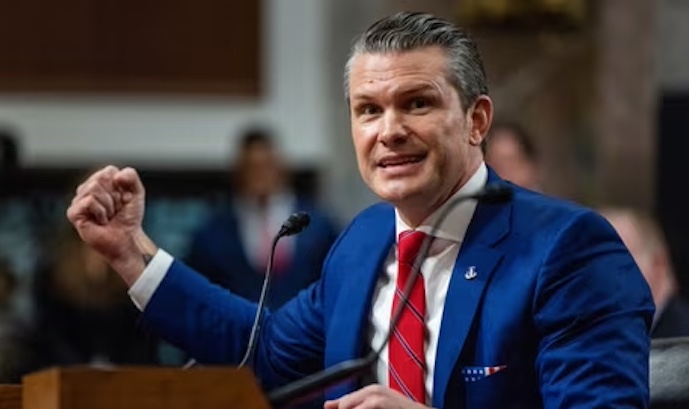
The Defence Secretary emphasized that the potential for Iranian attempts to obstruct or deter traffic through the Strait has been an integral part of US military strategic considerations for years.
He further articulated that the Pentagon has consistently developed and refined contingency plans to counter possible military actions by Iran in this crucial maritime passage.
Recognized as one of the most significant energy transit corridors globally, the Strait of Hormuz facilitates the movement of a substantial portion of the world's oil and liquefied natural gas shipments.
Several US officials, both current and former, highlighted to CNN that military strategies involving Iran typically account for the possibility that Tehran could seek to shut down this waterway.
However, they noted that during times when global oil and LNG supply chains appeared stable, the broader implications for global markets were sometimes not treated as an urgent concern.
At the point in time referenced, US oil production had hit record highs, and Washington was also eyeing bolstered energy provisions from nations like Venezuela.
Such factors led to a prevailing attitude that global energy markets had adequate safeguards against potential disruptions.
Despite this, market analysts warn that any prolonged closure of the Strait could have drastic impacts on global energy markets due to the high volume of petroleum and gas transports that daily traverse this route.
Hegseth's latest comments arrive amidst rising tensions in the Middle East, where military clashes and political rivalries have escalated worries regarding the security of global energy supply channels.
Comments (0)
You must be logged in to comment.
Be the first to comment on this article!