
The Nigerian Senate has successfully passed the Electoral Act (Amendment) Bill after a vigorous and rowdy session that erupted due to Senator Enyinnaya Abaribe's call for a division vote regarding Clause 60.
During the deliberations, Abaribe persistently sought a division on Clause 60(3), which controversially allows for manual transmission of election results in instances where electronic transmission fails. Senate President Godswill Akpabio initially remarked that the earlier demand for a division had been withdrawn, a claim that faced immediate pushback from opposition senators.
Deputy Senate President Barau Jibrin cited Order 52(6) to argue against revisiting a matter that had already been decided by the presiding officer. His comments incited further tumult, with lawmakers exchanging heated comments. In a brief altercation, Senator Sunday Karimi confronted Abaribe on the Senate floor.
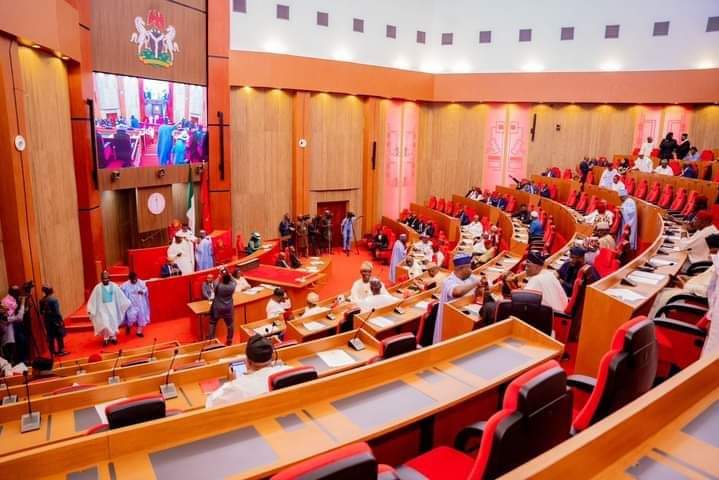
Senate Leader Opeyemi Bamidele drew attention to his sponsorship of a motion for rescission, implying that all previous decisions regarding the bill were nullified. He contended that Abaribe's request was thus procedurally valid. Consequently, Akpabio upheld the point of order and invited Abaribe to formally present his motion.
Under Order 72(1), Abaribe called for a vote on Clause 60(3), aiming to eliminate the exception for manual transmission during network failures. In the voting process, senators supporting the clause were asked to rise, followed by those opposing it. A total of 15 senators opposed the clause, while a substantial 55 voted in favor of maintaining it, leading to its inclusion in the bill.
Earlier in the session, the Senate transitioned into the Committee of the Whole after a motion was made to rescind the earlier passage of the Electoral Act, 2022 (Repeal and Re-Enactment) Bill 2026. Although a clause-by-clause review commenced, it halted at Clause 60 when Abaribe raised a point of order, resulting in discussions and murmurs within the chamber prior to a brief private meeting.
Before confirming the rescission of the bill, lawmakers expressed unease about the election timeline announced by the Independent National Electoral Commission, which sets the date for the 2027 general elections in February 2027.
Bamidele highlighted that the 360-day notice requirement in Clause 28 could schedule the 2027 presidential and National Assembly elections during Ramadan, raising concerns about voter turnout, logistics, stakeholder participation, and overall electoral inclusivity.
Additionally, the Senate noted discrepancies in the drafting of several clauses, including issues with cross-referencing, numbering, and internal consistency. After addressing these concerns and voting on disputed provisions, the amended Electoral Act bill was ultimately approved.
Comments (0)
You must be logged in to comment.
Be the first to comment on this article!