
The Nigerian government, alongside the World Bank, has launched nine catchment management plans to address desertification in northern Nigeria. These plans are intended to tackle the accelerated environmental degradation affecting the region.
This initiative is part of the Agro-Climatic Resilience in Semi-Arid Landscapes Project (ACReSAL), which is a significant climate resilience scheme supported by the World Bank, in collaboration with the Federal Ministry of Environment and other relevant federal agencies.
During a high-level validation workshop held in Abuja, officials, development partners, and environmental experts highlighted the urgent ecological challenges facing millions in northern Nigeria. They cautioned that these issues pose significant threats to food security, economic stability, and overall community well-being.
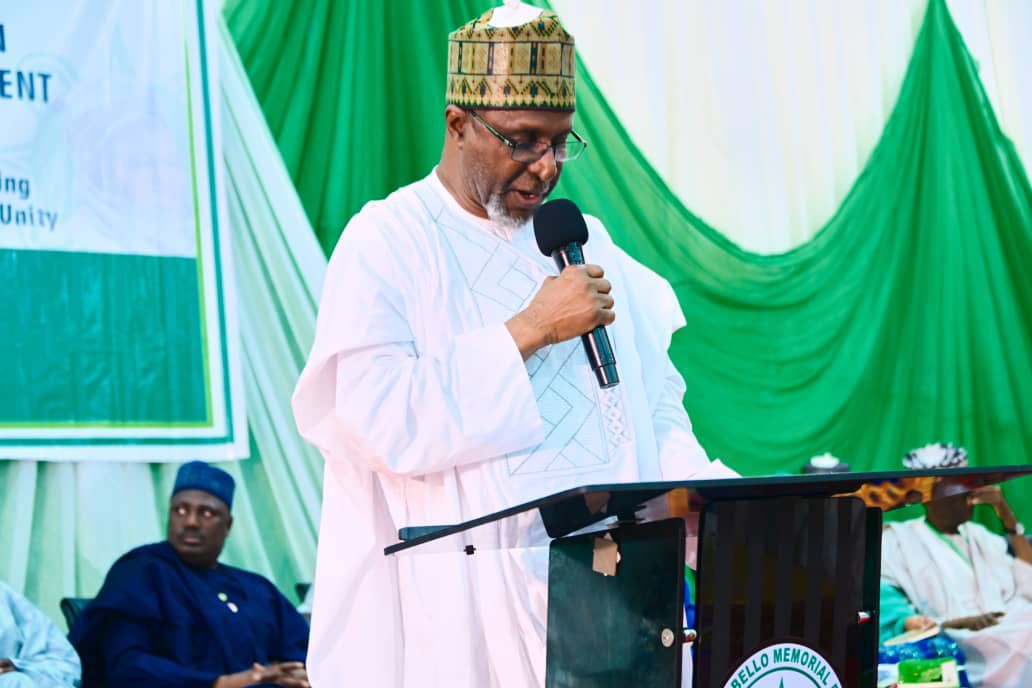
Balarabe Lawal, Nigeria’s Minister of Environment, stated that the environmental crisis in the region is a harsh reality for local farmers, herders, and rural inhabitants. He noted that advancing desertification, inconsistent rainfall, shrinking water sources, and deteriorating farmland are eroding agricultural productivity and exacerbating poverty among the residents of 19 northern states and the Federal Capital Territory (FCT).
Lawal emphasized, "These challenges are not mere theoretical concerns; they jeopardize our food supply, the livelihood of farmers and herders, and the stability of our communities."
The ACReSAL project is hailed as Nigeria's most extensive response to the mounting environmental crisis. It aims to coordinate efforts among the Federal Ministries of Environment, Water Resources and Sanitation, and Agriculture and Food Security to enhance climate resilience interventions.
The Strategic Catchment Management Plans serve as a critical framework for these interventions, outlining strategies for restoring affected landscapes, safeguarding watersheds, and promoting sustainable resource management within vulnerable ecosystems.
Joseph Utsev, representing the Minister of Water Resources and Sanitation, participated in the review and validation of the nine catchment management plans developed within the ACReSAL framework.
Ngozi Abohwo, Director of Hydrology, underscored that these plans are essential for integrated management of important water catchments while addressing the environmental threats facing communities.
She cautioned that encroaching deserts, degraded soils, and erratic rainfall patterns are already undermining agricultural production and threatening farmers' and pastoralists' livelihoods. "As we gather here, millions across northern Nigeria are dealing with severe environmental pressures that endanger their food security and economic sustainability," she remarked.
Abdulhamid Umar, the National Coordinator of ACReSAL, represented by Shettima Adams, stated that the validation exercise signifies a vital transition from years of environmental planning to tangible actions on the ground.
Umar reported that the catchment plans encompass areas such as Malenda, Oshin- Oyi, Gurara-Gbako, Aloma-Konshisha, Benue-Mada, Sarkin-Pawa-Kaduna, Zungur- Gongola, Gaji-Lamurde, and Hawul-Kilange.
These catchments span several states, including Adamawa, Bauchi, Benue, Borno, Gombe, Kaduna, Kano, Katsina, Kebbi, Kogi, Kwara, Nasarawa, Niger, Plateau, Taraba, Yobe, and Zamfara, as well as the FCT. Umar noted that the boundaries of these catchments were defined based on ecological criteria rather than political lines to facilitate more effective environmental management.
He added that the plans were crafted through thorough consultations with communities, farmers, and stakeholders to ensure that the provided solutions reflect the local realities. "These plans are not simply policy documents; they capture the voices of the communities and identify the actual environmental issues they confront — deforestation, declining soil health, reduced water availability, and overgrazing," Umar expressed.
This framework is expected to direct future investments in tree planting, climate-adaptive agriculture, improved water resource management, and other urgent restoration projects aimed at providing prompt benefits to rural households.
In a goodwill message on behalf of the World Bank Team Leader, Joy Iganya Agene, Henrietta Alhassan, the bank’s representative, hailed the validation of the catchment plans as a significant achievement in enhancing climate resilience within Nigeria’s fragile semi-arid regions.
Alhassan reiterated that effective catchment management is crucial not only for environmental conservation but also for sustaining livelihoods, stabilizing ecosystems, and fostering long-term economic growth. "The work being validated here embodies the communities’ voices, insights from experts, and the unwavering commitment of government and development partners to safeguard these essential landscapes," she added.
Alhassan also reaffirmed the World Bank's commitment to supporting Nigeria in advancing integrated catchment planning, climate adaptation, and sustainable management of natural resources as the nation proceeds with implementing these strategies.
Comments (0)
You must be logged in to comment.
Be the first to comment on this article!